Among the Sensex components, Nestle, Maruti, IndusInd Bank, ICICI Bank, Hindustan Unilever, Larsen & Toubro, Tata Consultancy Services, Infosys, HDFC Bank and Axis Bank were the major laggards. Tata Steel, JSW Steel, Power Grid, Tech Mahindra and State Bank of India were among the gainers.

Liberalising outflows might not be of a great help in the short run because a greater liberalised regime generally attracted more inflows, said RBI Governor Y V Reddy, speaking in Hyderabad on the management of capital account in India.

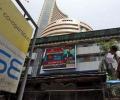
Benchmark equity indices Sensex and Nifty slumped over 1 per cent on Friday, tracking a weak trend in global markets and fresh foreign fund outflows. Falling for the third day running, the 30-share BSE Sensex tumbled 1,017.23 points or 1.24 per cent to settle at 81,183.93.

Bajaj Housing Finance Ltd's impressive stock market debut has brought cheer to the 100-year-old Bajaj Group, but the conglomerate faces the prospect of Bajaj Finserv being removed from the benchmark Sensex index. According to market expectations, Trent, a Tata group-owned fashion retailer, is likely to replace Bajaj Finserv during the upcoming index rebalancing in December.

Benchmark Sensex declined over 45 points in highly volatile trade on Wednesday, tracking weak Asian markets and continuous foreign fund outflows. Declining for the second straight session, the 30-share BSE Sensex fell 45.46 points or 0.06 per cent to settle at 73,466.39. During the day, it went lower by 437.93 points or 0.59 per cent to 73,073.92.

By taking the mutual fund route, investors can take exposure to gilts with small amounts. Over a decade or more, returns from these funds tend to be sound.

While SGBs are a sound investment, they aren't worth buying at any price. The interest income you earn from them will not justify paying a high premium.

The total number of demat accounts in the country stood at 171.1 million as of August 31.

Indian retail investors continue to sell gold ETFs.

Once we break free of the idea that land is scarce, real estate is just a pile of bricks, steel, and glass. Any price surge will kick off a supply response, which kills off the possibility of sustained price appreciation, points out Ajay Shah.

Banks submitted bids amounting to Rs 4.75 trillion, around 2.5 times of the notified amount of Rs 1.75 trillion, at the Variable Rate Reverse Repo (VRR) auction conducted by the Reserve Bank of India (RBI) on December 22, a day after the liquidity deficit in the banking system widened to Rs 2.5 trillion. In the most recent VRR auction held by the RBI on December 15, bids totaling 2.7 times the notified amount were received. Banks secured Rs 1 trillion at a weighted average rate of 6.63 per cent.

"There was no water leakage but the rainwater came down from the pipes fixed to install electric wires," Mishra said.

There was net outflow of $7.2 billion from the Indian market in June of which $5.4 billion was from debt market triggered by global risk aversion and currency weakness, Deutsche Bank India Equity Strategy report said.

Asian Paints, JSW Steel, ITC, Bajaj Finance, IndusInd Bank, Tata Steel, NTPC, Bajaj Finserv, HDFC Bank, Reliance Industries and Power Grid were among the laggards. In contrast, Tata Motors, Mahindra & Mahindra, State Bank of India, Infosys and HCL Tech were the gainers.
Foreign investors continued to pull out large sums from the emerging market equity funds last week, with the Asian equity funds witnessing an outflow for the sixth week in a row taking the total exodus to over $18 billion so far is year.

In view of the rising number of mobile and internet banking users, the Reserve Bank of India (RBI) has proposed to tighten norms related to the liquidity coverage ratio (LCR) by increasing the run-off factor for retail deposits. "Banking has undergone rapid transformation in recent years. "While increased usage of technology has facilitated the ability to make instantaneous bank transfers and withdrawals, it has also led to a concomitant increase in risks, requiring proactive management," the RBI said in the draft guidelines released on Thursday.

This was the second consecutive yearly outflow from such funds.

Several mutual funds (MFs) have recently approached the Reserve Bank of India (RBI) as they renew efforts to increase their overseas investment limit. In June 2022, the capital markets regulator Securities and Exchange Board of India (Sebi) permitted MFs to invest in foreign stocks within the aggregate mandated limit of $7 billion after a correction in stocks. One of the proposals shared with the RBI is to link MFs' foreign investment limit to the country's foreign exchange reserves.

According to a report by mutual fund tracker Morningstar, India-focused offshore funds and ETFs had witnessed a cumulative net outflow of $1.8 billion during 2012 as against a net withdrawal of $5.4 billion in 2011.

In 2013-14, the funds witnessed outflow of Rs 2,293 crore

'We will supply dollars in case of extreme volatility.'

From the Sensex basket, Infosys, IndusInd Bank, Bajaj Finserv, Wipro, HCL Technologies, Bajaj Finance, Tech Mahindra, Tata Consultancy Services, and Larsen & Toubro were the major laggards. Titan Company, Hindustan Unilever, HDFC Bank, Maruti, ITC, Power Grid and Reliance Industries were the gainers.

'To the believers of crypto regulations, I have only one question to ask, how will you regulate it?'

An article on 'State of the Economy' in the monthly Bulletin also said the improvement in the outlook for agriculture and the revival of rural spending have turned out to be the bright spots in the evolution of demand conditions. Consumer price inflation ticked up in June 2024 after three consecutive months of moderation as a broad flare-up in vegetable prices halted the overall disinflation that had been underway, it said.

India's software and engineering exports may take a hit and the country may also face larger capital outflows.

In the currency markets, the rupee lost another 10 paise to close at 1-week low of 63.54 against the US dollar

All investors should ideally have a 10 to 15 per cent allocation to gold. Whether they invest in gold ETFs or SGBs should depend on their investment horizon.

The Reserve Bank of India (RBI) conducted two overnight variable rate reverse repo (VRRR) auctions on Tuesday, marking the first instance of such action in a single day. The move aimed to reduce liquidity from the banking system, which has been largely in deficit mode for the past four months. Market participants noted that the central bank held the second VRRR auction due to its awareness of funds being released to banks during the day.

The ongoing fourth quarter earnings season, global factors and macroeconomic data would guide the trends in the equity markets this week, analysts said. Markets would also take cues from trading activity of foreign investors, rupee-dollar trend and movement of global oil benchmark Brent crude. "Domestically, the next batch of Q4 earnings reports will drive stock-specific movements, Hero MotoCorp, Larsen & Toubro, BPCL, State Bank of India, Eicher Motors and Tata Motors are some of the big names in the list and the next phase of voting," said Pravesh Gour, senior technical analyst, Swastika Investmart Ltd.

Foreign investors made a significant turnaround and injected over Rs 1,500 crore into Indian equities in February, reversing the massive outflows seen in the preceding month, primarily due to robust corporate earnings and positive economic growth. Additionally, Foreign Portfolio Investors (FPIs) continued to be bullish on the debt markets as they put in over Rs 22,419 crore during the month under review, data with the depositories showed. Looking ahead to March, the outlook for FPI flow appears promising, provided the current economic trajectory and corporate performance sustain their positive momentum, potentially continuing to attract foreign investment into Indian equities, Mayank Mehraa, smallcase manager and principal partner at Craving Alpha, said.
Small and midcap schemes may impose restrictions on redemptions, cap employee withdrawals, and increase the exit load, while ensuring a proportionate liquidation of the portfolio during market crises to safeguard the interests of all investors. These measures have been outlined in the investor protection policies recently put out by mutual fund (MF) trustees. The policies for small and midcap schemes were prepared by MF trustees following directives from the Securities and Exchange Board of India (Sebi) earlier this month.

Analysts attribute this withdrawal trend to the nervousness ahead of US presidential elections and the fact that the markets raced ahead even as the economic recovery remained fragile back home.
Even as Foreign Institutional Investors (FIIs) have been selling across markets and pulling out money, their outflow was highest from India in 2011, compared with BRIC peers (Brazil, Russia, India and China) and other emerging markets.

Foreign Portfolio Investors (FPIs) continued their buying spree and poured close to Rs 4,800 crore in the Indian equity markets in the first week of January driven by confidence in the country's robust economic fundamentals. Additionally, they injected Rs 4,000 crore in the debt market during the period under review, data with the depositories showed. With expectations of a prolonged decline in US interest rates in 2024, there is an anticipation that FPIs will likely escalate their purchase, particularly in the initial months of the New Year leading up to the general elections, V K Vijayakumar, chief investment strategist at Geojit Financial Services, said.
Market benchmarks Sensex and Nifty wilted under selling pressure on Friday after a five-day rally as investors pared exposure to banking, financial and consumer durable stocks amid mixed trends in global markets. Rising global crude prices, a depreciating rupee and persistent foreign fund outflows further weighed on sentiment, traders said.

India's current account deficit declined sharply to 1 per cent of the GDP or $8.3 billion in the second quarter of this financial year, mainly due to lower merchandise trade deficit and growth in services exports, according to a RBI data released on Tuesday. The current account deficit (CAD), which represents the difference between the total amount of money sent abroad and money received from overseas across the economy, was 3.8 per cent of GDP or $30.9 billion in the July-September quarter in 2022-23. CAD was $9.2 billion or 1.1 per cent of GDP in the first quarter (April-June) of the current financial year 2023-24.

The expectations of a borrowing cut by the government faded among bond-market participants after the general election results because they feel the compulsions of running a coalition may put pressure on the exchequer, according to dealers. The recent trend of moderate depreciation in the rupee's nominal effective exchange rate (NEER) might not persist if there are significant changes to the structural reform agenda.

From the Sensex basket, Mahindra & Mahindra, Tata Motors, NTPC, HCL Technologies, Larsen & Toubro, Infosys, Tech Mahindra and State Bank of India were the major laggards. Bharti Airtel, Bajaj Finance, Bajaj Finserv, Tata Consultancy Services and IndusInd Bank were among the gainers.
