
'Investors looking at the next 6-12 months can be certain that the Fed will maintain its easing cycle, and we expect the overall environment to be conducive for fixed income investments for portfolio diversification.'

Indian companies are generating more cash than ever. The net cash flow from listed firms' operations hit a new high of Rs 11.1 trillion in financial year 2023-24 (FY24), crossing the Rs 10-trillion mark for the first time, according to the Centre for Monitoring Indian Economy (CMIE) data going back to 1990-91. The FY24 figure represents a 19.3 per cent jump over the previous year, even as quite a few companies are yet to release their numbers.
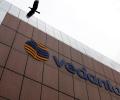
Mining conglomerate Vedanta Limited has received approvals from the majority of its creditors for a proposed demerger of businesses, marking an important step in the company's plan to split into six independent listed companies. "I am happy to let all of you know that we have received the 52 per cent plus the additional percentage, which is required for us to reach 75 per cent. "We have crossed that threshold as well. Most of the lenders have approved it," a senior Vedanta executive said in a recent bondholder conference call.

Vedanta's Cairn Oil & Gas on Thursday announced the appointment of Nick Walker as the new chief executive officer (CEO) of the company. In a statement, the company said the appointment is effective January 5. "Before this appointment, Walker was president and chief executive officer at Lundin Energy, one of the leading European independent E&P companies," it said.

Overall market reaction to the Budget was neutral. Investors absorbed the changes to the tax rates (positive for salaried class) and capital gains taxes (CGTs, negative due to the removal of indexation and increases. Other proposals largely pertain to supporting rural development, buybacks taxed as dividends, Custom duty changes that impact multiple sectors, higher outlays for clean energy, etc. There's some moderation in the growth of capex outlay across defence, fer

Investors' wealth eroded by Rs 6 lakh crore in a single day on Wednesday as the BSE benchmark Sensex tumbled over 790 points. The 30-share BSE Sensex fell by 790.34 points or 1.08 per cent to settle at 72,304.88. During the day, it slumped 872.93 points or 1.19 per cent to 72,222.29.

Among the Sensex firms, Wipro jumped over 6 per cent after the IT company's December quarter earnings beat estimates. The other prominent gainers were HCL Technologies, HDFC Bank, Infosys, Tech Mahindra, Bharti Airtel and Reliance Industries.

HDFC Bank, Reliance Industries and ICICI Bank remained among the top mutual fund (MF) buys for the second consecutive month in September. MFs deployed a net of Rs 15,000 crore into these stocks during the two-month period (August-September), revealed Nuvama Alternative & Quantitative Research reports.

Anil Agarwal-owned Vedanta Resources (VRL), which has hired Standard Chartered Bank to raise funds for its Konkola copper mine assets, says it is engaging with several potential partners for both short-term funds and long-term equity financing for the Zambian project. A Vedanta official said its commitment to optimising capital allocation and driving expansion is a key cornerstone of its strategy for the mines. It will enhance value creation and operationalise the Konkola Copper Mines (KCM).

Shares of Reliance Industries (RIL) traded 2 per cent higher at Rs 2,310.10 on the BSE in intra-day trade in an otherwise volatile market after the company reported a 27.4 per cent year-on-year (YoY) growth in its consolidated net profit at Rs 17,394 crore for the September quarter (Q2FY24). While revenue growth of the company was flattish YoY at Rs 2.32 trillion, the profit rose on the back of operational improvement across most segments, especially higher profits in the O2C (oil-to-chemicals) and oil & gas businesses, as well as the retail business. "Strong operational and financial contribution from all business segments has helped Reliance deliver another quarter of robust growth," said Mukesh Ambani, chairman and managing director of the company.
Dalal Street investors became richer by Rs 9.68 lakh crore in five days of market rally, where the Sensex breached the historic 73,000-mark for the first time ever to reach a new record peak, taking the market capitalisation of BSE-listed companies to an all-time high of Rs 376 lakh crore. The 30-share BSE Sensex jumped 759.49 points or 1.05 per cent to settle at a new closing high of 73,327.94 on Monday. During the day, it zoomed 833.71 points or 1.14 per cent to reach its all-time peak of 73,402.16.

Among the Sensex firms, Nestle rose the most by 4.66 per cent. NTPC rose by 2.16 per cent, Reliance Industries by 1.53 per cent, State Bank of India by 1.04 per cent and Hindustan Unilever by 1.03 per cent. ITC, Power Grid and Bajaj Finance were the major gainers. Wipro, Tata Consultancy Services, HCL Technologies, Tata Steel, Bajaj Finserv and Maruti were among the laggards.

Siemens delivered a strong margin performance and also reported high other income to beat consensus in the January-March quarter (Q2) of FY24 (the company's year-end is September 30). In addition, it has opted to demerge the energy vertical with a 1:1 award of shares in the newly demerged entity which will be listed by the end of this year (CY25).

Corporate India's net profit as a percentage of gross domestic product (GDP) dipped in the 2022-23 financial year (FY23) -- after rebounding sharply in FY22 -- amid a decline in global commodity prices. Top 500 companies' combined net profit stood at 4.1 per cent of the GDP for FY23, down from 4.3 per cent in the previous financial year when it had gone up from just 3.5 per cent in FY21. "The year-on-year (YoY) decline was led by global commodities, which contributed adversely to the ratio, while the financial sector contributed positively.

Mahindra & Mahindra was the biggest gainer on the Sensex chart, rising 2.56 per cent, followed by Tata Steel, Tech Mahindra, Nestle, Power Grid, Infosys, HCL Technologies, Axis Bank, UltraTech Cement and L&T. In contrast, Asian Paints, ITC, Bajaj Finserv, Bharti Airtel and Tata Motors were among the laggards.
Equity investors became richer by Rs 2.4 lakh crore as key benchmark indices Sensex and Nifty scaled new peaks in morning trade on Tuesday, amid persistent foreign fund inflows. Analysts said foreign institutional investors have reversed their selling strategy and have been consistent buyers during the last seven days. This momentum is a reflection of institutional confidence in the Indian market, they said.

The brokerage earnings estimate for the January-March 2024 quarter (Q4FY24) for Nifty 50 companies hints at a slowdown in corporate profit growth while revenue increase is likely to be in low single digits as in the previous two quarters. According to various brokerage estimates, the companies' combined net profits are expected to grow 3.1 per cent year-on-year (Y-o-Y) in Q4FY24, the slowest in the last five quarters. For comparison, the index companies' combined net profits were up 8.2 per cent Y-o-Y in Q3FY24 and 3.4 per cent Y-o-Y in Q4FY23.

Although the third quarter of financial year (2023-2024) FY24 (Q3FY24) was marginally below expectations, Info Edge (India) is witnessing strong investment trends and hitting new highs. The big driver is optimism about a pickup in the jobs market, which benefits Naukri.com and could mean upgrades in Q4FY24 expectations. The JobSpeak Index, which Naukri.com releases on a monthly basis, is showing a "transformative shift".

The ongoing second quarter earnings, movement of oil benchmark Brent crude and the uncertainty in the Middle East would dictate terms in the domestic markets this week, analysts said. Furthermore, the activities of Foreign Institutional Investors (FIIs) will also influence trading in the markets. "A slew of earnings reports from heavyweights expected this week will significantly impact market direction.

The index is currently trading at 149 per cent of its historical P/B valuation, surpassing its previous peak of 125 per cent made in 2020-21.

The recent surge in crude oil prices could shave off the gains made by India Inc in profit margins in the past few quarters. Worse, it comes at a time when consumer demand in the country is slipping and major global economies are witnessing a slowdown. A back-of-the-envelope calculation suggests that the margin expansion accounted for three-fourths of the rise in the listed firms' operating profit between the April-June quarter (Q1) of FY23 and Q1FY24, and only a quarter of profits gains came from revenue growth.

Stocks of Hindustan Petroleum Corporation Limited (HPCL), Bharat Petroleum Corporation Limited (BPCL) and Indian Oil Corporation Limited (IOCL) have more headroom left despite the sharp run in the last few weeks, suggests a recent report from Morgan Stanley. Stocks of these oil refining and marketing companies (OMCs), it believes, are seeing multiples re-rate as investors reassess long-term growth prospects. "IOCL trades at one year forward P/BV of 1.2x, 19 per cent below +1 standard deviation (SD); BPCL trades at one year forward P/BV of 1.5x, near historical averages; HPCL trades at one year forward P/BV of 1.5x, near +1SD," Morgan Stanley said.

Tata Steel was the biggest gainer in the Sensex chart, rising 2.39 per cent, followed by Tata Motors, Power Grid, Reliance Industries, UltraTech Cement, NTPC, Nestle, HUL, Mahindra & Mahindra, Wipro, Kotak Mahindra Bank and Asian Paints. In contrast, Bajaj Finance, IndusInd Bank, Axis Bank, Bharti Airtel, Bajaj Finserv, ICICI Bank, Infosys and Titan were among the laggards.

Brokerages expect Nifty50 companies to have cumulatively witnessed strong double-digit growth in their earnings in the first quarter of FY24 (Q1FY24). This growth in the combined earnings is expected to have been driven by banks, automakers, and oil & gas companies. Other sectors may report muted profit growth.

Investors' wealth eroded by Rs 7.59 lakh crore on Monday as the equity market took a heavy drubbing amid escalating tensions in the Middle East. The 30-share BSE Sensex plunged 825.74 points or 1.26 per cent to settle at 64,571.88 points. During the day, the index plummeted 894.94 points or 1.36 per cent to 64,502.68 points.

Operating margins have been the primary driver of corporate earnings in India in recent quarters, despite revenue growth suffering from weak consumer demand. Companies across sectors have reported a sharp improvement in earnings before interest, tax, depreciation, and amortisation (Ebitda) margins over the past two years, benefiting from lower commodity and energy prices. Higher margins more than compensated for slower revenue growth, resulting in double-digit growth in net profit for five consecutive quarters.

Investors shunned shares of oil marketing companies (OMCs) on Friday as they feared that the government's decision to cut retail prices of petrol and diesel could hurt the companies' profit margins in the near term. On Thursday, the government announced that OMCs will reduce pump prices of petrol and diesel after a record 22 months, making them cheaper by Rs 2 per litre in the national capital. The changes were effective from Friday.
Investors' wealth fell by Rs 2.89 lakh crore in two days of market fall, with the BSE Sensex tumbling 796 points on Wednesday, amid weak global market trends ahead of the US Federal Reserve's interest rate decision. Fresh foreign fund outflows and caution ahead of a host of interest rate decisions from global central banks also added to the overall bearish trend. Besides, the US Fed meeting, the BoE (Bank of England) and the BoJ (Bank of Japan) are also scheduled to meet this week.

Shares of Mukesh Ambani-owned Reliance Industries Limited (RIL) rose nearly 1 per cent on Tuesday, hitting an intraday high of Rs 2,986.05 per share, after most brokerages reacted positively to the company's March quarter (Q4FY24) results. The bullish outlook stems from Reliance Jio's potential tariff hikes, given the competitive landscape, along with slow but steady improvement in the oil-to-chemical (O2C) vertical.

Educational technology company Byju's chief financial officer Ajay Goel has quit after completing the audit process for the financial year 2022 and will return to Vedanta, the company said in a statement. The edtech major has roped in industry veteran Pradip Kanakia as senior advisor, and president (finance) Nitin Golani has been given additional responsibility as India chief finance officer (CFO) to handle the finance function of the company.
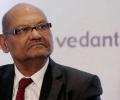
Mining magnate Anil Agarwal's conglomerate on Friday announced a major business shake-up, with flagship Vedanta Ltd approving a spin-off of its metals, power, aluminium and oil and gas businesses into separate listed entities and an overhaul of lucrative zinc unit planned as part of value creation and reducing debt load. Vedanta will issue one share of the five demerged businesses for every share held in the company, the firm said in a statement. The entire exercise, which would require shareholder and lender approval as well as a nod from the stock exchanges and courts, is expected to be completed in 12-15 months, its president for finance Ajay Agarwal said.

From the Sensex pack, Nestle, Tata Steel, Tata Motors, Bharti Airtel, Larsen & Toubro, Power Grid, NTPC, Tata Consultancy Services, Tech Mahindra, Infosys and Axis Bank were the major gainers. Kotak Mahindra Bank, Maruti, Bajaj Finance, Mahindra & Mahindra and ICICI Bank were the laggards.
The market capitalisation of BSE-listed firms reached an all-time high of Rs 299.90 lakh crore on Wednesday despite the Sensex falling marginally after a remarkable record-breaking rally in the last few trading sessions. The 30-share BSE Sensex dipped 33.01 points or 0.05 per cent to settle at 65,446.04, after rallying in the past five trading straight sessions. During the day, the benchmark hit a low of 65,256.49 and a high of 65,584.33.

Brokerages believe that the Bharatiya Janata Party's (BJP's) stronger-than-expected showing in state elections reduces political risks for the domestic markets going into 2024. However, after the short-term excitement, the focus will soon shift to earnings, global liquidity conditions, and the interest rate trajectory. "BJP's win in the three state elections is much better than what exit polls suggested and reinforces the consensus expectations of a Modi win in the 2024 national elections with a greater likelihood of 300+ seats for the BJP.

The Sensex ended over 51 points lower on Monday while the Nifty settled flat amid a weak trend in global markets and continuous foreign fund outflows. Markets are awaiting the November inflation data to be announced later in the day, traders said. The 30-share BSE Sensex declined 51.10 points or 0.08 per cent to settle at 62,130.57. During the day, it tumbled 505.52 points or 0.81 per cent to 61,676.15. The broader NSE Nifty ended at 18,497.15, marginally higher by 0.55 points.

Investors' wealth eroded by Rs 3.46 lakh crore on Wednesday as equity markets took a sharp tumble amid weak global trends and foreign fund outflows. The 30-share BSE Sensex fell by 676.53 points or 1.02 per cent to settle at 65,782.78. During the day, it plunged 1,027.63 points or 1.54 per cent to 65,431.68. In line with the weak trend in equities, the market capitalisation of BSE-listed firms eroded by Rs 3,46,947.54 crore to Rs 3,03,33,258.69 crore.
Brokerages expect India Inc to report an upturn in earnings for the March quarter of 2022-23, after a relatively muted showing in the previous two quarters. This growth is expected to be led by banking, financial services and insurance (BFSI) companies, FMCG firms, and automobile makers. The combined net profit of the Nifty50 companies (excluding Adani Enterprises) is expected to have grown 15.6 per cent to Rs 1.77 trillion in Q4FY23, from Rs 1.53 trillion a year ago.

Corporate earnings got a big boost from the fall in commodity and energy prices in July-September 2023 (Q2FY24) despite a slowdown in revenue growth during the quarter. The combined net profits of 3,123 firms that have declared their results so far were up 38 per cent year-on-year (Y-o-Y) to Rs 3.07 trillion in Q2FY24, up from Rs 2.24 trillion a year ago. Earnings were, however, down 3.5 per cent on a sequential basis from Rs 3.18 trillion in April-June (Q1) FY24.

Benchmark BSE Sensex and Nifty closed on a flat note after a volatile session on Wednesday profit booking in IT and realty shares negated gains in metal and oil & gas stocks. The 30-share BSE Sensex ended 35.78 points or 0.06 per cent lower at 58,817.29, while the broader NSE Nifty inched 9.65 points or 0.06 per cent higher at 17,534.75. The market remained range-bound for the most part of the session as investors kept their exposure low due to weak global cues, traders said.

Nifty50's earnings growth, estimated at 20 per cent by global research and brokerage firm Jefferies for financial year 2023-24 (FY24), will be amongst the top three in the Asian region, and is likely to outperform peers. Asean 40 index with 29.1 per cent estimated earnings growth and Straits Times Index (STI) with 29.1 per cent estimated earnings growth are the only two other indices in the Asian region that are likely to outperform India, suggests the recent Jefferies report, coauthored by Mahesh Nandurkar, their managing director along with Abhinav Sinha and Nishant Poddar.
 © 2026 Rediff.com - Advertise with us - Disclaimer - Privacy Policy - Sitemap - Feedback - About us - Terms of use - Grievances