
"The draft will also be put on the government of India website to facilitate a larger discussion," he said.
Reaching out to the ruling party in Uttar Pradesh, which has 17 MPs in the Lok Sabha, Communist Party of India-Marxist General Secretary Prakash Karat drove to the Uttar Pradesh chief minister's residence in New Delhi to hold the first meeting after the Left parties withdrew support to the United Progressive Alliance government over the nuclear deal.

The only thing that may salvage Narendra Modi's trip to the US is his meetings with CEOs, such as those of Blackstone, First Solar, Qualcomm, Adobe, and General Atomics, asserts Rajeev Srinivasan.
Communist Party of India general secretary A B Bardhan on Tuesday said he did not foresee the fall of the United Progressive Alliance government at the Centre. "The Left parties are not keen to withdraw support from the UPA government, but if they (UPA) fall on their own how can we prevent it," Bardhan remarked while describing the June 25 meeting on the nuclear deal as "crucial".
Two things have thrown a spanner in the works for the prime minister and the Congress. One is the UPA allies. The second development is the hike in the inflation rate, which jumped to 11.05 percent.

ONGC was the top loser in the Sensex pack, ending 3.48 per cent lower. Tata Steel, Vedanta, Bajaj Auto, TechM, RIL, Hero MotoCorp, Kotak Bank, Axis Bank, and Infosys too fell up to 2.33 per cent.
Pawar said the UPA-Left committee constituted to iron out the differences had already held four rounds of "good discussions and we hope both sides would amicably and with full responsibility settle the issue in our future meetings".
The reaction came a day after Gandhi obliquely attacked the Left, saying that "elements" opposing the nuclear agreement were not only "enemies" of the Congress, but also of the nation's progress and development.
Apparently in an effort to sell the Indo-US nuclear deal to the Left, the Congress is seeking to use China's willingness to carry out civilian nuclear cooperation with India.
'I wouldn't put it past the Indian govt to walk into this honey-trap of the nuke deal with its eyes open. India's netas have done worse before.'
Experts, scientists and economists could be invited to gather their views on the nuclear deal, CPI National Secretary D Raja said in Puducherry on Monday.
The Left, as also several other parties, have been expressing apprehensions over various aspects of the deal and have been demanding that the sense of Parliament be taken into consideration and had contended that the government had no majority on the issue.
Referring to the CPI-M's terse warning to the UPA government over the nuclear issue, Ghosh said, "All Left parties will take a common stand (on the issue)."
Even as Parliament is rocked by protests over the Indo-US nuclear deal, Lok Sabha Speaker Somnath Chatterjee on Friday scheduled the discussion on the deal for Monday.
Her remarks assume significance as they come after the US told India and other countries to cut oil imports from Iran to "zero" by November 4 or face sanctions, making it clear that there would be no waivers to anyone.
He disclosed how his government had briefed many of the political parties, including the main opposition Bhartiya Janata Party, represented in Parliament on the details of the agreement.
The much-awaited discussion on the nuclear deal was the highlight of the brief session as both houses debated the issue.
The main opposition Bharatiya Janata Party has already rejected the deal and sought a joint parliamentary committee to go into it after which parliamentary approval is necessary to operationalise the deal.
The CPI-M on Tuesday warned the UPA government at the Centre would "face the consequences" if it went ahead with the Indo-US nuclear deal. CPI-M politburo member Sitaram Yechuri said the outcome of the discussion between India and IAEA regarding the nuclear deal would be conveyed to Left parties by the government on March 17 at the Left-UPA Coordination Committee meeting.
"Our agenda is the nuclear deal and not the stability of the government or an early or late election. We are opposed to the deal because we think it is not in the interest of the country," CPI-M politburo member Sitaram Yechury told media persons in New Delhi. Whether government will go in for early elections is for them to decide, he said in reply to a question on the sidelines of the party Central Committee meeting in New Delhi.
Mulford said very little about the meeting except that it was regarding the civil nuclear deal during which he explained his country's position to Sinha, a key person in the BJP.
Ironically, Talbott, currently the president of the leading US think-tank Brookings Institution, has been critical of the nuclear deal, as India is yet to sign the Comprehensive Test Ban Treaty.

Khamenei said: "We do not violate the deal, but if the other party violates it, if they tear the agreement up, we will light it on fire."
The Parliamentarians of Indian-origin claim the way India has put the nuclear deal on hold has increased respect for India.
Sources in the United Progressive Alliance said the offer for a discussion was made afresh during Monday's UPA-Left committee meeting.
The Bharatiya Janata Party on Friday dubbed as somersault Prime Minister Manmohan Singh's "not the end of life" talk on the India-United States nuclear deal, alleging that the Congress has developed cold feet over the prospect of mid-term polls.
ElBaradei will have talks with Prime Minister Manmohan Singh and other Indian leaders in Delhi even as the government's standoff with the Left on the nuclear deal escalated further.
K Subrahamnayam, strategic thinker and staunch supporter of the deal debates the issue with rediff.com Managing Editor Sheela Bhatt.
Signalling the continuity of policy, the new government has ratified the Additional Protocol, a commitment given under Indo-US nuclear deal by the previous dispensation to grant greater ease to International Atomic Energy Agency to monitor India's civilian atomic programme.
This will make Apsara off-limits to the IAEA, once the Indo-US N-deal kicks in.
What India thinks of the political standoff in New Delhi.
The Left and the BJP are opposed to the deal.
This assumes significance as it comes two days ahead of the monsoon session of Parliament when the Left allies of UPA will be raising the nuclear deal issue.
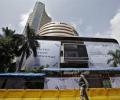
The NSE Nifty, after hitting a high of 10,758.55, closed at 10,717.80, up just 2.30 points, or 0.02 per cent.
Keen to conclude the civil nuclear deal by the year-end, India and the US will hold another round of high level talks in July to sort out differences that have been nagging the negotiations for months.
On his first visit to Washington after taking over as foreign secretary, Menon on Wednesday had a three-hour-long discussion with Burns, who is the key negotiator for the nuclear deal.
Maintaining that both India and the US are seriously trying to sort out the 'outstanding issues', he, however, refused to specify when the agreement will be firmed up.
The United States has said that it has broadened the non-proliferation regime by bringing India inside it through the Indo-US nuclear deal.
 © 2026 Rediff.com - Investor Information - Advertise with us - Disclaimer - Privacy Policy - Sitemap - Feedback - About us - Terms of use - Grievances