
'When markets go into a budget with excessive optimism, the risk of disappointment is higher.'

India's first maritime lender, state-owned Sagarmala Finance Corporation Ltd (SMFCL) hit the ground running with a Rs 4,300 crore disbursement announcement last Tuesday, within months of being registered as a non-banking financial company (NBFC) in June 2025.

Trai has ordered BFSI firms to move service and transaction calls to the 1600 series from 2026 to reduce spam, financial fraud, and rising digital arrest scams.

The banking sector could see better loan growth in the third quarter of financial year 2026 (Q3FY26) with improved net interest margins (NIMs), though the full impact of latest rate cuts will be largely felt in the fourth quarter. There may be lower slippage in unsecured loans and microfinance institutions (MFIs) along with steady recovery trends, which should lower credit cost.

A number of non-banking financial companies (NBFCs) have tapped into the debt capital market ahead of the festival season to meet increasing credit demand as bank funding slows. On Tuesday, Aptus Value Housing Finance secured Rs 300 crore at an interest rate of 8.75 per cent through bonds maturing in five years. ICICI Home Finance Company turned to the market to raise Rs 275 crore at 7.94 per cent, alongside another Rs 300 crore at 7.95 per cent, through bonds maturing in five and three years, respectively.
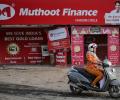
Shares of gold finance companies Muthoot Finance and Manappuram Finance hit their respective all-time highs, gaining on the BSE during Wednesday on expectation of healthy earnings. In comparison, the benchmark BSE Sensex was down 0.14 per cent, closing at 85,408.

Over 50 per cent, or 660 stocks, from the BSE 1000 index recorded negative returns during CY25.
The Reserve Bank of India (RBI) has sought granular data from select non-banking financial companies (NBFCs) on their loan book growth. The details sought are on the outstanding product-wise portfolio and the annualised interest charged on them. The annualised interest slabs mentioned are as follows: less than 10 per cent, 10-20 per cent, 20-30 per cent, 30-40 per cent, 40-50 per cent, and above 50 per cent.

From the Sensex firms, State Bank of India, Bajaj Finserv, Bajaj Finance, Maruti, HCL Tech, Larsen & Toubro, Mahindra & Mahindra and Infosys were among the major winners. However, Hindustan Unilever, Eternal, Tata Motors Passenger Vehicles, and Sun Pharma were among the laggards.

The Securities and Exchange Board of India (Sebi) on Wednesday overhauled the cost framework for the 80 trillion domestic mutual fund (MF) industry, introducing a simplified structure aimed at improving transparency for investors while balancing the impact on asset managers.

Sectoral funds, focused exclusively on public sector banks (PSBs), have delivered the strongest returns among domestic mutual fund (MF) categories over the past six months. However, active banking funds have significantly lagged because of their heavy tilt towards private lenders.

In August, the Reserve Bank of India Governor Shaktikanta Das held a meeting with chief executive officers/ managing directors (CEOs/ MDs) of large non-banking financial corporations (NBFCs). The discussions included diversifying borrowing sources for NBFCs and housing finance companies (HFCs) to contain increasing reliance on bank borrowing, risks associated with high credit growth in retail segment in unsecured loans, prioritising IT upgrades and cyber-security, improving provisioning, monitoring of stressed exposures and slippages, ensuring robust liquidity and asset-liability management, ensuring transparency in pricing, creating robust grievance redress mechanisms.

Sebi has proposed allowing depositories to mark such pledged shares as 'non-transferable' for the duration of the lock-in period, based on instructions from the issuer.

The Reserve Bank of India (RBI) has barred four non-banking finance companies (NBFCs), including two microfinance institutions (MFIs), from sanctioning and disbursing loans for charging exorbitant interest rates to the borrowers. These four entities are Asirvad Microfinance, Arohan Financial Services (also an MFI), DMI Finance, which provides personal, consumption, and micro, small and medium enterprises loans, and Flipkart co-founder Sachin Bansal's Navi Finserv, which offers home and personal loans. The ban will take effect on October 21 to "facilitate closure of transactions in the pipeline", the regulator said in a statement.

Sanjay Malhotra has made structural changes to banking regulation to bring down costs and increase efficiency. Plus, he kicked off a benign interest regime. But there are challenges ahead.

The size or turnover of a company, or even the salary package offered, no longer prevents employees from quitting, notices rediffGURU Pradeep Pramanik.

Officials from both India and the US in the recent past have indicated that a "fair deal" will be concluded soon, with Indian officials holding that more formal rounds of talks are not needed.

The RBI is fully aware that the high-cost loans and high indebtedness of the borrowers could pose financial stability risks, if not addressed by these NBFCs. Governor Shaktikanta Das has issued a stern warning, saying the RBI is closely monitoring these areas and will not hesitate to take appropriate action, if necessary, if the culprits don't opt for self-correction. Watch out for some action, soon, notes Tamal Bandyopadhyay.

Tata Sons, now debt-free, has asked the RBI to drop its 'upper-layer NBFC' tag and allow it to stay private.

'Reinvention is not a hugely difficult task. With technology as available today, you can reinvent yourself pretty quickly.'

Investors can meet cash needs without selling their securities.

The initial public offering of non-banking financial company Tata Capital Ltd got fully subscribed on the final day of bidding on Wednesday. The company's Rs 15,512 crore share sale received bids for 45,84,78,044 shares against 33,34,36,996 shares on offer, translating into 1.38 times subscription, according to NSE data till 13:36 hours.

Canadian firm Manulife and Mahindra & Mahindra (M&M), an Indian automaker with interests in financial services, have signed an agreement to form a 50:50 life insurance joint venture (JV) with a total capital commitment of up to Rs 3,600 crore each totalling Rs 7,200 crore.

Tata Capital Ltd, set to launch its IPO next week, has identified green financing and digital innovation as its core growth pillars, backed by the merger of its IFC-backed subsidiary Tata Cleantech Capital in 2024. By FY25, the cleantech and infrastructure finance book reached Rs 18,000 crore, growing at a 31.8 per cent CAGR over the last two years, the NBFC said on Friday.

Credit quality of Indian corporate is expected to be stable in the second half of the current financial year (H2FY26), supported by easing monetary cycle, and declining inflation, coupled with income-tax relief and rationalisation of the goods and service tax (GST) rates, among others.

Last fortnight, State Bank of India Chairman C S Setty lifted the veil on a subject long spoken of in corporate corridors: Why can't our banks finance mergers and acquisitions (M&As)? Change is in the air: Indian Banks' Association (of which Setty is the chairman) is to "make a formal request" to Mint Road to make way for it. Thus far the exclusive turf of foreign banks even though its funding remains offshore - as in, it's not on these entities rupee-book (and a few select shadow banks) - a most lucrative segment in the investment banking suite, M&As, will be homeward-bound.

Education loan growth is set to halve this fiscal (FY26) because disbursements for the US decelerate following a raft of policy changes there.

The top 50 exposures, amounting to Rs 7.8 trillion, of government-registered non-banking financial companies (G-NBFCs) constitute about 40 per cent of corporate credit within the NBFC sector, indicating concentration risk, according to the Reserve Bank of India's report "Trend and Progress of Banking in India 2022-23". Notably, all the 50 are tied to the power sector, a domain fraught with inherent challenges, the report said. The report highlighted recognising the escalating systemic importance of G-NBFCs, the Prompt Corrective Action (PCA) framework had been expanded to include G-NBFCs excluding those falling within the base layer.

While both institutions provide financial assistance, there are significant differences between them in terms of offerings, eligibility criteria, interest rates, and other crucial factors.
The NBFCs, which filed for ECB in January with the Reserve of India (RBI), include REC (over $500 million), Tata Motors Finance ($200 million), L&T Finance Holdings ($125 million), and Shriram Finance ($750 million), according to the RBI data. A senior executive with State Bank of India (SBI) said overseas borrowing by Indian companies, including highly rated NBFCs, was likely to grow because hedging costs were low and there was a softening bias in global interest rates.

Co-lending deals between non-banking financial companies (NBFCs) and banks are likely to rise after the Reserve Bank of India's (RBI's) decision to increase the risk weight on consumer credit, industry leaders and experts say. Smaller NBFCs, they add, may increasingly opt for co-lending as capital markets could become costlier for them. "Smaller NBFCs will be more comfortable with co-lending because they are geography-specific in terms of industry or customers.

'Some buyers get carried away by festival offers and purchase higher variants or larger vehicles than they truly need, which impacts running cost and long-term affordability.'

Reserve Bank of India on Thursday said 15 large NBFCs, including LIC Housing Finance, Bajaj Finance, Shriram Finance and Tata Sons, will be subject to enhanced regulatory requirements. The central bank has categorised NBFCs into Base Layer (NBFC-BL), Middle Layer (NBFC-ML), Upper Layer (NBFC-UL) and Top Layer (NBFC-TL). A list of 15 large Non Banking Finance Companies (NBFCs) falling in the Upper Layer category has been released.

CPGRAMS -- an online platform available to citizens 24x7 to lodge their grievances to public authorities on service delivery -- has existed for close to two decades. But it has never been this active, points out Tamal Bandyopadhyay.

'Our focus would be to onboard top 100 merchants in top 10 different segments.'

With the price of gold entering a strong bull run, gold-loan non-banking financial companies (NBFCs) are under the spotlight, even though their performance is not directly linked to gold price. Muthoot Finance outperformed in the April-June quarter (Q1) of 2025-26 (FY26), with its assets under management (AUM) growing 10 per cent quarter-on-quarter (Q-o-Q) and 42 per cent year-on-year (Y-o-Y), an improvement of 88 basis points (bps) Q-o-Q in net interest margin (NIM), and a fall in credit cost. Gold AUM rose 40 per cent Y-o-Y and 10 per cent Q-o-Q. The company recorded recoveries of 350 crore, including 100 crore from an asset reconstruction company (ARC), resulting in a 100-bp Q-o-Q yield increase.

Securitisation - sale of loans to investors - by lenders, including banks and non-banking financial companies (NBFCs), crossed Rs 50,000 crore during the fourth quarter ended March 2025 (Q4F25). This is a tad higher than Rs 48,000 crore during the same period of FY24.

Non-banking financial company (NBFC) Tata Capital is set to launch its much-anticipated $2 billion (Rs 17,200 crore) initial public offering (IPO) in the week beginning September 22, market sources familiar with the matter said on Sunday. The issue is expected to value the company around $11 billion, they added. Tata Capital is likely to make its stock market debut by September 30.

Investors may wait for six months and then take another look at the stock.
But the industry's chief executives remain confident of the long-term growth potential of NBFCs in India, given their specialised lending on the asset side, last-mile reach, and a well-capitalised balance sheet. "Over the years, NBFCs have faced many crises.
