
'We currently have new proposals worth Rs 1.48 trillion in the pipeline.'
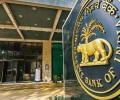
The Reserve Bank of India (RBI) will launch the Unified Lending Interface (ULI) nationwide in due course, aiming to transform India's lending sector, similar to how the Unified Payments Interface (UPI) revolutionised the payments ecosystem, Governor Shaktikanta Das said on Monday.

'There is no immediate threat to the government, and they would prefer the growth agenda.'

The Union Cabinet on Wednesday approved additional funding of up to Rs 3 lakh crore at a concessional rate of 9.25 per cent through the Emergency Credit Line Guarantee Scheme (ECLGS) for the MSME sector hit hard by the coronavirus crisis. The ECLGS was the second-biggest component of Rs 21 lakh crore comprehensive package announced by Finance Minister Nirmala Sitharaman last week.

The scheme is the biggest fiscal component of the Rs 20-lakh crore Aatmanirbhar Bharat Abhiyan package announced by Finance Minister Nirmala Sitharaman last month.

The finance minister chaired a meeting through video conference with major private banks and NBFCs to ensure effective rollout of ECLGS and uninterrupted liquidity to Indian MSMEs in this difficult time.

Finance Minister Nirmala Sitharaman on Tuesday held a review meeting on credit guarantee scheme with heads of public sector banks, and asked them to expedite loan disbursement under the Rs 3-lakh crore ECLGS for MSME sector, hit hard by coronavirus-induced lockdown. The meeting on Emergency Credit Line Guarantee Scheme (ECLGS) was held through video conference, and the minister appreciated the efforts of banks in execution of the scheme.
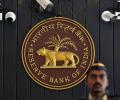
Rs 5,000 crore additional liquidity facility to be provided by the National Housing Bank to boost liquidity in housing sector, the RBI said.

This is part of the first batch of Supplementary Demands for Grants for 2020-21 moved by Finance Minister Nirmala Sitharaman in the Lok Sabha.

The repo rate has been left unchanged at 4 per cent, Governor Shaktikanta Das said while announcing the decisions taken by the central bank's MPC.

SBI was the top gainer in the Sensex pack, rallying over 10 per cent, followed by Kotak Bank, Dr Reddy's, UltraTech Cement, ITC and HDFC Bank. On the other hand, Axis Bank, Bharti Airtel, ICICI Bank, Maruti and HCL Tech were among the laggards.

On November 12, 2021, the Reserve Bank of India (RBI) decided to ring in uniformity in asset classification and income recognition across all lending institutions. Shadow banks, or non-banking financial companies (NBFCs), like commercial banks, are to test non-performing assets (NPAs) on a daily basis and upgrade them to "standard assets" only when interest and principal arrears are settled by borrowers. This is going to create all manner of headaches for shadow banks and their clientele. Says Y S Chakravarti, managing director and chief executive officer (CEO), Shriram City Union Finance: "NPA levels will go up, especially of small borrowers.

Of the total cash outgo Rs 40,000 crore is towards enhanced expenditure under Mahatma Gandhi National Rural Employment Guarantee Program and Rs 33,771.48 crore have been sought for direct benefit transfer under Pradhan Mantri Jan Dhan Yojana and National Social Assistance Programme.

RBI has invited case studies from participant banks by January 31.
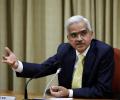
The Reserve Bank of India (RBI) on Friday decided to leave the benchmark interest rate unchanged at 4 per cent but maintained an accommodative stance, implying rate cuts in the future if need arises to support the economy hit by the Covid-19 pandemic.

'Banks have to be braver, willing to take more risks and give confidence to the customer,' observes Joydeep Ghosh.

Stressed MSME borrowers would be eligible for restructuring of debt, if their accounts were classified standard.

Even as you fight the ongoing health challenge, here are some tips to strengthen your personal finance in the time of coronavirus.

Once these banks start showing losses, they will not be able to pay dividends to the government nor pay taxes, which will further aggravate the situation for the government as its return on investment as an investor would be very negligible for the next few years, says M V Subramanian.
 © 2026 Rediff.com - Investor Information - Advertise with us - Disclaimer - Privacy Policy - Sitemap - Feedback - About us - Terms of use - Grievances