
The FM also said the government has proposed a joint panel of Corporate Affairs Ministry and CBDT for incorporation of income computation and disclosure standards.

Finance Minister Nirmala Sitharaman on Sunday proposed to exempt Minimum Alternate Tax (MAT) for non-residents who pay tax on presumptive basis.
The 2026-27 Budget, seeking to harmonise the government's imperative to grant certainty while ensuring a rational tax policy, had several notable announcements to usher in halcyon days, says Mukesh Butani.


'Among corporates, about 60% of income is now reported under the new tax regime.'
This Budget positions India's taxation ideology as not merely a revenue source but as a strategic catalyst for growth, inclusion and long-term confidence.
Budget 2026 sticks to fiscal discipline, shuns populist measures despite five key state elections coming up, but ends up rattling stock markets with a higher transaction tax on derivatives trading.

With the Union Budget three months away, major industry chambers have submitted to the government proposals on common taxes, seeking simpler compliance and a quicker resolution of tax disputes.

The Finance Ministry is unlikely to tinker with the 10 per cent Minimum Alternate Tax (MAT), the amount companies getting tax exemptions pay on their book profits, despite the industry chambers' demand to reduce the same.

The contrast with the old Income-Tax Act is stark. The 1961 law ran into 512,000 words; the 2025 one pares that down to 259,000. Chapters have been cut from 47 to 23, while sections have reduced from 819 to 536. One of the clearest changes is terminological. The confusing twin concepts of 'assessment year' and 'previous year' have been scrapped.

Foreign companies now pay less tax relative to their earnings than at any time in more than three decades. Foreign private companies paid 24.36 per cent of their pre-tax profit as tax in 2023-24, show numbers from the Centre for Monitoring Indian Economy (CMIE).

The revenue department had sent notices to FIIs.

Engineering Export Promotion Council (EEPC) of India has urged the Centre to extend lower corporate tax benefit to Limited Liability Partnerships (LLPs) and proprietary firms as it would make funds available with MSMEs and boost private investment cycle. A body of direct tax professionals also sought for reduction of tax burden on individuals and requested the government to raise the income tax exemption limit at Rs 2.5 lakh to Rs 4 lakh per annum in the upcoming budget for 2022-23 fiscal. EEPC India chairman Mahesh Desai claimed around 84 per cent of small businesses are being denied the benefit of lower corporate tax which was aimed at providing industrial units with more investible surplus.

India is in need of reinsurance capacity for many large risks.

Finance Minister has proposed to levy MAT of 18.5 per cent on the book profits of Special Economic Zone developers and units.
Bringing some cheer to the industry, Finance Minister Pranab Mukherjee on Monday lowered the surcharge tax limit on corporate tax to 5 per cent from 7.5 per cent, even while marginally raising the Minimum Alternate Tax.

The commerce ministry is proposing a host of direct and indirect incentives such as deferral of import duties and exemption from export taxes to revamp Special Economic Zones through a new legislation, an official said. In the Union Budget this year, the government proposed to replace the existing law governing Special Economic Zones (SEZs) with a new legislation to enable states to become partners in 'Development of Enterprise and Service Hubs' (DESH). The official said the commerce ministry has sought views of different ministries, including finance, on the new bill.

What the Budget could hold in store when it comes to tax rules like GAAR, MAT, PoEM, BEPS and ICDS.

The 30-share Sensex dropped 155 points to end at 27,735.

The IT and ITeS sectors expect a reduction in minimum alternate tax (MAT) and dividend distribution tax in the next month's Union Budget, a senior economist said on Tuesday.

In May 2014, FIIs were net buyers by Rs 20,225 crore (Rs 202.25 billion).
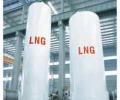
Natural gas/Liquefied Natural Gas imported for power generation by a power generation company is being fully exempted from basic customs duty Budget provisions.
The government will come out with new guidelines to revive export hubs, special economic zones (SEZs), which have lost sheen after imposition of certain levies and proposal to take away tax incentives.

The Finance Minister is slated to announce on Thursday the budget proposals for the next fiscal.

In the wake of the Union Budget proposals, developers of Special Economic Zones (SEZs) say the scheme is heading for an end, with investors' interest certain to reduce drastically.
Software body Nasscom expressed its disappointment over the budget as it has no fresh proposals for the USD 100 billion Indian IT-BPO sector even as the industry's request to exempt SEZ income from Minimum Alternative Tax has been ignored.

More developers may withdraw their special economic zones projects, as they lose tax-free status with imposition of minimum alternate tax and further burden through direct tax code, Export Promotion Council for Export-oriented Units and and SEZs said.

Changing the rules of the game for developers or units who have already committed funds upsets the financial calculations that guided the investment decision. It is another matter if the government makes it clear that newcomers will be subject to taxes.
The Budget, by itself, has a limited ability to finance the country's infrastructure needs. However, its ability to create an enabling environment for raising capital and project development is increasing.
The draft is in the form of a discussion paper, and has taken radical steps to improvise on the paper released in 2009 on the same issue.

Taxmen also claimed that the signature of Siddhartha on the letter being circulated on the social media under his name "does not match" with the record available with the department.

Decision on Kirti Parikh recommendations will be taken in due course

Electric power is the key input required for manufacture of caustic soda and accounts for almost 60% of the total cost of production.
Excise duty on formulations has increased from 4 per cent to 5 per cent.
The levy will be 10%, with an abatement of 50%, effectively bringing down the service tax levy to 5% on the tariff.

Companies pay MAT on the book profits that do not come under the tax net because of various exemptions and incentives.

"We are trying to bring the new taxation regime, which can last for another 50 years. Therefore, our endeavour is to see that new taxation system should include the basic features and time tested procedures of existing act, which have survived judicial security over the years."
Despite higher allocations, core sector likely to see reduced profitability.
Despite deregulation of petrol prices and a hike in retail prices of other regulated fuels in June 2010, oil marketing companies continue to incur.

The 2011-12 Budget has failed to bring cheer to the Indian IT sector as Finance Minister Pranab Mukherjee did not make any major announcements to boost the segment.
 © 2026 Rediff.com - Investor Information - Advertise with us - Disclaimer - Privacy Policy - Sitemap - Feedback - About us - Terms of use - Grievances