
From a premium benchmark index stock to a penny stock and now back to the mid-cap space, the bounce-back has surprised even seasoned market players, though most of them are still wary of taking a call on the stock.

Sustained foreign fund inflows and strengthening rupee are among the main reasons behind the market rally.
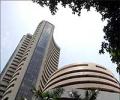
Nifty ended flat at 5041. Realty and energy stocks were in the doldrums, while consumer durables and pharma stocks looked up.

Analystsare showing optimism in Sensex EPS growth after double digit growth in the second quarter of current year.

Investors with shorter horizon of three-five years can also look at balanced funds and also those looking to invest lump sum money.

The Nifty advanced by 55 points to end at 5296. The market breadth was strong. Out of 3024 stocks traded on the BSE, there were 1723 advancing stocks as against 1181 declines.

The NSE Nifty ended at 48 points at 5,241. BSE market breadth was marginally negative. Out of 3,007 stocks traded, 1,548 declined while 1,342 advanced.
Equity funds' exceptional performance was obviously due to the stock market rally that was led by small and mid-cap stocks. Realty, banks and consumer goods companies emerged as top gainers.

With the Sensex again nearing 28,000 points, investors can make good returns with a one-two year horizon.

Investors continue to make losses on investments.

Stocks from the food processing sector and of companies trading in rice, dairy products, edible oils and food items outperformed markets by gaining 10-50 per cent.
Different sectors and funds have different levels of volatility. So their beta values will differ. However, beta should be used along with other factors like management expertise, future prospects and your investment horizon. The longer your investment timeframe, the lesser the volatility, and thus lower the risk.

Both the indices closed at five-month highs, led by financial services, IT and metal stocks, amid persistent foreign fund inflows.
Richard Heald, Vice-Chairman and Amitabh Malhotra, Director of Rothschild spoke about the volatile market, its implications and how this is an opportunity for Rothschild in India. Heald said that rising commodity prices are worrisome. The inflationary pressures are a concern. He advised that corporates should be open to all financing options. Investors in general want to invest in cash generating assets and commodities. With no decoupling other markets will impact India too.
Indian IT (information technology) firms are not unduly worried about the rupee rising against the dollar, at least for now.

The number of issues were the lowest since FY15, compared to 45 in FY18.

The Nifty shut shop at 5260, up 36 points. The market breadth, though, was weak. Out of 2918 stocks traded on the BSE, there were 1316 advancing stocks as against 1529 declines.
Atherstone Capital Markets has come up with India IPO Index, which is an index of companies listed on the stock exchanges.

Reflecting the bullish mood, all sectoral indices ended with gains, led by auto, oil and gas, FMCG, IT and teck. The broader NSE Nifty, after crossing the 10,600-mark, settled 68.40 points, or 0.67 per cent higher at 10,598.40.
Investors who are enamored by thematic funds (especially infrastructure funds) must not lose sight of the fact that diversified equity funds (which include opportunities funds) can make aggressive sectoral/thematic calls. More importantly, they can exit the sector/theme when valuations peak; this is something thematic funds cannot do because they are bound by their mandates to remain invested in the theme regardless of the valuations.
"With all kinds of stocks flying around, investing can't be a part-time job," says Bruce Greenwald, professor of finance at the Columbia Business School.

A significant rise in trading in small and mid-cap stocks over the past three months has pushed up the market share of the Bombay Stock Exchange by over 3 percentage points in the cash segment of the equity market.

In the Sensex pack, index heavyweight Reliance Industries fell 2.84 per cent to Rs 1,057.15 after reports that the company's oil assets may take a hit due to the government's imposition of cost controls on soaring petrol and diesel prices.
Though riskier than diversified equity funds, infrastructure funds make good investment sense.
The NSE Nifty ended at 2,795, up 37 points. The market breadth was fairly positive - out of 2,589 stocks traded, 1,551 advanced and 930 declined on Wednesday.

So far in September, the S&P BSE Small-cap index has gained nearly 3 per cent as compared to a modest 0.2 per cent dip in the S&P BSE Sensex.

The 50-share NSE Nifty after moving between 10,374.30 and 10,307.30 settled flat at 10,348.75, up 6.45 points, or 0.06 per cent.
Sources said non-banking financial companies of brokerage outfits had extended loans to clients by availing of bank credit. They could face serious trouble if auditors 'qualify' their books for extending loans on small- and mid-cap stocks as 'highly risky'. With just over a week to go before the end of the current financial year, most of the NBFCs are cleaning up their books before the audit to avoid being caught on the wrong foot.

Investment experts said the key to generating superior returns was "asset allocation" and taking money out of the table from themes that have performed well and into themes that are available at a discount.
Though there are various provisions under the Indian income tax laws which encourage M&A activities in India, some of these provisions need to be revisited to further step up the momentum. Further, the scope of some of the concessions needs to be extended to all sectors.
Information technology firms, which are already in trouble due to the slowdown in their key markets, are now facing payment delays. Many firms said collections cycles (receivables) are getting extended.
The market was expecting the October-December 2007-08 quarter to be subdued for most mid- and small-cap IT firms. However, most results fell below analysts' expectations.

'We think FY18 will end with a 10 to 12 per cent earnings growth, but FY19 will see a recovery to over 15 per cent.'
With the AIM (Alternative Investment Market) becoming increasingly popular as a fund raising destination, Indian companies are flocking to tap the opportunity provided by this sub-market of the LSE.

The Nifty ended with a gain of 58 points at 4,571. The index today surged to a high of 4,582 - up 107 points from the low of 4,475.
The benchmark index closed at 13,315.60 on September 18, after touching 12,558.14, below its May 2006-level. Interestingly, small-cap and mid-cap indices fell by over 15 per cent each, despite the Sensex and Nifty gaining 6 per cent since then.
The capital markets seem to have fallen off the government's agenda.
The Nifty touched its nine- month high in the morning and finally ended at 4,529 up 81 points. The market breadth was positive - out of 2,870 shares, 2,290 advanced, 541 declined and 39 were unchanged on Monday.
As per the new methodology, stocks must have an annualised traded value of at least Rs 1,000 crore for their inclusion in the BSE 100 index at each semi-annual rebalancing
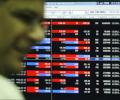
After touching a fresh all-time low against the US dollar on Thursday, the rupee jumped 27 paise to end at 68.46.
 © 2026 Rediff.com - Investor Information - Advertise with us - Disclaimer - Privacy Policy - Sitemap - Feedback - About us - Terms of use - Grievances