
The reduction in the number of loan accounts and the outstanding amount during the last financial year is a cause of concern and stress for microfinance institutions (MFI), Secretary, Department of Financial Services, M Nagaraju said on Thursday, highlighting "inefficiency" in MFIs that leads to higher rates of interest.

The banking sector could see better loan growth in the third quarter of financial year 2026 (Q3FY26) with improved net interest margins (NIMs), though the full impact of latest rate cuts will be largely felt in the fourth quarter. There may be lower slippage in unsecured loans and microfinance institutions (MFIs) along with steady recovery trends, which should lower credit cost.

The Indian banking sector could be due for a rise in profitability after several quarters of net interest margin (NIM) compression. The Q2FY26 results suggest NIMs have bottomed out.

'When the BJP wanted the election to focus on 'ghuspathiya' and promises that look like pies in the sky, we forced them to talk about jobs, giving free 125 units of power, and addressing women's indebtedness.'

New regulations by the Reserve Bank of India on microfinance have prompted MFIs to go for a makeover.

Mint Road, on December 21, 2023, flagged the role of self-regulatory organisations (SROs) in strengthening the compliance culture in regulated entities (REs) and providing a consultative platform for policymaking. It also decided to issue an omnibus framework for SROs.
Towards the end of February, the Reserve Bank of India (RBI) restored the risk weighting on banks loans to non-banking financial companies (NBFCs; including to microfinance institutions, or MFIs) to 100 - back to its November 2023 position - from 125. It is only a partial relief though. "Higher risk weighting on unsecured lending continues to be in place while the same on bank funding to NBFCs has been done away with. "This is a positive step by RBI," says Rajiv Sabharwal, managing director (MD) and chief executive officer (CEO), Tata Capital.
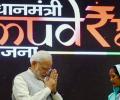
The government on Friday doubled the limit of Mudra loan amount under the Pradhan Mantri Mudra Yojana (PMMY) to Rs 20 lakh from Rs 10 lakh under a new 'Tarun Plus' category to promote entrepreneurship in the country.

ICICI Prudential Life Insurance (IPRU) disappointed the market even though some analysts said the Q3FY25 results were in line. Most analysts cut margin estimates. The insurer reported M9FY25 growth of 8.5 per cent year-on-year (Y-o-Y) in value of new business (VNB) premium to Rs 1,575 crore, while total annual premium equivalent (APE) grew 27.2 per cent to Rs 6,910 crore.

Partha Pratim Sengupta, who will be taking charge as the MD & CEO of Bandhan Bank in early November, has his task cut out. The Kolkata-based lender, which converted itself from a microfinance institution to a universal bank, is in its 10th year of operation. The bank was able to cut down the share of the micro loan book over these years.

In the Union Budget for Financial Year 2023-24 (FY24), Finance Minister Nirmala Sitharaman had held forth on the need for better governance and investor protection in the banking sector. She had proposed certain amendments to the Reserve Bank of India Act (RBI Act), 1934; the Banking Regulation Act (BR Act), 1949; and the Banking Companies (Acquisition and Transfer of Undertakings) Act, 1970.
The Reserve Bank of India (RBI) has barred four non-banking finance companies (NBFCs), including two microfinance institutions (MFIs), from sanctioning and disbursing loans for charging exorbitant interest rates to the borrowers. These four entities are Asirvad Microfinance, Arohan Financial Services (also an MFI), DMI Finance, which provides personal, consumption, and micro, small and medium enterprises loans, and Flipkart co-founder Sachin Bansal's Navi Finserv, which offers home and personal loans. The ban will take effect on October 21 to "facilitate closure of transactions in the pipeline", the regulator said in a statement.

The asset quality of microfinance portfolios worsened in the quarter ending June 2024 due to the impact of heatwaves on borrowers' incomes and collections, coupled with rumours of loan waivers, according to Sa-Dhan. Jiji Mammen, executive director and chief executive officer of Sa-Dhan, said loans with 90+ days past due (dpd) rose to 1.2 per cent in June 2024, compared to 0.9 per cent in June 2023. The 90+ dpd also increased from 1.16 per cent in March 2024.

The current crisis for MFIs is far worse than what they faced in 2006 when farmers' suicides resulted in a conflict with the state and MFIs had responded by reducing interest rates.

A Rs 525-crore contingency provision during the July-September period led to a 19 per cent fall in IndusInd Bank's share price on Friday (October 25). Contingency provisions are generally made when a lender expects more bad loans in the coming quarters. Shares of the bank on Tuesday (October 29) declined 1.53 per cent to settle at Rs 1,038.2 apiece on the BSE.
Finance Minister Nirmala Sitharaman on Tuesday announced the doubling of the upper limit of Mudra loans to Rs 20 lakh to promote entrepreneurship in the country. "The limit of Mudra loans will be enhanced to Rs 20 lakh from the current Rs 10 lakh for those entrepreneurs who have availed and successfully repaid previous loans under the 'Tarun category', she said while presenting the Budget in the Lok Sabha.

'The Casa ratio is at 33.4 per cent, which has to keep improving. Right now, there is a bit of liquidity pressure in the market.'

Commercial banks have turned cautious in lending to smaller microfinance institutions (MFIs), which has compelled the latter to borrow from non-banking financial companies (NBFCs) at much higher rates. Recently Reserve Bank of India (RBI) Deputy Governor M Rajeshwar Rao slammed micro lenders for increasing their margins "disproportionately" and said these lenders were quick to pass on the increased cost to the borrowers but reluctant to pass on the benefits under the new regime, where margins are not capped.

Private sector lender Bandhan Bank on Friday said its founder, managing director and CEO Chandra Shekhar Ghosh has tendered his resignation. Ghosh would retire from the services of the bank as MD and CEO upon completion of his current tenure on July 9, 2024, the bank said in a regulatory filing. "After leading the bank for almost a decade, including three consecutive tenures as MD & CEO, I feel that the time has now come for me to assume a larger strategic role at Bandhan group level," Ghosh said in a letter addressed to the board.

'There will be 200 ITIs developed as hubs, while 800 will be developed as spoke, connected with five National Skill Training Institutes.'

In mid-March this year, the finance ministry asked state-run banks to review their gold loan portfolio for the two-year period between January 1, 2022, and January 31, 2024. This business had grown at a fast clip. Reserve Bank of India (RBI) data has it that it grew 15 per cent to Rs 1 trillion in FY24. Now, in recent times, any kind of exuberance in financial services has seen the authorities swoop down - be it pushing the lines on governance or unsecured credit.

The top 50 exposures, amounting to Rs 7.8 trillion, of government-registered non-banking financial companies (G-NBFCs) constitute about 40 per cent of corporate credit within the NBFC sector, indicating concentration risk, according to the Reserve Bank of India's report "Trend and Progress of Banking in India 2022-23". Notably, all the 50 are tied to the power sector, a domain fraught with inherent challenges, the report said. The report highlighted recognising the escalating systemic importance of G-NBFCs, the Prompt Corrective Action (PCA) framework had been expanded to include G-NBFCs excluding those falling within the base layer.

'We need to be far more careful given the fact that while this is group lending, it's essentially unsecured.'
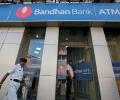
It is 10 years since Bandhan Financial Services became the first microfinance institution (MFI) to receive the universal bank licence. A year later, in 2015, it started operations. Bandhan's entry into banking was seen as a vote of confidence by the Reserve Bank of India (RBI) for the country's microfinance sector. Subsequently, the RBI awarded small finance bank licences to nine MFIs.

India has a huge untapped population which doesn't have facilities for financial aid and insurance, and it is perhaps plausible to look at the option of having niche players catering to smaller sectors akin to non-banks and microfinance institutions in lending, said Rakesh Joshi, member (Finance & Investment), Insurance Regulatory and Development Authority of India (Irdai). Speaking at the Business Standard BFSI Insight Summit, Joshi said, "Today, most of our insurance companies operate at a national level. There is arguably a case for having differentiated operations, which cater to niche sectors the same way we have non-banking financial companies (NBFC) and microfinance institutions in lending." "The capital requirement for niche players may not be as large as those having national ambitions. "Enabling these niche players, which require lower capital, will enhance the penetration in areas which hitherto had not seen traction from large players," he said.
Bandhan Financial Services, the first microfinance institution in the country to win a bank licence, is also one of the youngest entities to be allowed to enter the banking space.
As many as 30 rural borrowers have committed suicide in Andhra Pradesh in the last few months following their inability to pay back loans taken from microfinance institutions at exorbitant interest rates.

The Reserve Bank of India (RBI) on Monday allowed microfinance lenders to fix interest rates on loans with a rider that those should not be usurious for the borrowers. A microfinance loan is defined as a collateral-free loan given to a household having an annual income of up to Rs 300,000. Each regulated entity (RE) should put in place a board-approved policy regarding pricing of microfinance loans, said the 'Master Direction - Reserve Bank of India (Regulatory Framework for Microfinance Loans) Directions, 2022'. In the past, the central bank used to announce the rates on quarterly basis.
In its first ever list of World's Top 50 Microfinance Institutions, the US business magazine has named Bangalore-based Bandhan at the second position.

Bansal has picked up a majority stake in Chaitanya Rural Intermediation Development Services, a company which runs microfinance institution Chaitanya India Fin Credit.

To further strengthen the supervision on non-banking entities (NBFCs), the Reserve Bank on Tuesday issued revised guidelines on a Prompt Corrective Action (PCA) framework for such companies, excluding government-owned ones, effective from October 1, 2022, on the lines of what it had introduced for banks in 2002. The RBI came up with stricter supervisory norms under the PCA framework for banks after their bad loans mounted and balance-sheets bled badly. This involved restricting them from fresh lending, brand opening and, hiring, among others. The RBI said the revised PCA framework is also applicable to all deposit-taking non-banking financial companies (NBFCs), all non-deposit taking NBFCs in the middle, upper and top layers, including investment and credit companies, core investment companies, infrastructure debt funds, infrastructure finance companies and microfinance institutions.

One of the factors behind the rise in securitisation deals was State Bank of India's (SBI) decision to buy portfolio worth Rs 45,000 crore from NBFCs

For smaller MFIs, resuming operations is more difficult because they haven't got any fresh bank credit sanctioned from their lenders.

The Navi lending app, launched in May, provides instant loans of up to Rs 5 lakh, with repayment tenures of up to 36 months.

The two-wheeler sector has been underperforming its peers on the volumes front for over five quarters now. Even in the March quarter, Bajaj Auto and Hero MotoCorp posted a 17-24 per cent YoY decline in volumes, the sharpest in the listed auto universe. The ongoing impact of frequent price hikes, all-time high fuel prices, and muted rural sentiment has led to the lacklustre showing by two-wheeler makers. What has aggravated the situation for two-wheeler companies, which get almost all their sales from the internal combustion engine or ICE-based units, is the traction for electric two-wheelers (EV).
Ending days of suspense, the Reserve Bank on Wednesday granted banking licences to infrastructure financing firm IDFC and microfinance institution Bandhan from among 25 applicants that included corporate heavyweights ADAG Group, Aditya Birla Group and Bajaj Group.
A large number of these applicants are already employed in top positions at public- and private-sector banks, say sources at Bandhan.
Bandhan plans to stick to its Grameen model, creating a unique hybrid model of banking.
Activists created a climate of opinion against MFIs, while politicians capitalised on the frenzy.
One of the hurdles for MFIs towards becoming banks is an unsecured loan portfolio.
 © 2026 Rediff.com - Advertise with us - Disclaimer - Privacy Policy - Sitemap - Feedback - About us - Terms of use - Grievances