
India has put curbs on wheat exports through the government route, starting November last year. This comes amid a surge in domestic prices of the cereal. In December, India exported 391 tonnes of wheat to Bangladesh and Bhutan. In November 2022, it had exported 375 tonnes of wheat only to Bhutan.

After a ban on wheat exports, India's cereal grain procurement for the central pool was struggling to rise significantly until the middle of last week, informed trade and market sources. Farmers have been holding on to their produce as the price of wheat in the open market recouped some of the losses it suffered in the aftermath of the ban. According to trade estimates, around 18.12 million tonnes (mt) of wheat was procured in the central pool up until May 18. Before the export ban was enforced on May 13, it was 17.96 mt.
The move came a day after Parliament approved two agriculture sector-reform bills which have been bitterly opposed by the opposition parties like Congress and TMC.

He assured fears of food shortages were far-fetched.

The govt is increasing the duty to 15 per cent from the existing 10 per cent.
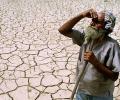
The arrival of the June-September rains has been delayed.
The Prime Minister tends to keep such decisions close to his chest.
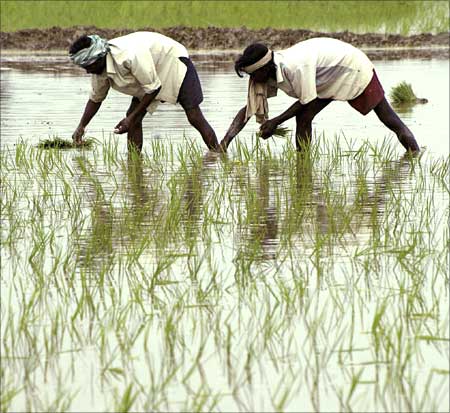
'It is quite natural for our farmers to go for rice and cane when both power and water are almost free.'

Most of the extra spending in the Budget is in fact an accounting entry that shifts the cost of an interest subsidy to the agriculture Budget that was previously borne by the finance ministry

Prime Minister Narendra Modi's landslide election in 2014 raised hopes he would draw a line under India's socialist past, cut welfare and reduce the government's role in business.

India does not have a unified regulatory regime to counter Ponzi, or pyramid, schemes whose operators typically grab new deposits to meet their promise of guaranteed returns to existing savers, point out Manoj Kumar and Mayank Bhardwaj.
 © 2026 Rediff.com - Investor Information - Advertise with us - Disclaimer - Privacy Policy - Sitemap - Feedback - About us - Terms of use - Grievances