
Indian benchmark stock indices, Sensex and Nifty, declined for a second consecutive day, primarily due to selling pressure in IT, oil & gas, and select banking shares. Concerns over the US-Iran negotiations and a sluggish monsoon further dampened market sentiment.

Indian equity benchmark indices Sensex and Nifty declined in early trade, driven by persistent concerns over the unresolved US-Iran situation and continued outflows from foreign institutional investors.
Indian benchmark indices, Sensex and Nifty, experienced a decline in early trade due to uncertainty surrounding the upcoming US-Iran negotiations in Doha. Foreign fund outflows and a dip in major IT stocks further contributed to the market's cautious sentiment, despite mixed performance in global markets.

Market benchmark indices Sensex and Nifty drifted lower in early trade on Monday amid renewed hostilities between the US and Iran. The 30-share BSE Sensex declined 63.65 points to 77,047.63 during initial trading. The 50-share NSE Nifty went marginally up by 16.55 points to 24,070.20. Later, the BSE benchmark dropped 246.54 points to 76,853.93, and the Nifty dipped 50.55 points to 24,005.45. Track Sensex, Nifty on June 29.

Indian benchmark indices Sensex and Nifty rallied in early trade, driven by a positive trend in global markets, cooling crude oil prices following a US-Iran peace deal, and fresh foreign fund inflows.

Indian benchmark indices, Sensex and Nifty, experienced a significant drop of over 1 per cent, driven by a bearish trend in global markets, weakness in HDFC Bank and IT firms, and fresh foreign fund outflows.

Indian benchmark indices Sensex and Nifty rallied in early trade, driven by a significant decline in Brent crude oil prices, which fell below the USD 73 per barrel level, and positive trends observed across most Asian equities.
Indian benchmark stock indices, Sensex and Nifty, advanced for the second consecutive day, driven by softening crude oil prices and a positive trend in global markets. Despite some profit-taking in IT and metal shares, auto stocks outperformed, contributing to the overall gains.
Indian benchmark indices Sensex and Nifty closed lower for the second consecutive day, driven by investor caution over conflicting geopolitical signals from West Asia and fresh foreign institutional investor (FII) outflows.

Indian benchmark indices Sensex and Nifty experienced a significant downturn in early trade, ending a five-day rally, primarily due to heavy selling in IT firms following a revenue growth guidance cut by global consulting giant Accenture.
Indian equity benchmark indices Sensex and Nifty closed lower on Thursday, driven by escalating tensions between the US and Iran, persistent foreign fund outflows, and concerns over rising US inflation.

Indian stock market benchmark indices Sensex and Nifty rebounded in early trade, driven by a decline in crude oil prices, supportive global cues, fresh foreign fund inflows, and buying in blue-chips like Reliance Industries and HDFC Bank. Track Sensex, Nifty movement on June 22, 2026.

Eighteen of India's 28 states exceeded the fiscal deficit ceiling of 3 per cent of GSDP in FY25, a deterioration comparable to the Covid year of 2020-21, according to the Comptroller and Auditor General (CAG). The report also noted a decline in states reporting a revenue surplus, with Bihar, Mizoram, and Telangana moving into deficit.

Indian benchmark indices Sensex and Nifty recovered early losses to trade higher, supported by encouraging developments on the geopolitical front, specifically the US-Iran peace deal, and easing crude oil prices.
Indian benchmark indices, Sensex and Nifty, closed lower, primarily due to a sharp sell-off in IT stocks, a fresh surge in crude oil prices, and sustained outflows from foreign institutional investors. The Sensex dropped over 300 points, while the Nifty declined by 77.95 points.
Analysts predict that developments in West Asia, their impact on crude oil prices, and the trading activity of foreign institutional investors (FIIs) will be crucial factors influencing the Indian stock market this week.
Indian equity markets experienced a significant decline in early trade, with the BSE Sensex and NSE Nifty dropping, as escalating geopolitical tensions in West Asia and a surge in global oil prices dampened investor sentiment. Track Sensex, Nifty50 movement and key market drivers for May 8, 2026.

Indian benchmark indices, Sensex and Nifty, experienced subdued trading and turned flat on Tuesday as investors engaged in profit-booking following a recent rally, compounded by weak Asian market trends and fresh foreign fund outflows.

The report notes that equities had faced pressure from elevated valuation premiums, subdued nominal gross domestic product (GDP) and earnings growth, sustained foreign portfolio investor (FPI) selling, artificial intelligence (AI) infrastructure euphoria, and external shocks including US tariffs and a spike in crude oil prices due to geopolitical tensions in West Asia. However, several of these factors are now reversing.
Indian stock market benchmark indices, Sensex and Nifty, experienced declines in early trade due to escalating tensions between the US and Iran, which led to a surge in crude oil prices and weak global equity trends.

'India has initiated a bear market and we will still go lower. It has nothing to do with the economy.'

Indian benchmark equity indices Sensex and Nifty closed higher, recovering from previous losses, driven by a global market rebound, a pause in Israel-Iran hostilities, and a rally in bank stocks.

Donald Trump agreed with Xi Jinping's assessment of the US as a 'declining nation,' but attributed the decline to the policies of the Biden administration.

Indian benchmark indices Sensex and Nifty experienced a significant slump in early trade, mirroring a sharp decline in global equities and a fresh spike in crude oil prices, exacerbated by simmering tensions in West Asia and a global unwinding of the AI-led rally. Track how sensex, Nifty fared on June 8.

Indian stock markets extended their gains for a second consecutive session, with the Sensex closing 736 points higher, driven by a global equity rally and a significant drop in crude oil prices following the finalisation of a peace deal between the US and Iran to end their 107-day conflict and reopen the Strait of Hormuz.
Indian benchmark indices Sensex and Nifty surged significantly in early trade, mirroring a global rally and a sharp decline in crude oil prices following the finalisation of a peace deal between the US and Iran to end their 107-day conflict and reopen the Strait of Hormuz.
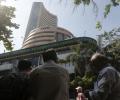
Indian stock market benchmarks, Sensex and Nifty, saw gains in early trading, driven by anticipation surrounding the Reserve Bank of India's monetary policy decision, despite mixed global cues and significant FII outflows.
Indian benchmark indices, Sensex and Nifty, extended their rally for the fourth consecutive day, driven by a significant drop in crude oil prices and strong performance from IT firms, despite mixed global cues.
Indian benchmark indices Sensex and Nifty experienced a significant slump, with the Sensex tumbling 719.08 points, driven by escalating West Asian tensions, a sharp rise in crude oil prices, and a global sell-off in technology stocks.

The Indian stock market mythos of 36 years is wrapped in a diaphanous negligee, lashed together by a delicate, etheric sash of 1.6 bull markets. To make money from here on will require a ground invasion, trench by trench, rather than carpet bombing. Way more difficult, points out Shankar Sharma.

Indian benchmark indices Sensex and Nifty climbed in early trade, driven by a significant drop in crude oil prices following reports of a potential 60-day ceasefire extension between the US and Iran, coupled with positive global market trends and buying in IT stocks.

Indian equities on Dalal Street saw volatility as global market trends and fresh tariff concerns linked to Donald Trump impacted investor sentiment. Track Sensex, Nifty50 movement and key market drivers for April 2, 2026.
Indian equity benchmark indices Sensex and Nifty experienced a significant tumble in early trade, with the Sensex tanking nearly 700 points, driven by uncertainty surrounding US-Iran negotiations, a fresh spike in crude oil prices, and persistent foreign fund outflows.
Indian equity benchmark indices, Sensex and Nifty, tumbled nearly 2 per cent for the fourth consecutive session, driven by elevated crude oil prices, escalating US-Iran tensions, unabated foreign fund outflows, and a depreciating rupee.
Indian equity benchmark indices, Sensex and Nifty, tumbled nearly 2 per cent for the fourth consecutive session, driven by elevated crude oil prices, escalating US-Iran tensions, unabated foreign fund outflows, and a depreciating rupee.

Indian benchmark indices Sensex and Nifty experienced a decline in early trade, mirroring weak global market trends and persistent outflows from foreign institutional investors (FIIs), exacerbated by ongoing geopolitical uncertainties in West Asia.
Indian benchmark stock indices, Sensex and Nifty, closed nearly 1 per cent lower due to surging crude oil prices, weak global market trends, and significant foreign fund outflows, with geopolitical tensions and inflation concerns further dampening investor sentiment.

The Indian rupee depreciated significantly against the US dollar, reaching a new all-time low due to rising oil prices, a strong dollar, and ongoing geopolitical concerns. Domestic equity market declines and foreign investment outflows further contributed to the rupee's weakness.
Indian benchmark indices Sensex and Nifty surged significantly in early trade, tracking a global rally fueled by US President Donald Trump's declaration of an end to the war with Iran and a subsequent drop in crude oil prices.

In April alone, they snapped up shares worth Rs 19,664 crore, recording their biggest buy since October 2024.
