
The Adani group will have understood the fragility of investor trust in the group. The group needs to improve transparency including in areas like share-ownership (which they have long and mistakenly believed can be side-stepped) and related-party transactions, among others, Amit Tandon and Hetal Dalal point out.

The RBI's policy decision would be the major event driving trading sentiment in the equity market this week, while global cues, foreign funds movement and crude oil prices will be the other key factors to watch out for, analysts said. Markets have been witnessing a rebound recently. However, the move lacks decisiveness amid lingering challenges like global policy tightening due to soaring inflation and geopolitical tensions, they added. "RBI policy, global macro numbers and crude oil prices will set the trend for this week.
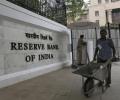
Though the economy has steadily gained momentum and remained resilient since the second quarter of the current fiscal, the Omicron variant of coronavirus remains the major challenge along with rising inflation pressures, says the Reserve Bank in its second financial stability report. In the foreword to the report released on Wednesday, RBI Governor Shaktikanta Das notes that after the destructive second wave in April-May 2021, the growth outlook has progressively improved, though there are headwinds from global developments and more recently from the Omicron virus. A stronger and sustainable recovery hinges on the revival of private investment and shoring up private consumption, which unfortunately still remain below their pre-pandemic levels, he notes.

In a tightening cycle, a premature pause in monetary policy action would be a costly policy error, Reserve Bank Governor Shaktikanta Das opined while voting along with five other members of the MPC for raising the key lending rate by 35 basis points earlier this month, according to the minutes of the meeting released on Wednesday. Prior to the December hike in repo rate, the RBI had raised the key short-term lending rate by 190 bps in four tranche.

The CAD is a critical indicator of the macroeconomic health and represents the gap between the overall foreign exchange expended and received in the economy.

The Indian economy is expected to grow around 10 per cent during the current financial year on the likelihood of fewer COVID-19-linked supply disruptions and buoyancy in the global economy, said Poonam Gupta, director general of economic think-tank NCAER. The real challenge, however, would be to sustain a growth rate of 7-8 per cent in years to come, she said. "We could see annual growth in the ballpark range of about 10 per cent. "The reasons for this perceived optimism are: fewer supply disruptions; increased pent-up demand in the traditional and contact-intensive services; and a buoyant global economy.

The correction seen in the stock markets thus far is insufficient and there are significant downside risks, given the way macroeconomic data is shaping up, a Nomura equity strategist said on Thursday. "The markets are trying to look through the current stress we see in the macros. There are potential risks to the market. "Our estimates assume no major impact on growth and earnings. "The market should have been at least 5 per cent lower than it is now.

Economist Jayati Ghosh noted that the word 'freebies' indicates the class position of those who use it.

TCS is confident of achieving a double-digit revenue growth in the current fiscal and will be targeting a similar performance in FY24 as well, a senior executive said on Tuesday. The largest IT services exporter's ability to achieve the number in FY24 will hinge on how the macroeconomic situation, including geopolitical tensions, commodity price pressures, inflation and financial tightening worries, play out, chief operating officer N Ganapathy Subramaniam told PTI. "(For) this year (FY23), probably we are there (double-digit growth).

Domestic macroeconomic data, RBI policy and developments related to the Russia-Ukraine war would be major driving factors for the stock market this week, analysts said. Moreover, FPI investment and trends in crude oil would also influence the trading sentiment, they added. "This week, the RBI credit policy will be a critical factor for Indian markets.

Retail investment demand for gold bars and coins as well as central bank purchases pushed the global gold demand by 28 per cent to 1,181.5 tonnes in the September quarter, according to the World Gold Council report. The total global demand stood at 921.9 tonnes during the July-September quarter of 2021, the World Gold Council's 'Gold Demand Trends Q3 2022' showed on Tuesday. Investment was down 47 per cent year-on-year as gold backed Exchange Traded Fund (ETF) investors responded to a challenging combination of higher interest rates and a strong US dollar with significant outflows of 227 tonnes.

The Centre could better its fiscal deficit at 6.6 per cent of GDP in this financial year on stronger-than-expected revenue buoyancy, even if the budgeted disinvestment target is not met, Fitch Ratings has said. The international rating agency had last week kept the sovereign rating unchanged at 'BBB-' with a negative outlook, and said that the risks to India's medium-term growth outlook are narrowing with rapid economic recovery from the pandemic and easing financial sector pressures. In an email interview with PTI, Fitch Ratings Director (Asia-Pacific Sovereigns) Jeremy Zook said the two key positive triggers that could lead to a revision of the outlook to stable are implementation of a credible medium-term fiscal strategy to lower debt burden and higher medium-term investment and growth rates without the creation of macroeconomic imbalances, such as from successful structural reform implementation and a healthier financial sector.

In the Sensex pack, HDFC, ONGC, Bharti Airtel, Titan, Asian Paints, Mahindra and Mahindra and TCS were the prominent gainers. On the other hand, ICICI Bank, IndusInd Bank, NTPC, UltraTech Cement, Tech Mahindra and SBI were among the major laggards. On the other hand, HCL Tech, Tech Mahindra, HUL, Bharti Airtel and ICICI Bank were trading in the red.

Retail inflation dropped marginally to 7.01 per cent in June mainly due to slight easing in prices of vegetables and pulses, though it still remained above the Reserve Bank's comfort level for the sixth month in a row. The consumer price index (CPI) based inflation stood at 7.04 per cent in the preceding month of May and 6.26 per cent in June 2021. Inflation in the food basket in June 2022 was 7.75 per cent, compared to 7.97 per cent in the previous month, as per the National Statistical Office (NSO) data released on Tuesday.

HDFC was the top gainer in the Sensex pack, climbing nearly 4 per cent, followed by PowerGrid, Sun Pharma, Tata Steel, Tech Mahindra and Bajaj Finserv. NSE Nifty surged 234.75 points to 17,401.65.

The government should not go in for an 'aggressive fiscal consolidation' in the upcoming Budget as global risks have not abated, RBI Monetary Policy Committee (MPC) Member Ashima Goyal said on Wednesday. Goyal further said subsidies are expected to come down as food and energy inflation moderates. WPI inflation in food articles in November was 1.07 per cent against 8.33 per cent in the previous month.

Prime Minister Narendra Modi Wednesday said the International Monetary Fund (IMF) sees India as a "bright spot" in the global economy and as per the World Bank, India is in a better position to deal with the global headwinds than many other countries. This is because of India's strong "macroeconomic fundamentals", Modi said while virtually addressing the inaugural function of the 7th edition of Invest Madhya Pradesh-Global Investors Summit in Indore. In the past eight years, the government has increased the speed of reforms and removed many hurdles in the way of investments.

The government on Wednesday reconstituted the Economic Advisory Council to the Prime Minister (EAC-PM) under existing chairman Bibek Debroy, for a period of two years. V Anantha Nageswaran has been dropped, Rakesh Mohan (former deputy governor of RBI), Poonam Gupta (director general of NCAER) and TT Ram Mohan (professor, IIM Ahmedabad) have been appointed as part-time members of the reconstituted EAC-PM. The other part-time members of the Council include Sajid Chenoy, Neelkanth Mishra and Nilesh Shah.
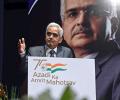
Reserve Bank Governor Shaktikanta Das on Thursday described cryptocurrencies as "clear danger" and said that anything that derives value based on make believe, without any underlying, is just speculation under a sophisticated name. The government is in the process of finalising a consultation paper on cryptocurrencies after gathering inputs from various stakeholders and institutions. Reserve Bank of India (RBI) has been flagging concerns about cryptocurrencies, which are seen as a highly speculative asset.

Amazon India has decided to shut down 'Amazon Distribution', according to sources. This follows its recent decision to shut its food delivery and edtech offerings. The moves are part of the annual operating planning review process amid global macroeconomic uncertainty. The e-commerce giant is looking to focus on its core businesses, sources said.

Indian technology industry has a "big opportunity" despite global macroeconomic challenges, said Rishad Premji, chairman of IT services firm Wipro, on Wednesday as he spoke about how Covid-19 had changed work. "My confidence is driven by two things: the rapid pace of digitisation across the world, and the shift in the mindset of stakeholders who engage with us as an industry," said Premji in Bengaluru while addressing industry leaders and civil servants at the Invest Karnataka 2022, the state's Global Investors Meet (GIM). Businesses are using technology for customers and employees: a trend marked by the shift to cloud computing and leverage of data.

Asian Paints was the top loser in the Sensex pack, shedding 2.66 per cent, followed by Axis Bank, HUL, Wipro, M&M, HDFC and Bharti Airtel. On the other hand, TCS, Infosys, L&T, Tech Mahindra and HDFC Bank were among the gainers.

Technology giant Apple, which recorded $83 billion in revenue for the quarter ended June 2022, has reported a "near doubling" of revenue in India. Announcing financial results for its fiscal 2022 quarter ended June 25, Apple on Thursday said it has achieved a revenue record of $83 billion, up 2 per cent year-over-year. Apple CEO Tim Cook, during an earnings call, said the 83 billion dollar revenue was "better than we expected despite supply constraints, strong foreign exchange headwinds and the impact of our business in Russia."

Coming Wednesday, Finance Minister (FM) Nirmala Sitharaman will present the 2023 Union Budget - the last full Budget ahead of the 2024 Lok Sabha elections. While India exited 2022 as a relatively bright spot in the global economy, the FM will endeavour to present a Budget that insulates India's economy against global headwinds and recession in advanced economies, while sticking to the path of fiscal consolidation. In this, she is being helped by her core team of trusted advisors.

India's macroeconomic situation is certainly better than what it was a year ago, eminent economist Pinaki Chakraborty said on Monday, while expressing hope that the country will be back on the path of economic growth if there is no major third wave of the COVID-19 pandemic. In an interview with PTI, Chakraborty, who is the director of the National Institute of Public Finance and Policy (NIPFP), said that inflation may remain at an elevated level as there was a significant fiscal and monetary expansion in the last 18 months. "The current macroeconomic situation is certainly much better than what it was one year back. We are seeing recovery in most sectors," he said. Chakraborty noted that COVID-19 vaccination has been going on at a very fast rate in India.

The speed at which he led the central bank in different areas -- ranging from internal reorganisation to inflation fighting, stabilising the currency, taking on rogue corporations, cleaning up bank balance sheets, and opening the sector -- makes one believe that Rajan knew he had only three years to do his job. A fascinating excerpt from Tamal Bandyopadhyay's MUST-READ Roller Coaster: An Affair with Banking.

'It's a big technology company and may offer good remuneration, but stability in my career is equally important to me.'

Mark Zuckerberg, founder and CEO of Meta, summed it up well as he explained the reason for the company sacking 13 per cent of its employees. He said no one predicted that the boom for digital services during the Covid pandemic would die out. "Many people predicted this would be a permanent acceleration that would continue even after the pandemic ended.
Titan was the top gainer in the Sensex pack, rising over 3 per cent, followed by M&M, Reliance Industries, Axis Bank, TCS, Maruti and Infosys. NSE Nifty surged 122.10 points to 15,885.15.

The total amount of money various entities have raised through the private placement route is at its lowest since 2014. They raised a total of Rs 1.96 trillion in the first five months of 2022, revealed the numbers from PRIME Database. It is down 23.4 per cent from the Rs 2.56 trillion raised in the corresponding period in 2021.

Domestic equities will be mainly driven by global market trends, foreign institutional investors' movement and developments around new Covid variant Omicron this week, according to analysts. Markets traded under pressure last week following weak global cues and overall investor sentiment remained downbeat throughout the week, they observed. "Global markets, Omicron variant, dollar index and FIIs' behaviour will be key factors to drive the market this week," said Santosh Meena, head of research, Swastika Investmart Ltd. One major event last week was US Federal Reserve's announcement that it will end bond-buying from March, and it also signalled starting rate hike cycle thereafter.

The most important positive of India's stealth bull market is earnings growth across different sectors, explains Debashis Basu.

The Reserve Bank of India on Friday raised the benchmark lending rate by 50 basis points to 5.40 per cent to tame inflation.

'Higher than expected inflation in the US or the European Union, faster than expected tightening by the major central banks, break out of a war in Europe, and withdrawal of portfolio equities from the emerging markets are factors which can result in equity market corrections.'

Investments by private equity and venture capital funds (PE/VC) declined by 22 per cent in March to $4.6 billion spread across 107 deals, a report said on Wednesday. The deal activity showed an increase of 54 per cent by value at $15.5 billion across 360 deals, largely on the back of heightened activity in the startup space, the monthly report by IVCA and EY said. "While India's position as an attractive destination for PE/VC investments is expected to remain strong in 2022 given its high growth and macroeconomic and policy stability, the continuing geopolitical tensions, rising inflation, quantitative tightening by the US FED and inversion in the US yield curve are potential downside risks, making investors circumspect," Partner at EY Vivek Soni said.

As large-scale layoffs begin at Facebook's parent company Meta, employees on work visas such as H-1Bs are now faced with uncertainty over their immigration status, with CEO Mark Zuckerberg acknowledging "this is especially difficult if you're here on a visa" and offering support to those impacted. Meta announced that it is laying off 11,000 employees or 13 per cent of its workforce, with Zuckerberg describing it as "some of the most difficult changes we've made in Meta's history." US-based technology companies hire a large amount of H-1B workers, the majority of whom come from countries such as India.

Reliance Industries, the Tata group, Bharti Airtel and Aditya Birla are among Indian conglomerates that have hedged their revenue and costs linked to the US dollar, giving them financial cover as the rupee fell past 80 against the greenback on Tuesday.

The RBI on Wednesday cautioned that while the Indian economy appears capable of weathering the deterioration in geopolitical conditions amid the ongoing Russia-Ukraine war, it faces headwinds from global spillovers from geopolitical tensions, elevated commodity prices and moderating external demand. The RBI, however, did not tinker with the GDP growth projection made in April. It had slashed the GDP growth projection for the fiscal 2022-23 to 7.2 per cent from its earlier forecast of 7.8 per cent.

Reserve Bank of India (RBI) on Friday kept the benchmark interest rate unchanged at 4 per cent and decided to continue with its accommodative stance despite rising inflation. This is the 11th time in a row that the Monetary Policy Committee (MPC) headed by RBI Governor Shaktikanta Das has maintained the status quo. RBI had last revised its policy repo rate or the short-term lending rate on May 22, 2020 in an off-policy cycle to perk up demand by cutting the interest rate to a historic low.

Old ideas contained in the heads of old economists still dominate. That's not good, asserts T C A Srinivasa Raghavan.
