
The defence ministry on Thursday rejected senior Defence Research and Development Organisation scientist K Santhanam's assertion that the 1998 Pokhran II nuclear tests were not fully successful, adding that India has a meaningful number of nuclear weapons and an effective delivery system to go with it.

To say now that the test was a fizzle and that he knew it all along has caused a lot of concern in the minds of our public. This could unwittingly encourage adventurism by India's adversaries.
Former President A P J Abdul Kalam said the Pokhran tests of 1998 were successful as desired yield was obtained. Kalam was reacting to former senior Defence Research and Development Organisation scientist K Santhanam's contention that Pokhran-II tests had not met the desired objective.
K Santhanam, former Defence Research and Development Organisation scientist, who has rubbished the nuclear test at Pokhran in 1998 told journalists that he believed India neede to conduct two more tests to perfect the thermo-nuclear technology required to make a Hydrogen bomb. Santhanam maintained that simulations or computer-based tests were not enough to perfect thermo-nuclear technology. His statements are an antithesis of the Indian governments' position on this issue.
In the midst of the controversy over the success of the 1998 thermonuclear test, nuclear scientist P K Iyengar has said the views of former Defence Research and Development Organisation scientist K Santhanam on the issue are the 'clincher'. There is a "strong reason to believe that the thermonuclear device had not fully burnt and, therefore, further testing was called for," Iyengar, a former Atomic Energy Commission chairman, said.
The United States' nonproliferation lobby is apparently relishing the controversy ignited by erstwhile Defense and Research Development Organization scientist K Santhanam that the May 1998 Pokhran thermonuclear tests were not a full success implying that India needs to test again.
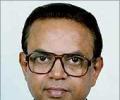
Dr A N Prasad, former director of the Bhabha Atomic Research Centre and a distinguished nuclear scientist, explains the reasons behind Santhanam's statement on Pokhran II and its possible implications for India.
K Santhanam, a retired Defence Research and Development Organisation scientist, on Monday accused former Atomic Energy Commission chief Anil Kakodkar of 'ignoring facts' about the yield of the nuclear tests done at Pokhran in May 1998, calling him 'a liar' motivated by institutional loyalties.
The question before the country is: Do we need thermonuclear weapons as part of our arsenal for deterrence? If the answer is yes, India must conduct further tests, irrespective of any promise that might have been given to the Americans.

Santhanam also sought to counter claims by Narayanan and others in the establishment that he was not privy to the test measurements and information on Pokhran-II tests.
Former Defence Research and Development Organisation scientist K Santhanam, who had questioned the success of the thermonuclear device during the Pokhran-II tests, has favoured an inquiry to determine the results of the 1998 experiments, saying creation of nuclear power could not be based on myths.
'There is a change in the administration in the United States of America. They are bound to further pressurise India to sign the CTBT. In such an event it was necessary to make such a statement or speak the truth on the issue so that India does not rush into signing the CTBT.'
Chidambaram, who led the team of scientists during the 1998 nuclear tests, today dismissed as "absurd" suggestions that Pokhran-II explosions did not yield the desired results.
Senior DRDO scientist K Santhanam on Thursday reiterated that there was no question about backing away from his assertion that the 1998 Pokhran II nuclear tests were not fully successful, while the Chief of Naval Staff, Admiral Sureesh Mehta, said the tests conducted eleven years ago were adequate.

Santhanam recently stirred a controversy claiming that the nuclear tests done in 1998 were not successful as projected at that time.

"This is the picture of ground zero where the thermo-nuclear device was detonated in May 1998 in Pokharan. No crater was found at all! This picture tells the story that we have to do more homework. Indeed, we have to do more honest homework." said K Santhanam, former Defence Research and Development Organisation scientist dramatically holding the picture in his hand in the press conference held in New Delhi.

'What did he (Kalam) know about extracting, making explosive grade? He didn't know a thing. By being a President, he appeared to wear the stature. He relied on atomic energy to gain additional stature,' said Sethna about Kalam while talking to CNN-IBN.

"They (Armed Forces) need to be reassured about the weapon system they use and about the planning of what kind of the yield they have when they hit the target," Malik, the army chief during Pokhran-II, told Karan Thapar on the Devil's Advocate programme of CNN-IBN.
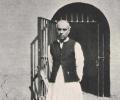
Social media posts and articles falsely suggest that Jawaharlal Nehru 'signed a bond' or 'used his father's influence' to escape from serving a prison term in Nabha in 1923. Utkarsh Mishra reveals the true story. The first of a series of occasional columns correcting social media's false take on History.

The burial ceremony was performed in the presence of Sri Vijayendra Saraswathi, the junior pontiff of the Mutt and some close family relatives of the late seer.

'India must close the missile technology gap with both China and Pakistan as early as possible, or else the credibility of India's nuclear deterrence will remain suspect,' says Brigadier Gurmeet Kanwal (retd).

Terming corruption as a "major stumbling block" in the country's progress, President Pranab Mukherjee on Tuesday asked the central vigilance commission to lead the way in cleansing the government.

'Judging by the conduct of two governors of Kerala and one governor from Kerala, Congressmen treated Raj Bhavan as a transition point before taking a flight back into active politics.'

India has built two top-secret facilities in Karnataka to enrich uranium in pursuit of its hydrogen bomb dream.
 © 2026 Rediff.com - Investor Information - Advertise with us - Disclaimer - Privacy Policy - Sitemap - Feedback - About us - Terms of use - Grievances