
Tata Group's British luxury carmaker Jaguar Land Rover (JLR) announced plans to reduce its global workforce by approximately 4,000 roles over the next two years, aiming for 1.7 billion in savings to enhance sustainable profitable growth and invest in future technologies.
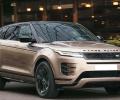
Jaguar Land Rover will begin assembling premium cars at its new Tamil Nadu plant on February 9, marking a step towards full-scale luxury car manufacturing in India.

The UK government on Sunday announced that it will support "iconic British brand" Jaguar Land Rover (JLR) with a loan guarantee of up to 1.5 billion pounds to give certainty to the Tata Motors owned carmaker's supply chain following a devastating cyber-attack. The loan will come from a commercial bank, backed by the Department for Business and Trade's (DBT) Export Development Guarantee (EDG), provided by export credit agency UK Export Finance, to be paid back over five years.

Jaguar Land Rover (JLR) India reported its highest-ever first-quarter retail sales for FY27, with 1,665 vehicles retailed, an 11 per cent year-on-year increase, largely due to sustained demand for premium SUVs and the benefits of the India-UK Free Trade Agreement.

Tata Motors Passenger Vehicles (TMPV) reported Q1FY27 results showing significant margin pressures at both Jaguar Land Rover (JLR) and its domestic operations, despite strong volume growth in the India business. Analysts expect these margin headwinds to persist, potentially offsetting gains from increased sales and new launches.

India's passenger vehicle (PV) exports saw a 17 per cent year-on-year decline in August, contrasting sharply with a 36.5 per cent surge in domestic dispatches, which reached a record high for the month as automakers prepared for the festive season.

A cyberattack on an automaker can spread through its wider supply chain and create significant financial losses.

Tata Sons has the balance sheet to support them, for now.

N Chandrasekaran will step down as chairman of Tata Sons in February 2027, concluding a decade at the helm, following a prolonged standoff over his reappointment with Tata Trusts Chairman Noel Tata.

Prices of the Range Rover V8, Range Rover Sports V8 and Jaguar F-Type will be reduced by an average of 200,000 yuan (Rs 20.4 lakh) from August 1. Every fourth car made by Jaguar Land Rover is sold in China.

The turnaround at Tata-owned car-maker Jaguar Land Rover accelerated in the July-September quarter as booming demand in China helped drive a 30 per cent rise in sales, the company announced in a statement.

Jaguar Land Rover has reached an agreement with Tata Motors to be an exclusive importer of these premium saloon cars and utility vehicles.

Prime Minister Narendra Modi on Saturday visited a Tata Motors-owned Jaguar Land Rover factory in the West Midlands region of England that is known as the flagship Indian investment in the UK.

Tata Motors' MD and CEO, Girish Wagh, has identified rising diesel prices as the most significant threat to India's commercial vehicle (CV) industry recovery, despite the sector recently surpassing its pre-FY19 wholesale peak. Diesel costs account for 25-50% of a truck operator's total cost of ownership, making any increase a critical concern for fleet economics.
Tata Motors-owned Jaguar Land Rover has announced plans to shed 200 jobs across its UK operations but claimed that the redundancies were not connected with the economic downturn or slump in car sales.
Geoff Polites, CEO of Jaguar Land Rover who is credited with successfully turning around the company and steering it through its $2.3 billion sale to Tata Motors, has died.Polites, 60, breathed his last in Melbourne after battling serious illness for two years. Ford Australia president Bill Osborne said Polites had battled ill health for the past two years but remained determined to return the Ford-owned Jaguar and Land Rover brands to profitability.

Now you can buy Jaguars and Land Rovers from dedicated showrooms in India. Indian owned or not, they represent some of the best sports cars and sports utility vehicles.
While analysts reacted negatively to a drop in the operating margin, JLR has demonstrated a strong global growth.

The deal includes a security deposit of 10.10 crore and features an unusually steep 15 per cent escalation every three months, which stands out in Bengaluru's commercial leasing market.

As industrial plants boost the village's profile, locals demand priority hiring, alongside better storage facilities and water security.
BMW India has outpaced rival Mercedes-Benz India in luxury car registrations for the first quarter of calendar year 2026, driven by new product launches and a growing electric vehicle segment, even as the overall luxury car market remains largely flat.
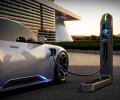
The question is: Will the company have a strong balance sheet to support this massive investment plan?
Barely days before it launches the world's cheapest car, Tatas were on Wednesday named the preferred bidder for Ford's British luxury brands -- Jaguar and Land Rover.
Company chief executive David Smith said that he did not expect sales to return to normal levels "for some time." He added, "It is only right and proper that our response to the unavoidable impact of the credit crunch and a severe reduction in demand includes actions across all grades and functions in the company. It is critical that Jaguar Land Rover becomes a more efficient and dynamic organisation to face up to the challenges that we will meet in the years ahead."
Tata Motors-owned Jaguar Land Rover has announced plans to axe 400 more jobs in view of the current global economic downturn.
Sunday Times says top European official in sight. The current chief executive is Geoff Polities, an Australian car industry veteran.
The company has expanded its line-up to nine models with several variants, making it the most aggressive luxury auto player in the country.

While SUVs have steadily gained share across the industry, data shows that nearly three in 10 luxury vehicles sold in India are sedans, highlighting the segment's resilience despite years of SUV-led growth.
UK-based JLR posted 16 per cent growth in retail sales in the past year, highest in the luxury car segment globally, on the back of launches, output ramp-up and better reach in world markets.
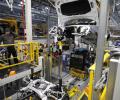
At an estimated 1.9 billion in losses and over 5,000 UK organisations affected, the Jaguar Land Rover cyberattack has been labelled the most economically damaging cyber incident in UK history, exposing the deep vulnerability of interconnected supply chains.

Businesses have been reluctant to talk about contingency plans for Brexit
The passenger vehicle (PV) business of Tata Motors, which also includes the electric vehicle and Jaguar Land Rover businesses, post-demerger is now valued at Rs 1.45 trillion.

The Tata Sons board has deferred a decision on the re-appointment of Natarajan Chandrasekaran as Chairman, signaling potential differences within the group. Concerns were raised about losses in certain group companies and the listing of Tata Sons.

West Asia conflict triggers sharp sell-off in Indian markets, with realty, banking and auto stocks leading losses amid energy shock fears.

There are hopes of a turnaround in overall corporate earnings after six quarters of single digit growth.
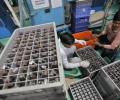
The automobile and auto-ancillary sector is expected to show strong Q3FY26 results, aided by festival-led demand, rationalisation in goods and services tax (GST) rates for select categories of vehicles, easing interest rates, and improving rural sentiment.

The initial tests will involve vehicle-to-vehicle and vehicle-to-infrastructure communications technologies that will allow cars to "talk" to each other and roadside signs, overhead gantries and traffic lights

The Unite union wants a 12.8 per cent pay rise

Tata Motors' commercial vehicle (CV) business debuted on the BSE on Wednesday, completing the automaker's long-planned demerger into separate listed entities for its passenger and CV operations.

JLR, the maker of Jaguar F-Type and Range Rover Evoque, was a jewel in the crown of Tata Motors till two years back. But, it has been struggling because of the pending Brexit, a sharp contraction in sales in China, a shift in consumer preference from diesel to gasoline in Europe, higher taxes on diesel vehicles, and tightening regulations.
