
Equity fundraising through initial public offerings (IPOs) rose 20 per cent during the financial year 2023-24 (FY24). During the period, 76 Indian corporates raised Rs 61,915 crore through main board IPOs, compared to Rs 52,116 crore mobilised by 37 IPOs in 2022-23, as disclosed by PRIME Database. However, if one excludes the mega Life Insurance Corporation (LIC) IPO, which came out in 2022-23, IPO mobilisation increased by 58 per cent from last year.

Equity fundraising through initial public offerings (IPOs) rose 20 per cent during the financial year 2023-24 (FY24). During the period, 76 Indian corporates raised Rs 61,915 crore through main board IPOs, compared to Rs 52,116 crore mobilised by 37 IPOs in 2022-23, as disclosed by PRIME Database. However, if one excludes the mega Life Insurance Corporation (LIC) IPO, which came out in 2022-23, IPO mobilisation increased by 58 per cent from last year.
Life Insurance Corporation (LIC) may require at least five more years to comply with the minimum public shareholding of 25 per cent beyond the current exempted timeline of 2027. Formal communication in this regard had been shared recently with the finance ministry, underlining LIC's roadmap, plans of further dilution of stake, current norms around public float, and challenges ahead, a government source familiar with the matter said. "Going forward, we will have to take a call, along with Sebi (Securities and Exchange Board of India) and the Department of Economic Affairs on the roadmap for minimum public shareholding (MPS).
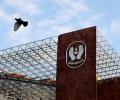
The government is expected to defer the mega initial public offering (IPO) of LIC to the next financial year as the ongoing Russia-Ukraine war has dampened fund managers' interest in the public issue, market experts said on Sunday. The government was looking to sell 5 per cent stake in Life Insurance Corporation (LIC) this month, which could have fetched over Rs 60,000 crore to the exchequer. The IPO would have helped meet the curtailed divestment target of Rs 78,000 crore this fiscal.
Amid volatility in stock markets generated by tension between Russia and the US over Ukraine, LIC chairman M R Kumar on Monday said that the insurance behemoth was watching the geo-political situation carefully, though it was keen on listing of the IPO in March. The Life Insurance Corporation (LIC) has already filed the DRHP with the Securities and Exchange Board of India (SEBI) for its initial public offering (IPO). "We are watching the situation closely and carefully...but we are very keen on having listing in March," Kumar said, when asked about the impact of the evolving geopolitical situation on the upcoming IPO.
IPO market hopes to come out of slump in festive season, reports Sundar Sethuraman.
The Union Cabinet has cleared disinvestment of the country's largest insurer LIC and a panel headed by the finance minister will now decide on the quantum of stake dilution, a senior official said on Monday. The Department of Investment and Public Asset Management (DIPAM) had in January appointed actuarial firm Milliman Advisors LLP India to assess the embedded value of LIC ahead of the IPO (initial public offering), which is touted to be the biggest public issue in Indian corporate history. The Budget amendments to the LIC Act has been notified and the actuarial firm is expected to finalise the embedded value of the life insurer. Under the embedded value method, the insurance company's present value of future profit is also included in its present net asset value.
The government may have to rework the valuation of Life Insurance Corporation of India (LIC) for its initial public offering (IPO) if the listing is pushed beyond May, an official said. The current embedded value of LIC, pegged at Rs 5.4 trillion as of September 30 and for the six-month period ended September, will have to be re-evaluated if the issue is pushed beyond May 12, as approved by the Securities and Exchange Board of India (Sebi). This would impact the market value of LIC, that is currently being internally estimated at 3-4 times of the embedded value.
The government has appointed 10 merchant bankers including Goldman Sachs (India) Securities, Citigroup Global Markets India, and Nomura Financial Advisory and Securities India to manage the mega initial public offering of country's largest insurer LIC. Other selected bankers include SBI Capital Market, JM Financial, Axis Capital, BofA Securities, JP Morgan India, ICICI Securities, and Kotak Mahindra Capital Co Ltd, a circular on the divestment department website said. "Government has finalised the book running lead managers and some other advisors for the IPO of LIC," DIPAM Secretary Tuhin Kanta Pandey tweeted. The divestment department had invited applications for the appointment of merchant bankers on July 15.
The government is mulling allowing foreign direct investment (FDI) in the country's largest insurer LIC, a move which would help overseas investors take part in the company's proposed mega IPO, sources said. The proposal is under discussion between the Department of Financial Services and Department of Investment and Public Asset Management (DIPAM). "Discussions have been going on for the proposal for the last few weeks. "It would also go for inter-ministerial discussions and would also require Cabinet nod," a source said.
The Centre is unlikely to reduce its shareholding in Life Insurance Corporation of India (LIC) for at least 2 years following the insurer's listing because such a move could affect returns for investors participating in the mega initial public offering (IPO). The government's stance was communicated to prospective investors during roadshows after many of them sought clarity on the Centre's plan for lowering its shareholding in the insurer to meet the minimum public shareholding norms. To this, the Centre maintained its stand that it would not look at any equity dilution in the insurer for at least two years to avoid downward pressure on LIC's shares.
The government is unlikely to come up with the IPO of Life Insurance Corporation (LIC) in the current financial year ending March 2022, as the valuation of the state-owned behemoth is taking more than anticipated time, and the preparatory work is still far from complete. There are still some issues that need to be addressed with regard to the valuation of LIC, a senior official of one of the merchant bankers said. Even after the valuation, there are several regulatory processes that have concluded, the official said.

With the new owner shelling out Rs 18,000 crore for the buyout of 'Maharaja' this would be the highest ever amount garnered through privatisation or even the cumulative sum garnered through strategic sale in 1999-00 to 2003-04. The government had garnered roughly over Rs 5,000 crore during that five-year period by privatising 10 CPSEs.
With the Russia-Ukraine war roiling financial markets globally, the government may defer the mega IPO of LIC and wait for an opportune time to get the maximum value of its holding in the state-owned insurance behemoth, sources said. "It's a full blown war now so we will have to assess the situation for going ahead with the LIC IPO," a government source said. Finance Minister Nirmala Sitharaman, too, had indicated review of the IPO in view of the evolving geopolitical situation.

After a hiatus of nearly two decades, the government's programme to privatise state-owned firms restarted with the handing over of debt-laden national carrier Air India to the Tata Group. With the new owner shelling out Rs 18,000 crore for the buyout of the 'Maharaja', this would be the highest-ever amount garnered through privatisation, and is even more than the cumulative sum mopped up through strategic sales from 1999-00 to 2003-04. The government had in October last year inked the share purchase agreement with the Tata Group for sale of national carrier Air India for Rs 18,000 crore. Tatas would pay Rs 2,700 crore cash and take over Rs 15,300 crore of the airline's debt.

The government has decided to spend big on infrastructure across a wide variety of sectors to give a greater impetus to the economy which is recovering from the impact of Covid-19, Finance Minister Nirmala Sitharaman said on Monday.

The government on Monday budgeted Rs 1.75 lakh crore from stake sale in public sector companies and financial institutions, including 2 PSU banks and one general insurance company, in the next fiscal year beginning April 1. The amount is lower than the record Rs 2.10 lakh crore which was budgeted to be raised from CPSE disinvestment in the current fiscal year. However, the COVID-19 pandemic impacted the government's CPSE stake sale programme, and the target has been lowered to Rs 32,000 crore in the Revised Estimates.

With the disruption caused by the second wave of Covid-19 pandemic, the 'fear of unknown' is looming over the government's privatisation drive. Although there is a lot of uncertainty and unpredictability on how things will unfold, the government is hopeful of completing the transactions listed in the Budget with a delay of one to two months, said a top government official. However, "there are many unknown factors now, and we do not know whether there could be a third wave. But we are trying to carry on with our work", the official said." Since there is a lot of uncertainty, the estimates will have to be revised as rating agencies are revising their outlook for growth.
Changing tracks helps. But, not taking the beaten path isn't always helpful. This is the story of two of India's biggest privatisations - Air India and Bharat Petroleum (BPCL). Nearly two decades after the last privatisation, a landmark divestment concluded this year when the loss-making national carrier Air India was sold to the Tatas.

A lot of work is needed to be done on the part of the insurance sector behemoth, and the government, before it is ready for its market debut.
 © 2026 Rediff.com - Advertise with us - Disclaimer - Privacy Policy - Sitemap - Feedback - About us - Terms of use - Grievances