
India's market landscape is undergoing significant shifts, with bank-backed brokerages potentially regaining dominance over discount platforms due to regulatory changes and increased taxes, while the IPO pipeline faces a slowdown amid heightened global volatility.

India Inc, which is sitting on cash balances of 13.5 trillion, is using the funds to meet capital expenditure as well as brownfield expansion, resulting in 'anaemic' demand for bank loans, State Bank of India (SBI) chairman CS Setty said at an event on Monday. He added that a slowdown in corporate credit is mainly due to lack of demand.

Despite corporate bond yields hardening by 20-25 basis points, Indian corporates are not warming up to bank funding for their capital expenditure needs as bank lending rates remain elevated due to the higher cost of liabilities, compared to current rates in the debt capital market.

Union minister Nitin Gadkari on Monday asked the industry not to perennially demand a reduction in taxes as the government needs funds to implement welfare schemes for the poor. Addressing an event, the road transport and highways minister said the logistics cost in India will come down to 9 per cent within two years.

Cybersecurity breaches have emerged as the top risk shaping organisational performance, with 61 per cent of respondents identifying it as the primary risk, said a Ficci and EY report.

Knowledge workers and mid-career professionals in India are hopeful that artificial intelligence will positively impact their roles, even as concerns about job displacement persist, especially among younger professionals, a top official of a human capital management solutions provider has said. At a time when AI has become a critical part of an organisation's functioning, many professionals see the positive possibilities of AI.

Indian corporates collectively raised over Rs 17,500 crore from the domestic debt capital market through bond issuances on Tuesday. The issuances were led by Bharti Telecom's Rs 10,500 crore fundraise in two tranches, the largest by an Indian company in the domestic market so far in FY26.
The more things change, the more they remain the same for corporate India. In the April-June 2025 period (Q1FY26) - for the ninth consecutive quarter - listed companies witnessed only single-digit revenue growth, while their core earnings, excluding other income and one-time gains, contracted for the second time in four quarters. This comes as firms brace for the impact of 50 per cent US tariff on Indian goods.

IPOs have been the flavour of the season for some time. But the coming together of three mega IPOs, from diverse businesses and historic relevance, could tell a story that's still in the making, points out Nivedita Mookerji.

Business confidence in India Inc rose to a five-quarter high in December quarter of FY26, amid further reform expectations and steady domestic demand, a survey by industry body Confederation of Indian Industry (CII) showed. The CII Business Confidence Index (BCI) rose for the third consecutive quarter to 66.5 in the December quarter from 66 in the preceding September quarter.

Dubai is positioning itself as a springboard for Indian companies looking to tap into fast-growing emerging markets, including Africa, banking on low tariffs, long-standing trade relations, and a shared vision for regional economic growth, said Mohammad Ali Rashid Lootah, president and chief executive officer, Dubai Chambers, at the Dubai-India Business Forum in Mumbai.

Union Commerce and Industry Minister Piyush Goyal on Thursday described the reduction in GST rates as "game-changing" and the "biggest reform" since independence, as he asked the industry to pass on the full benefit to consumers.

Domestic rating agency ICRA on Monday said Indian companies are likely to clock 7-8 per cent revenue growth during the March quarter of the current fiscal year, led by revival in rural demand and uptick in government spending. ICRA expects the private capital expenditure (capex) cycle to remain measured in view of the uncertainties around geopolitical developments and relatively subdued outlook on merchandise exports from India.

'India's top companies currently lack the organisational wherewithal to hire and train 2 million interns annually, given their current scale of operations and existing employee base.'

'Given that India underperformed emerging markets by 28 per cent in 2025, the worst performance in over 30 years, the timing of the sharp STT hike could have been better.'
Promoters' ownership in private listed companies declined to an eight-year low of 40.58 per cent as of June 30, 2025, following a net share sale worth Rs 54,732 crore during the quarter, according to data from primeinfobase.com, an initiative of PRIME Database Group.
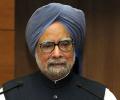
Singh, who opened up the economy as finance minister and served as prime minister for two consecutive terms, died on Thursday at the age of 92. "History will forever honour his pivotal role in the transformative 1991 reforms that reshaped India and opened its doors to the world.

India is planning to amend the Mines and Minerals (Development and Regulation) Amendment Act 2023 to specify the use of funds currently earmarked at 5,600 crore for exploring critical mineral mines overseas, according to a top official. The proposed amendments also aim to introduce a tailings policy and modify the royalty structure to facilitate the extraction of critical minerals from waste materials, the official added.

With short-term rates firming up due to tight liquidity conditions, Indian corporates are opting to borrow long term to take advantage of the attractive rates by locking them in these uncertain times. The banking system has a liquidity deficit of over Rs 2 trillion. According to market participants, engineering conglomerate Larsen & Toubro (L&T) raised Rs 1,500 crore through 10-year bonds in December 2024.

'The answer is not for me to give. The answer either way has to be heard from the industry itself. Tell us why not if you are not doing it; tell us if you are doing it -- why should this question remain unanswered?'

The revenue growth of Indian companies for the July-September quarter is estimated to be 5-7 per cent year-on-year (Y-o-Y), marking the slowest growth in 16 quarters, rating agency CRISIL said on Thursday.

'In India, managers and the leadership almost glorify overworking.'

Mint Road's proposals on banks' M&A funding are cautious even as entrants root for more elbow room, and weigh business models.

Corporate India is embarking on an ambitious investment drive, with capital expenditure (capex) expected to double to $850 billion over the next five years, according to a report by S&P Global Ratings. Indian power & transmission, airlines, and green hydrogen sectors would spearhead the spending, the report said.

'Foreign capital will continue to come directly into India, but companies have realised that GIFT City is a more cost-efficient way of channelling funds.'
Corporate India's struggle with subdued revenue and earnings growth persisted in the October-December quarter of 2024-25 (Q3FY25). The combined net sales (gross interest earnings for lenders) of listed companies grew in single digits for the seventh consecutive quarter, while their combined net profit rose by a single digit for the third straight quarter.

'Our problem is not a budget deficit but a trust deficit. We need to trust our institutions and industries to innovate and lead. That is the way forward for India.'

The recent policies that have been announced by the Reserve Bank of India (RBI) will allow banks to fully use its capital, funding profile to keep business at an equilibrium level, which otherwise was getting skewed towards retail, said K V Kamath, chairman, Jio Financial Services.

After subdued earnings in the first half amid global headwinds, India Inc is taking a cautious approach on their capital expenditure (capex) for the second half of the financial year ending March 2025, according to management commentary. Minutes from the October monetary policy meeting show the Reserve Bank of India's (RBI's) optimism about private investments picking up.

The Indian industry is paranoid about the USA's plan to impose reciprocal tariffs and wants early conclusion of a bilateral trade agreement, sources said on Wednesday. They said that the talks for the proposed bilateral trade agreement are going well.

'In the new coalition government, India's reform agenda may prioritise job creation and factor market reforms.'

India Inc on Thursday pitched for lowering income tax burden on common man, increase in capital expenditure, and firm steps to contain food inflation in their nearly two-hour long interaction with finance minister Nirmala Shitharaman ahead of the Union Budget. During pre-Budget consultation with Sitharaman, the industry leaders and associations also urged the government to focus more on infrastructure development with a view to maintaining the economic growth momentum. The industry leaders also laid stress on boosting the MSME (micro, small, and medium enterprises) sector, considered a backbone of the Indian economy and main employment generator.

Industry insiders in India warn that any such move in the pharmaceutical sector could be counterproductive for the US as it may face increased drug shortages if tariffs are imposed on such imports.

More than a third of 83 mainboard IPOs this year ended their debut sessions in the red, with losses of up to 35 per cent.

Growth in corporate profits needs to be commensurate with wages to boost the economy, Economic Survey 2024-25 said, noting that sharp disparities between the two pose risk to the economy by curbing demand. The document tabled in Parliament on Friday noted that while the labour share of GVA (gross value added) shows a slight uptick, the disproportionate rise in corporate profitsredominantly among large firmsaises concerns about income inequality.

Employers in India are planning to outpace global adoption in certain future technologies as companies operating in the country are heavily investing in technologies like artificial intelligence (AI), energy technologies, robotics, and autonomous systems, said the World Economic Forum (WEF) in its latest "Future of Jobs" report released on Wednesday. The report, released days before the WEF annual meeting in Davos from January 20-25, notes that 35 per cent employers in India think that adopting semiconductors and computing technologies (compared to 20 per cent globally) will transform their operations while 21 per cent employers think that adopting quantum and encryption technologies (compared to 12 per cent globally) will also transform their operations.

The recent surge in crude oil prices could shave off the gains made by India Inc in profit margins in the past few quarters. Worse, it comes at a time when consumer demand in the country is slipping and major global economies are witnessing a slowdown. A back-of-the-envelope calculation suggests that the margin expansion accounted for three-fourths of the rise in the listed firms' operating profit between the April-June quarter (Q1) of FY23 and Q1FY24, and only a quarter of profits gains came from revenue growth.

GST 2.0 may cushion consumers against US tariffs, but like the 2019 corporate tax cut, it risks being another tactical fix rather than a structural growth strategy, expects Debashis Basu.

Finance Minister Nirmala Sitharaman on Tuesday sought to know from industry what is holding it back from investing in manufacturing, even though foreign investors show confidence in India. Drawing parallel between India Inc and mythological character 'Hanuman', Sitharaman said the government is willing to engage with the industry and take policy action. "This is the time for India... We cannot miss the bus," she added.
Corporate India is starting to step up its capital expenditure plans amid government incentives and signs of rising demand, company executives and analysts have indicated. This coincides with the Reserve Bank of India (RBI) recently citing a double-digit growth in private capital expenditure. Healthy balance sheets of banks and corporates, along with increasing capacity utilisation and improving business sentiment, are contributing to a favourable environment for sustained growth in private sector investments, the RBI said in its policy last week.
