
Nearly 16 years after the 1992-93 Hindu-Muslim riots in Mumbai,a sessions court on Wednesday acquitted Farooq Mapkar, accused in the Hari Masjid firing case.
The state government issued a notification last year, handing over the case to CBI. But the agency told the high court that its hands were already full, and it cannot investigate a 15-year-old case in which special task force had already given the police a clean chit.
A letter to the state government from the Union Home ministry last month said that it would not hand over the case to the CBI as per its request because it thought "no case was made out" against the Assistant Inpector of Police Nikhil Kapse and his team. The division bench of Justices Bilal Nazki and A P Deshpande wondered how the Home Ministry could exonerate police without conducting a probe.
Additional Solicitor General Rajendra Raghuvanshi told a division bench of Justices S B Mhase and V K Tahilramani on Thursday that the Centre was not ready for a CBI probe. "The Centre thinks the case is 15 years old and already a trial of the case against one of the survivors Farooq Mhapkar -- for rioting -- is underway. Also, the STF, formed by state government following the Srikrishna report, held that (police official) Kapse was not guilty," Raghuvanshi said.
The Supreme Court on Friday directed the Central Bureau of Investigation to go ahead with its investigation into the Hari Masjid firing in Mumbai in which six persons were killed in 1992.A bench comprising justices P Sathasivam and A R Dave upheld the Bombay high court order entrusting CBI with the probe of the incident.The bench dismissed the appeal filed by the Maharashtra government against the 2008 direction of the high court.
The police had allegedly opened fire on a "mob" coming out of Hari Masjid in Central Mumbai on January 10, 1993, to maintain law and order in the aftermath of the Babri Masjid demolition.

'When Irshad Khan approaches the Supreme Court, he will undoubtedly have the best and most committed of lawyers to represent him.' His case will be reported on the front pages.' Neither the BJP government in Rajasthan nor at the Centre can stop this,' says Jyoti Punwani.
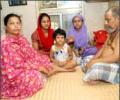
"I am the only Muslim girl in my college and my friends call me Krrish because I wear this burqa," jokes Samina. Her sister Zarina, who is doing her first year BCom from Maharashtra College, adds, "I am called Al Qaeda because of my dress."
'The Babri Masjid wasn't just a mosque, it was a test of our secularism,' says Jyoti Punwani.

'No one talks about the Mumbai riots anymore, though like Delhi 1984, the guilty have not been punished. In Gujarat, many powerful leaders of the state's ruling party are in jail for their role in the riots... In Mumbai, only one politician of the Shiv Sena, a former MP, was convicted of hate speech, along with two other Shiv Sainiks, one of whom was a corporator and the other a junior functionary... So why the apathy? Could it be because despite these statistics and the widely-publicised findings of the Srikrishna Commission, what remained in public consciousness was the violence by the Muslims, thanks to a highly efficient Sena propaganda machine? There's no demand for it, but would an SIT probe into the closed cases of the Mumbai riots help today?' The fadeout of Mumbai's riots from public debate can be called a triumph of the communal State, argues Jyoti Punwani.
 © 2026 Rediff.com - Investor Information - Advertise with us - Disclaimer - Privacy Policy - Sitemap - Feedback - About us - Terms of use - Grievances