
Indian pharmaceutical companies are strategically increasing investments in the US market, focusing on specialty drugs, complex generics, respiratory products, and local manufacturing, despite a nearly 10 per cent fall in exports to the US in FY26 due to pricing pressure and competition in traditional generics.

Artificial intelligence (AI) is no longer a side conversation for Indian pharma. It is fast becoming central to how drugs will be discovered, made, and supplied. Along with that shift comes a sharper focus on innovation, on the one hand, and quality and trust, on the other.

The west is faced with a daunting task on patent expiry, increasing challenges from generics, pipeline showing limited blockbusters, and in addition to that increasing pricing pressure.
India's healthcare and pharmaceutical sectors raised Rs 14,811 crore through initial public offerings (IPOs) in 2024, the largest since 2019, driven by strong domestic demand amid expanding global opportunities. According to data, key contributors to the record fundraising included Sai Life Sciences (Rs 3,043 crore), IKS Health (Rs 2,498 crore), and Sagility India (Rs 2,107 crore).

Global capability centres (GCCs) are increasingly looking to tap into revenue opportunities from the Indian market, which is already a critical talent hub. While capturing the potential of the Indian market has been in the works over the past few years, it's only of late that companies are gaining momentum. India is home to more than 1,580 GCCs, with a total market size of $46 billion and growing at a compound annual growth rate (CAGR) of 11.4 per cent, according to a Nasscom-Zinnov report.
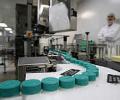
Industry must take strong collective action to protect the reputation it enjoys in global markets, says Kiran Mazumdar Shaw.

Will 2022 be a year of contrasting narratives -- one filled with caution and the other with continued optimism?
The BCG analysis shows Lupin gave an annualised average TSR of 29.9 per cent, ahead of the 18.4 per cent of Israel-based Teva Pharmaceutical, the world's largest generics maker. Teva is next on the list. Another Indian generic maker, Glenmark, occupies third position, with an 18 per cent TSR to its investors.
The US healthcare reform bill with its focus on cutting costs is likely to be beneficial for generic and CRAMS players.

As on July 31, the valuation of his shareholding in the company stood at Rs 9,830 crore.
The Melbourne-headquartered Generic Health markets generic prescription and over-the-counter products in the Australian market, in a partnership model with established global generic drug makers. The company sells approximately $500 million (nearly Rs 2,150 crore) worth of drugs in Australia, which has Rs 11,300 crore (A$3 billion) worth generics market. The total drug market in Australia is worth A$10 billion (Rs37,800 crore).
Singh said they will focus on Fortis Healthcare and Religare Financial Services after the acquisition.
Ranbaxy Laboratories, Dr Reddy's, Nicholas Piramal and three other Indian drug companies cut their research costs by separating the units involved in developing new drugs, thereby addressing investor concerns on low operating margins.
Of the top-10 global biotech companies, the biggest two -- Amgen and Biogen -- have already set up wholly owned subsidiaries in the country.
Dr Reddy's Laboratories has completed acquisition of betapharm, its mega overseas deal valued at 480 million (Rs 2,668 crore).\n
Leading Indian pharmaceutical companies, which are largely focused on the global generics and the domestic pharma market, have succeeded in keeping a tight check on their key research and development (R&D) costs in the December 2007 quarter.
Pharma firms have slowed down on R&D activities in a bid to control costs.
Global generic drugs producer Sandoz has opened its third plant in India at Navi Mumbai with annual production capacity of one billion tablets and capsules.
The Indian pharmaceutical players have the potential to corner about 25 per cent of the generic market amounting to $3.75 billion by 2007-08 through leveraging their low cost and technology advantage, according to Rabo India Finance report.

The growth prospects are particularly high for Indian companies in the speciality and complex generic drugs segment in the US, the report said.

The plant and associated facilities focus on manufacturing or packaging Amoxicilin-based products, which include semi-synthetic penicillin
The only category of pharmaceuticals that showed a negative growth in exports this time was herbal products, exports of which stood at $299 million as compared to $ 312 million in the previous year.

After spending considerable time and energy in remediation efforts in the wake of the US Food and Drug Administration's warning letter on compliance issues, the company's leadership has finally set out to bring the house in order.

Indian pharma firms under European drug regulator's scanner.

Amneal Pharmaceuticals is set to pip Sun Pharma as the fifth largest generics maker in the US, reports Sohini Das.
Russia's central bank early on Tuesday raised interest rates to 17 per cent to counter the 50 per cent rouble fall in six months.
