
Bangladesh government on Monday pressed war crime charges against fundamentalist Jamaat-e-Islami (JI) leader Ghulam Azam at the International Crimes Tribunal, calling him a "key collaborator" of the then Pakistani regime during the 1971 Liberation War.
A special Bangladeshi tribunal on Sunday indicted an 89-year-old former chief of fundamentalist outfit Jamaat-e-Islami on 61 charges for committing crimes against humanity during the 1971 Liberation War, months after he was arrested. "The International Crimes Tribunal indicted Professor Ghulam Azam for five types of crimes he committed during the 1971 Liberation War," said prosecuting lawyer Syed Rezaur Rahman.
A special Bangladeshi tribunal on Monday summoned a Jamaat-e-Islami leader and a "key collaborator" of the then Pakistani junta on charges of committing crimes against humanity during the 1971 Liberation War.

Bangladesh's biggest right-wing party Jamaat-e-Islami was on Thursday banned from contesting future polls by a court here which cancelled its registration in a landmark ruling, leaving the once-most powerful fundamentalist party with an uncertain future.

A top leader of the fundamentalist Jamaat-e-Islami party was sentenced to death on Wednesday by a special Bangladeshi tribunal for committing "crimes against humanity" during the country's 1971 liberation war.

A 91-year-old top leader of the fundamentalist Jamaat-e-Islami was sentenced to 90 years in jail on Monday by a special Bangladeshi tribunal for masterminding atrocities during the 1971 war of independence against Pakistan.
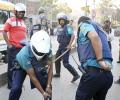
Hardline Jamaat-e-Islami activists on Tuesday exploded crude bombs and clashed with police, leaving at least 40 people injured, during nationwide protests against a court verdict banning it from contesting elections.

Bangladesh government on Monday sought death penalty for rightwing Jamaat-e-Islami's 91-year-old supremo Ghulam Azam as it challenged in the Supreme Court a 90-year jail term handed down to him by a special tribunal for war crimes.

Nizami now faces execution unless his case is reviewed by the court or he is granted clemency by the President.
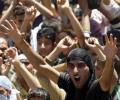
In another blow to Bangladesh's fundamentalist Jammat-e-Islami, the cabinet has decided to strip the voting rights of people convicted of "crimes against humanity" during the 1971 liberation war.

Much of Bangladesh was paralysed on Monday by the latest strike called by Jamaat-e-Islami, with two powerful explosions rocking Shahbag Square, the epicentre of a massive campaign demanding toughest punishment for leaders of the fundamentalist party for war crimes during the 1971 war.

A T M Azharul Islam, a top leader of fundamentalist Jamaat-e-Islami party, was sentenced to death on Tuesday by a Bangladeshi special court for committing war crimes during the country's independence war against Pakistan.

The four-member Appellate Division bench headed by Chief Justice Surendra Kumar Sinha pronounced the single-word judgement at the tense courtroom.

An Indian connection to the war crimes tribunal has emerged, further complicating matters, says RS Chauhan
Bangladesh's fundamentalist Jamaat-e-Islami chief Motiur Rahman Nizami was on Wednesday sentenced to death by a special tribunal for his role in the killing of thousands of people during the nation's independence war against Pakistan in 1971.
 © 2026 Rediff.com - Investor Information - Advertise with us - Disclaimer - Privacy Policy - Sitemap - Feedback - About us - Terms of use - Grievances