
Indian equities are experiencing their sharpest rebound in years, with the BSE 500 index rallying 12.1 per cent so far this month, echoing Covid-era recoveries despite ongoing geopolitical uncertainty and earnings risks.

Reliance Industries' digital arm, Jio Platforms, may see its initial public offering (IPO) delayed to the second half of fiscal 2027, according to CreditSights. The delay is primarily attributed to ongoing geopolitical tensions in the Middle East, which could impact market conditions and investor sentiment.

Analysts predict that the ongoing conflict in West Asia, crude oil prices, and global trends will significantly influence the Indian stock market in the upcoming holiday-shortened week. Foreign investor activity and rupee movement will also be crucial.

Global brokerage Citi has reduced its Nifty 50 index target to 26,000 from 27,000, citing persistent geopolitical tensions, risks to corporate earnings growth, and concerns about India's role in the global artificial intelligence (AI) ecosystem.

Indian benchmark equity indices Sensex and Nifty closed higher, recovering from previous losses, driven by a global market rebound, a pause in Israel-Iran hostilities, and a rally in bank stocks.

Indian benchmark indices Sensex and Nifty traded lower amid volatile trends, influenced by escalating geopolitical uncertainties in West Asia and fresh outflows from Foreign Institutional Investors (FIIs).
Indian benchmark indices Sensex and Nifty closed lower for the second consecutive day, driven by investor caution over conflicting geopolitical signals from West Asia and fresh foreign institutional investor (FII) outflows.

Foreign investors have aggressively sold off Indian equities, withdrawing over 48,213 crore in the first 10 days of April, following a record 1.17 lakh crore outflow in March, driven by escalating geopolitical tensions in West Asia, rising crude oil prices, and global inflation concerns.
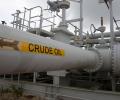
Crude oil prices experienced a significant drop following the announcement of a US-Iran ceasefire and the reopening of the Strait of Hormuz, leading to heavy selling by traders.

Indian benchmark stock indices, Sensex and Nifty, experienced a significant decline for the third consecutive day, with the Sensex tumbling 1,092 points and Nifty closing below 24,550. This downturn was primarily driven by the India Meteorological Department's forecast of a below-normal southwest monsoon and ongoing geopolitical uncertainties surrounding the US-Iran ceasefire arrangement.

Indian benchmark indices Sensex and Nifty recovered early losses to trade higher, supported by encouraging developments on the geopolitical front, specifically the US-Iran peace deal, and easing crude oil prices.

India's leading passenger vehicle manufacturers are significantly increasing investments and factory capacities, alongside planning major product launches for FY27, driven by strong confidence in sustained domestic demand growth despite global geopolitical tensions and supply chain risks.

Nomura has increased its March 2027 target for the Nifty 50 to 25,900, driven by strong corporate earnings and attractive market valuations, even as risks from the West Asia conflict and high oil prices persist.

The reopening of the Strait of Hormuz, following a ceasefire agreement between the US and Iran, is expected to significantly ease India's crude oil supply risks, lower freight costs, and reduce inflationary pressures, as global oil prices have already dropped.

Reliance Industries Ltd (RIL) has expressed caution regarding 'extreme volatility' risks stemming from the West Asian conflict, which could impact global oil demand and the company's margins, while also noting that near-term retail consumption demand may remain sensitive to macro conditions. Chairman Mukesh Ambani, in the annual report, remained silent on the timeline for Jio Platforms' anticipated public listing, stating the group will 'continue to evaluate strategic pathways'.

Gold has emerged as the most stable asset during episodes of geopolitical stress, and crude oil has been more sensitive than others when it comes to regional conflicts and sanctions, according to a report in the Reserve Bank of India's (RBI's) monthly bulletin. Silver and the United States Treasury have showed moderate reactions.

Indian stock markets are set to be influenced by ongoing developments in the US-Iran conflict, fluctuations in crude oil prices, and the latest quarterly earnings reports from major corporates, with foreign investor activity also playing a crucial role.

Indian benchmark indices, Sensex and Nifty, ended lower in choppy trade, with the Sensex declining 114 points, as investors reacted to unabated foreign fund outflows and rising geopolitical uncertainties.

Indian benchmark indices Sensex and Nifty surged significantly in early trade, tracking a global rally fueled by US President Donald Trump's declaration of an end to the war with Iran and a subsequent drop in crude oil prices.
Foreign Portfolio Investors (FPIs) have withdrawn Rs 14,231 crore from Indian equities so far in May, extending the total outflow for 2026 to over Rs 2 lakh crore, driven by persistent global macroeconomic uncertainties including inflation, interest rates, and geopolitical risks.
Indian equity markets, including the Sensex and Nifty, experienced a significant downturn for the second consecutive day, driven by escalating geopolitical tensions in West Asia and persistent foreign fund outflows.
Crude oil prices reached a new record high in futures trade, both domestically and internationally, as escalating military tensions between the US and Iran in West Asia continue to fuel market volatility. Diplomatic efforts concerning the Strait of Hormuz are being closely watched for potential price stabilisation.

Indian benchmark indices Sensex and Nifty rallied nearly 1 per cent, driven by optimism over easing geopolitical tensions in the Middle East and fresh foreign fund inflows, with the Sensex gaining over 500 points.

The diagnostics sector is projected to significantly outperform other healthcare segments like pharmaceuticals and hospitals in Q4FY26, driven by increasing volumes, stable realisations, and a domestic focus that insulates it from geopolitical risks.
The Indian rupee rebounded 50 paise from its all-time closing low to settle at 96.36 against the US dollar, driven by retreating crude oil prices, signs of easing geopolitical friction, and likely central bank intervention.

A potential US-Iran peace deal, expected to be signed on June 19, is anticipated to ease geopolitical stress and benefit various sectors, particularly in India, with analysts suggesting investors await finer details before making significant moves.
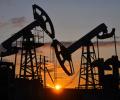
India's largest private refiner, Reliance Industries Ltd, successfully navigated a volatile energy market in the last quarter of FY26 by diversifying crude sourcing and demonstrating operational agility, particularly in response to geopolitical disruptions and cost fluctuations.

India has emerged as the most impacted market within emerging economies, experiencing $3.7 billion in outflows over the past three weeks, matching the total outflows from the entire emerging market basket, as global equity funds turn negative for the first time since January 2026 due to escalating geopolitical tensions.

Indian stock markets rallied in early trade after US President Donald Trump announced a halt to planned military strikes on Iran, citing requests from Gulf leaders and ongoing "very big discussions" that could lead to a deal. This de-escalation, coupled with foreign fund inflows and gains in IT and Adani group stocks, contributed to the positive market sentiment. Track Sensex and Nifty on May 19, 2026.

India's economy is projected to maintain growth above 7 per cent in 2026-27 (FY27), supported by strong domestic consumption and investment, even as global growth faces risks from geopolitical tensions, according to industry body Assocham.

Indian hotel companies are experiencing a sharp correction in share prices due to the Iran war and broader geopolitical tensions, leading analysts to cut operating profit expectations and valuations, despite structurally positive medium-term prospects.
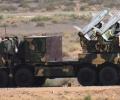
India's defence sector is on the cusp of a 'super cycle' of growth, driven by escalating geopolitical conflicts and a strong policy push towards indigenous manufacturing, with major players like BEL, HAL, and BDL poised for significant order inflows and technological advancements.

Benchmark indices Sensex and Nifty experienced a significant decline, falling over 1 per cent due to foreign fund outflows and global uncertainties.

Analysts predict a surge in gold and silver prices as investors seek safe-haven assets due to escalating tensions in the Middle East. The impact on domestic prices will depend on the conflict's duration, with geopolitical factors and macroeconomic data also playing a role.

Gold prices surged in futures trading due to escalating US-Iran tensions, driving demand for the safe-haven asset.

The case for long-term investment in gold, however, remains intact.

Crude oil prices are projected to fall significantly this year, driven by hopes of a peace deal between the US and Iran, which could lead to the reopening of the Strait of Hormuz, and a notable drop in Chinese demand for seaborne crude imports.

Foreign Portfolio Investors (FPIs) have withdrawn over Rs 62,853 crore from Indian equities in the first fortnight of June, bringing the total outflows for 2026 to Rs 2.87 lakh crore, surpassing the entire 2025 figure, driven by geopolitical tensions, global economic growth concerns, and a weakening rupee.

Indian benchmark indices Sensex and Nifty rallied in early trade, driven by a positive trend in global markets, cooling crude oil prices following a US-Iran peace deal, and fresh foreign fund inflows.
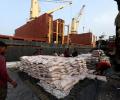
The Federation of Indian Export Organisations (FIEO) has appealed to the Reserve Bank of India (RBI) for liquidity support to Indian exporters, citing a significant increase in freight costs and extended payment cycles due to the ongoing West Asia conflict.
