
Domestic institutional investors pumped Rs 2.3 trillion into equities during H1 CY24. Of this, mutual funds contributed 80%.

The hospitality industry has seen plenty of interest since the catastrophic impact of the pandemic, which led to losses in FY21. The hotel industry market cap has more than tripled since 2019 on the combination of a strong earnings rebound and positive surprises, as well as three recent listings. The industry has good tailwinds. The anticipation is, demand for rooms will outrun supply for a few years despite capacity expansions.

Traction for its specialty portfolio, a strong showing in the domestic market, and better regulatory compliance are positives for the country's largest pharmaceutical (pharma) company, Sun Pharmaceutical Industries. Given the triggers, some brokerages have increased their earnings per share estimates and target price for 2024-25 (FY25). This should sustain the momentum for the stock, which has been one of the major pharma gainers in 2023-24 (FY24), rising 57 per cent. It is currently trading at Rs 1,547 per share.

Godrej Properties (GPL) reported strong pre-sales of Rs 22,500 crore in FY24, up 84 per cent year-on-year (Y-o-Y). The performance was led by new launches, which increased 65 per cent to Rs 23,000 crore in FY24, and contributed 70 per cent to total pre-sales. The sales volume increased 31 per cent Y-o-Y to 20 million square feet (msf), while realisation rose 40 per cent Y-o-Y, driven by contribution from high-realisation markets of National Capital Region (NCR) Delhi and Metropolitan Mumbai Region (MMR) and positioning in the premium segment.

The upstream oil and gas (O&G) sector has delivered a stellar performance in the stock market in the recent past. The O&G sector is dominated by PSUs and despite the imposition of a windfall tax, profitability has been impressive. Oil India Limited (OIL) is particularly favoured by investors.

The stock of United Spirits, the country's largest liquor company by market capitalisation (mcap), has gained 11 per cent over the past week on double-digit growth guidance, rising premiumisation trend, operationally in-line performance in the March (Q4FY24) quarter and a rally in consumer stocks. The revenue growth of the company came in at 7 per cent year-on-year (Y-o-Y) mirroring the growth of the prestige and above (P&A) segment. This segment comprising premium brands accounts for 88 per cent of the revenues.

'We emphasise the importance of not basing investment decisions solely on electoral outcomes.' 'Instead, focusing on investing in high-quality businesses capable of prospering regardless of the political landscape is paramount.'

Power Grid Corporation (PGCIL) intends to ramp up its capex substantially through the next two financial years. The Public Sector Undertaking (PSU) utility posted flat consolidated revenues of Rs 10,700 crore in the third quarter of the current financial year (Q3FY24) and reported 7 per cent year on year (Y-o-Y) growth in net profit to Rs 4,000 crore. The Q3FY24 capex stood at Rs 3,440 crore and capitalisation at Rs 1,780 crore, taking the 9MFY24 total to Rs 8,700 crore capex and Rs 5,800 crore capitalisation, respectively.

Electrical Consumer Durable (ECD) companies like Havells India have seen strong Q4FY24 sales and continuing seasonal demand across fans, air coolers, and room air conditioners (RAC) in addition to business-to-business sales of cables, switchgear, and professional lighting, among others. Havells India's Q4FY24 revenue rose 12 per cent year-on-year (Y-o-Y) to Rs 5,400 crore, in-line with consensus. Strong summer demand led to robust volume growth in fans and RAC and volume growth in cable and wires (C&W) due to infrastructure spending and real estate activity.

Ambuja Cements' announcement that it would acquire Hyderabad-based Penna Cement Industries could be the Adani Group company's first step for wider inorganic expansion, according to analysts.

LIC Housing Finance (LICHF) delivered a healthy FY24 with improvements in net interest margin (NIM) and credit costs and an improved return on assets of 1.7 per cent compared to an average of 1.3 per cent between FY14-FY23. Loan growth was low due to technology upgrades to the platform in H1FY24, though momentum improved in H2FY24. In Q4FY24, the net interest income (NII) came in at Rs 2,250 crore.

Base metals major Hindalco's overseas subsidiary, Novelis, has submitted a draft registration with the US Securities and Exchange Commission (SEC) for the proposed public offering of promoters' shares. Novelis' sole shareholder, AV Minerals (Netherlands) NV, is a 100 per cent subsidiary of Hindalco. Novelis would not receive any proceeds from the sale. Assuming SEC clearance could go through in about 6 months.

'Have a long way to go even as a small finance bank, both in terms of size, and in terms of fulfilling our aspirations for financial inclusion.'
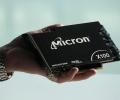
Micron Technology, a global leader in memory and storage, is considering supplying Made-in-India chips from its Gujarat plant to one of its key global clients, Apple, whose vendors assemble iPhones in the country. Micron is setting up an assembly test marking and packaging (ATMP) plant in Sanand, Gujarat. Currently, Apple vendors import chips for manufacturing iPhones. Sources in the know say the aim is to use part of the production to supply to Micron's clients in India directly.
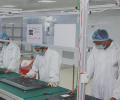
Dixon Technologies' January-March quarter (Q4) results came in well below expectations, but the potential for signing up a new mobile client, and plans for backward integration into display manufacturing kept investors happy. Dixon's Q4FY24 revenue grew 52 per cent year-on-year (Y-o-Y) to Rs 4,660 crore, below Street consensus, due to weakness in consumer electronics (Rs 890 crore) and home appliances (Rs 294 crore) segments.

A weaker-than-expected sales performance, concerns about higher competitive intensity in the current year, and earning cuts by some brokerages have weighed on the stock of the country's largest paint maker, Asian Paints. While the Q3 volume show was slightly below expectations, the company's operational and bottom line beat estimates, benefiting from the falling raw material costs. The stock ended the day with a decline of over 2 per cent at Rs 3,175 apiece.

Tata Motors reported a consolidated net profit of Rs 17,483 crore (adjusted for exceptional gains and losses) for Q4FY24, surpassing TCS' consolidated net earnings of Rs 12,434 crore. For the automotive major, this marked a 213.7 per cent year-on-year increase in the bottom line, from Rs 5,573.8 crore a year ago. In contrast, India's biggest IT firm saw a more modest Y-o-Y growth of 9.1 per cent in net profit, from Rs 11,392 crore.
Sun Pharmaceutical Industries reported a 34 per cent year-on-year (Y-o-Y) jump in net profit to Rs 2,654.6 crore in Q4FY24.
Bharat Electronics (BEL) reported excellent results for the January-March quarter (Q4) of FY24, which were driven by decent EBITDA margins and higher PAT as well as good revenue growth. Order inflows were also good. BEL is a major beneficiary of the policy of defence indigenisation.

After a technology upgrade, the Multi Commodity Exchange of India (MCX) appears poised for an improvement in volumes. The premier commodity and forex exchange reported a loss of Rs 19.1 crore in the July-September quarter (second quarter, or Q2) of 2023-24 (FY24). This was attributed to higher software charges payable under an extended service agreement with 63 moons technologies and a one-off cost towards core guaranteed funds (CGF).
Siemens delivered a strong margin performance and also reported high other income to beat consensus in the January-March quarter (Q2) of FY24 (the company's year-end is September 30). In addition, it has opted to demerge the energy vertical with a 1:1 award of shares in the newly demerged entity which will be listed by the end of this year (CY25).

The stock of Apollo Hospitals Enterprise (AHEL), India's largest listed health care services company, fell 4.6 per cent on Monday (April 29) and slipped another 0.34 per cent to close at Rs 5,946.20 on Tuesday (April 30). The share declined due to a lower valuation for subsidiary Apollo HealthCo (AHL) and an aggressive valuation for Keimed, a promoter-owned drug wholesaler that is merging with AHL.

Brokerages have maintained their ratings and target prices on FSN E-Commerce Ventures, the parent company of Nykaa, after the fashion and beauty online retailer posted in-line numbers during the October-December quarter (Q3) of financial year 2023-24 (FY24). They have, however, cut earnings before interest, tax, depreciation, and amortisation (Ebitda) estimates after weak demand weighed across line items in Q3. "While revenue growth was healthy at 22 per cent year-on-year (Y-o-Y), gross margins declined 90 basis points (bps), weighed by higher discounting in own brands and lower ad income.
Strong performance by its US subsidiary Novelis and better returns in the copper business helped Hindalco Industries post consolidated revenue growth of 2 per cent quarter-on-quarter (Q-o-Q) to Rs 54,100 crore in the July-September quarter of 2023-23 (Q2FY24). Novelis' Flat Rolled Products (FRP) volumes grew 6 per cent Q-o-Q to 933,000 tonnes (down 5.2 per cent Y-o-Y) on better North American and European volumes. The consolidated earnings before interest, taxes, depreciation, and amortization (EBITDA) declined 2 per cent Q-o-Q to Rs 5,610 crore despite lower input costs in India and better Novelis performance.

Bajaj Auto, India's leading two-wheeler (2W) and three-wheeler (3W) maker, is scaling up its wholly owned finance subsidiary, Bajaj Auto Credit Ltd (BACL), with an investment of more than Rs 3,000 crore planned over the next two financial years, company's managing director Rajiv Bajaj said. BACL has already started commercial operations, Bajaj recently said on the sidelines of the group's CSR identity event. According to rating agency CRISIL, BACL's operations began on January 1 after receiving its licence from the Reserve Bank of India (RBI) in August last year.

Reliance Industries Ltd invested over $125 billion in the last ten years as it undertook massive expansion in hydrocarbon and telecom businesses, a report said, estimating that the conglomerate's investments in the next three years would be in relatively less capex-heavy retail and upstream new energy. Reliance is coming out of a series of long and intensive capex cycles (hydrocarbons and telecom).
Industrial base metals major Hindalco delivered a strong consolidated performance during the January-March quarter (Q4) of FY24. Consolidated revenue was reported at Rs 56,000 crore, up 6 per cent quarter-on-quarter or Q-o-Q (flat year-on-year or Y-o-Y), with better realisation and higher India volumes.

Berger Paints, the country's second-largest decorative paint maker, continued to outperform its peers and gain market share in the 2023-24 (FY24) October-December quarter (third quarter, or Q3). The company posted a consolidated revenue growth of 7 per cent compared to the year-ago quarter, surpassing Asian Paints (5.4 per cent) and Kansai Nerolac Paints (5.7 per cent).

Marico's January-March quarter (Q4) results were slightly better than consensus. Revenue was up by 1.7 per cent year-on-year (Y-o-Y) to Rs 2,280 crore. Ebitda grew by 12.5 per cent Y-o-Y to Rs 440 crore. Adjusted PAT was up 10.3 per cent Y-o-Y to Rs 320 crore.

Despite the robust growth in this country, Apple's India share in its overall global sales remained modest -- constituting 1.5 per cent of its overall turnover of $389 billion in FY23.

The stock of Mahindra & Mahindra (M&M) has been touching successive all-time highs on the bourses and, over the past year, gained 81 per cent. While the S&P BSE Auto Index has not performed poorly, registering gains of 73 per cent, it still trails the company by 800 basis points (bps) during this period. There are multiple reasons why investors are beating a path to M&M's counter.
HDFC Bank's January-March quarter result, which came in-line with expectations, failed to enthuse investors. The reason? The management's decision to abstain from providing any specific growth guidance, and analysts' expectations of an arduous road to recovery. Analysts believe the path to normalisation of several growth metrics is unlikely to be a straightforward one, and the road to balance sheet realignment may be long.

'Which is growing fast and where we are very strongly positioned.'

Existing optimism about the capital goods sector has been enhanced by the Assembly election results, which were favourable for the BJP. The prospects of political continuity led to renewed interest in the sector. There are demand-supply gaps, especially in power, and visibility of improved pricing and strong order flows, including from private enterprises.

Continuing on the fiscally prudent path, the Modi government in the interim Budget refrained from announcing populist measures, which will help it trim the fiscal deficit to 5.1 per cent of the GDP next fiscal and 4.5 per cent in FY26.

Public sector banks (PSBs) have delivered significant outperformance over the past three years and the sector has been re-rated. Given the growth and profitability expectations of an 18 per cent return on equity (RoE) over FY24-26, there is still a case for buying at the current levels. While the net interest margins or NIMs may remain range-bound or have a downward bias, there's optimism about possibly better opex ratios and lower non-performing assets (NPAs), plus scope for further credit cost reduction, and healthy treasury performances as interest rates trend down.

There is no impediment to normal operations as Tata Motors puts in place the demerger process of its commercial and passenger vehicles businesses. Instead, the demerger would provide greater manoeuvrability for both new entities to operate independently, according to Tata Motors management. While there may not be immediate value unlocking, it will give investors clarity about future growth and the financials across different segments.
Tata Motors is likely to exit the S&P BSE Sensex and the Nifty50 indices once the demerger process of its commercial vehicle (CV) and passenger vehicle (PV) businesses is complete, analysts at Nuvama Institutional Equities said. They have compared the development with Reliance Industries (RIL) and Jio Financial Services, which got listed separately and eventually (in the next few days) got excluded from the domestic indices.

Information technology (IT) companies have been on the road to revival in the past one year. From being the worst-hit sector in 2022 with a loss of 26 per cent, the Nifty IT index closed 2023 with gains of 24 per cent. So far in 2024, the index is up around 7 per cent against the nearly flat Nifty 50 benchmark index. The IT index has been on a continuous decline in the last three sessions.

From its lows this month, the stock of Sona BLW Precision Forgings is up 10 per cent on better-than-expected results. The stock rose by 4 per cent in the trading session on Tuesday after Japan's Nikkei Group said the Indian automotive component major has topped its rankings in terms of competitive advantage. The rankings are based on sales, profit margin, capital expenditure, research and development, and market capitalisation.
 © 2026 Rediff.com - Investor Information - Advertise with us - Disclaimer - Privacy Policy - Sitemap - Feedback - About us - Terms of use - Grievances