
From the 30-share pack, Hindustan Unilever, Tata Motors, Axis Bank, Nestle India, Asian Paints, ITC, Reliance Industries, Mahindra & Mahindra, IndusInd Bank and State Bank of India were among the laggards. Larsen & Toubro, Tata Steel, JSW Steel, HDFC Bank, Adani Ports, Kotak Mahindra Bank, Bharti Airtel and PowerGrid were among the gainers.

'Instead of one or two families controlling 10% to 15% of GDP, it has to be broad based. Then, the resilience of the economy also will be higher.' 'Then, if something happens to one business, it will not hurt the economy badly.'

The fast-moving consumer goods (FMCG) sector has underperformed the Nifty over the past year as its 20 per cent return is trumped by 29 per cent of the benchmark index. The FMCG index saw a 2.2 per cent drop in the last session, while the Nifty lost 1 per cent. FMCG is seen as a defensive segment. The demand for staples like personal care products, groceries and snacks tend to be stable. FMCG companies are consistent dividend-payers.
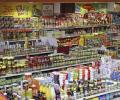
Fast-moving consumer goods (FMCG) companies anticipate sustained volume pressures in the January-March quarter (Q4) coupled with sluggish rural growth during the period. Brokerages estimate top-line growth to be in low single digits in the quarter. Also, the late onset of winter had an impact on demand for winter products which range from moisturisers to hot beverages.

'Because of the size and complexity of the economy, we can address almost every job that is there, from agriculture farming to healthcare.'

To shield against US President Donald Trump's tariff shock, analysts have been advising investors to focus on stocks of domestic-oriented companies, rather than export-centric ones, to minimise potential losses.
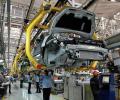
The K-shaped economic recovery in India from the pandemic slowdown shows in corporate results as well. The automobile sector, which represents big-ticket consumption, continues to do well and has increased its share in corporate revenues and profits while fast-moving consumer goods (FMCG) companies that sell low-ticket consumer goods are struggling with poor sales and earnings growth. The share of the automobile sector, including makers of auto ancillaries, in corporate net sales rose to a 10-quarter high of 10.05 per cent during July-September 2023 (Q2FY24) from 8.94 per cent a year earlier and 9.75 per cent in Q1FY24.

Procter & Gamble has announced Shailesh Jejurikar as its next CEO, effective January 1, 2026. Jejurikar, an India-born executive, will succeed Jon Moeller in the role.
Colgate-Palmolive India's September quarter (Q2FY26) performance has reinforced concerns among brokerages about the company's continued market challenges.
FMCG major Hindustan Unilever Ltd (HUL) on Thursday reported a 5.97 per cent rise in its consolidated net profit to Rs 2,768 crore for the June quarter of FY26, helped by gains from a re-estimation of taxes paid in the previous year. The company had logged a net profit of Rs 2,612 crore in the April-June quarter a year ago, according to a regulatory filing from HUL, the maker of popular brands as Dove, Lifebuoy, Lux, Lakm, and Sunsilk.

'Defence, capital goods, engineering, capital market-related stocks, autos, and cement sectors are my bullish bets for Samvat 2082.'

'Indian markets may underperform global peers for the next two quarters.' 'But beyond that, India should catch up and resume its long-term growth path.'

'The frenzy for gold is primarily due to the uncertainty surrounding the tariff war.'

Among Sensex firms, Mahindra & Mahindra climbed 2.34 per cent, followed by Maruti which climbed 1.70 per cent. Power Grid, Reliance Industries, Bharti Airtel and Eternal also were also among the gainers. However, ITC, HCL Tech, Tata Consultancy Services, Tech Mahindra and Infosys were among the laggards.

Priya Nair will become the first woman CEO and MD of Hindustan Unilever Ltd (HUL) effective August 1, 2025, with India's largest FMCG firm announcing her appointment on Thursday. Nair, currently president, Beauty & Wellbeing, Unilever, has been appointed for a period of five years.

Among the Sensex firms, Kotak Bank, PowerGrid, ICICI Bank, HDFC Bank, PowerGrid were the major gainers. HUL, TCS, M&M, IndusInd Bank, HCL Tech were among the losers.

Advertisers will pay 18 lakh to 25 lakh per 10 seconds, a 10% to 20% increase over the last Asia Cup final.

Among Sensex firms, Tata Motors rose the most by 3.97 per cent. Mahindra & Mahindra jumped by 3.96 per cent. Maruti, Adani Ports, Bajaj Finance and UltraTech Cement were also among the gainers. However, Trent declined 3.81 per cent. Asian Paints, HCL Tech, Tech Mahindra, L&T, TCS, Power Grid and Sun Pharma were also among the laggards.

As lower GST rates take effect on Monday, sales of air-conditioners, TV sets surged dramatically with buyers rushing to grab cheaper deals offered by retailers at the beginning of the Navratra festival.

'Stop fearing 'No' and build your empire. 'By embracing rejection, you gain clarity, data and a stronger team, paving the way for inevitable growth,' Mamaearth Co-Founder Ghazal Alagh tells aspiring entrepreneurs.

Among the Sensex firms, Nestle rose the most by 4.66 per cent. NTPC rose by 2.16 per cent, Reliance Industries by 1.53 per cent, State Bank of India by 1.04 per cent and Hindustan Unilever by 1.03 per cent. ITC, Power Grid and Bajaj Finance were the major gainers. Wipro, Tata Consultancy Services, HCL Technologies, Tata Steel, Bajaj Finserv and Maruti were among the laggards.

Among the Sensex firms, Mahindra & Mahindra jumped the most by 5.96 per cent. Bajaj Finance, Bajaj Finserv, Trent, ITC and HDFC Bank were also among the gainers. However, Maruti Suzuki India, Bharat Electronics, HCL Tech, NTPC, Power Grid, Infosys and Reliance Industries were among the laggards.

The proposed reforms in goods and services tax (GST) announced by the government last week, coupled with the eighth pay commission dole-out, is likely to push consumption-driven stocks - such as air conditioners (ACs), select automobiles, fast-moving consumer goods (FMCG), retail, and counters of quick-service restaurants (QSRs) - into higher orbit over the next few months, believe analysts.

Promoters' ownership in private listed companies declined to an eight-year low of 40.58 per cent as of June 30, 2025, following a net share sale worth Rs 54,732 crore during the quarter, according to data from primeinfobase.com, an initiative of PRIME Database Group.

Recalling or relabelling medicines already in the supply chain before September 22 will not be mandatory, the finance ministry said on Tuesday, issuing a fresh set of frequently asked questions (FAQs) to address industry concerns following the announcement of goods and services tax (GST) revisions.
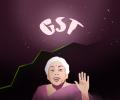
Lower rates effectively increase disposable income, strengthen purchasing capacity, and support broader consumption growth.

Among Sensex shares, Hindustan Unilever, Bharti Airtel, Tech Mahindra, Infosys, Mahindra & Mahindra, ICICI Bank, ITC and Asian Paints were the biggest winners. On the other hand, Kotak Mahindra Bank, Reliance Industries, NTPC, UltraTech Cement and Power Grid were among the laggards.

Among the Sensex pack, HDFC Bank, ICICI Bank, Kotak Mahindra Bank, Bajaj Finance, IndusInd Bank, Bharti Airtel and Nestle were the biggest gainers. Tata Consultancy Services, Sun Pharma, Infosys and Tata Motors were among the laggards.

New lower GST rates kicked in from Monday, resulting in a slashing of prices of as many as 375 items ranging from toothpaste and shampoo to cars and television sets, a move seen as an attempt to boost consumption to cushion an economy facing tariff headwinds. Tax rates of 5, 12, 18, and 28 per cent have been clubbed into two rates of 5 per cent and 18 per cent, resulting in a reduced price of 99 per cent of daily use items.

The country's Fast-moving consumer goods (FMCG) industry witnessed a consumption slowdown in the December quarter, with an overall "negative" volume growth, as consumers continue to reel under inflationary pressure, says a report. According to the report released by data analytics firm NielsenIQ on Thursday, in October-December, the FMCG industry grew 7.6 per cent in terms of value but its volume growth was (-) 0.3 per cent. "... Overall FMCG volume growth is negative, the absolute values, as well as volumes, continue to be above pre-Covid levels across markets," it said.

From the Sensex firms, Hindustan Unilever, Kotak Mahindra Bank, Trent, Reliance Industries, Asian Paints and ITC were among the gainers. However, Bharat Electronics Ltd, Tech Mahindra, UltraTech Cement, Maruti and Eternal were among the laggards.
Some of the key names include: Maruti, M&M, Ashok Leyland, Britannia, Ultratech, JK Cement, Havells, Voltas, Amber, Metro, Trent, LemonTree, Indian Hotels, Niva Bupa, HDFC Life, IGL, Acme Solar, Suzlon, Swiggy, Delhivery, ICICI Bank, HDFC Bank, Bajaj Finance, Shriram Finance," according to a report by Motilal Oswal Financial Services.

Equity benchmark indices Sensex and Nifty ended lower on Thursday after US President Donald Trump announced the imposition of a 25 per cent tariff on all goods coming from India starting August 1 and an unspecified penalty for buying Russian crude oil and military equipment.
Companies manufacturing fast-moving consumer goods (FMCG) continue to see rural stress sustain and it continues to trail urban demand. At the Confederation of Indian Industry's FMCG summit, managements of various companies pointed out urban demand continued to grow while rural demand remained under pressure because incomes were under stress in rural areas. "Due to rural stress, volumes continue to remain an issue for the industry and we are yet to see any revival in demand," Sudhir Sitapati, managing director (MD) and chief executive officer (CEO) at Godrej Consumer Products

Over the past year, the National Stock Exchange Nifty FMCG Index, which tracks the market capitalisation of the top 15 companies in the fast-moving consumer goods (FMCG) sector, has surged by 17.3 per cent. In contrast, the Nifty50, a broader market index, has witnessed an 8.8 per cent increase during the same period. The FMCG stocks have also been rally leaders in the current calendar year.

India's initial public offering (IPO) market is rewriting the rules of sectoral dominance, with a diverse slate of companies entering the stock market arena.
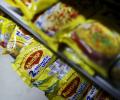
The turnover of FMCG major Nestle India's has grown 2.5 folds to Rs 20,100 crore in last one decade, post the Maggi crisis in 2015, according to the company's latest annual report. At the time of crisis, Nestle India's turnover was at Rs 8,100 crore.

Despite recent underperformance, MNC funds have delivered over longer time frames.

A young couple sharing a laugh - in the living room over a Polish joke book, on the beach, in the rain - with the tagline, "Made for each other", hung from billboards at prominent street corners from the 1960s to the 1990s. It was a campaign for one of the largest selling cigarette brands in India, Wills (Navy Cut) from the ITC stable, that resonated with a generation of smokers and non-smokers alike till the curtains came down on tobacco advertising in 2004. As we prepare to welcome 2024, ITC has metamorphosed from a tobacco giant into a conglomerate straddling multiple large-sized businesses. In the mind space of Gen Z or millennials, the company represents a gamut of branded products - from frozen food (ITC Master Chef), noodles (YiPPee!), and cookies (Sunfeast) to snacks (Bingo!) and notebooks (Classmate), and so on and so forth.

Among Sensex firms, Eternal, Infosys, Asian Paints, HDFC Bank, Bajaj Finserv and Titan were the major gainers. However, Tata Steel, Tech Mahindra, Adani Ports and Bharat Electronics were among the laggards.
