
After a robust 2023, foreign investors significantly scaled back their investments in Indian equities in 2024, with net inflows amounting to over Rs 5,000 crore, as elevated domestic valuations, coupled with geopolitical uncertainties prompted investors to adopt a more cautious stance. Looking ahead to 2025, FPI flows into Indian equities could see a recovery, supported by a cyclical upswing in corporate earnings, particularly in domestic-oriented sectors like capital goods, manufacturing, and infrastructure, Vinit Bolinjkar, head of research, Ventura Securities, said.

Foreign investors pulled out a massive Rs 94,000 crore (around $11.2 billion) from the Indian stock market in October, making it the worst-ever month in terms of outflows, triggered by the elevated valuation of domestic equities and attractive valuations of Chinese stocks. Before this, foreign portfolio investors (FPIs) withdrew Rs 61,973 crore from equities in March 2020. The latest outflow came after a nine-month high investment of Rs 57,724 crore in September 2024.
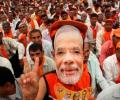
Gujarat Chief Minister Narendra Modi was the Chief Guest at the event.

Release of key macroeconomic numbers, monthly derivatives expiry, and global cues are likely to drive stock market movement this week, according to analysts. Markets will also be reacting to remarks made by the US Federal Reserve Chair Jerome Powell, they said. "This week, we expect the market to witness a gradual up-move with stock-specific action.

The revenue growth of Indian companies for the July-September quarter is estimated to be 5-7 per cent year-on-year (Y-o-Y), marking the slowest growth in 16 quarters, rating agency CRISIL said on Thursday.
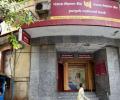
At least 13 candidates are in the race for the position of managing director and chief executive officer (MD & CEO) of Punjab National Bank (PNB), the second-largest public sector bank (PSB), according to multiple sources familiar with the matter. "Among the candidates, some are executive directors (EDs) and managing directors in major PSBs. "Financial Services Institutions Bureau (FSIB) will conduct the interviews next month," said a source.

the largest transactions of the year include the merger of Quality Care India and Aster DM Healthcare valued at $5.08 billion, followed by Bharti Enterprises' acquisition of a 24.5 per cent stake in the BT Group at $4.08 billion, and a family settlement transaction in the Godrej family at $3.5 billion.

A key indicator of corporate efficiency may now be better than at any time since the turn of the millennium. The net working capital cycle - a crucial measure that tracks the time a company takes to convert current assets like inventory into sales and then collect the money from customers - has seen remarkable improvement. According to data from the Centre for Monitoring Indian Economy (CMIE), the average company needed nearly 90 days to complete this cycle in 1999-2000.

The sharp pullback in mid and smallcap stocks signals a cooling-off period in segments that previously attracted considerable investor interest.

Food delivery and quick commerce (qcom) service application (app), Zomato, now commands a market capitalisation (mcap) higher than automobile giants Tata Motors and Bajaj Auto. Zomato, whose shares closed 1.18 per cent lower on Thursday at Rs 288.45 per share, has an mcap of Rs 2.78 trillion, according to BSE data. By comparison, Tata Motors' mcap stood at Rs 2.74 trillion, while Bajaj Auto's was Rs 2.5 trillion on the BSE.

From the 30 Sensex firms, Bajaj Finance, Reliance Industries, Tata Steel, JSW Steel, Tech Mahindra, Tata Motors, Kotak Mahindra Bank and Maruti were the biggest laggards. Reliance Industries Ltd, India's most valuable company, on Monday reported a 5 per cent fall in the July-September quarter net profit as weak oil refining and petrochemical business hurt operational performance. ICICI Bank, Bharti Airtel, Asian Paints, Adani Ports, UltraTech Cement and HCL Technologies were among the gainers.

Equity benchmark indices Sensex and Nifty settled lower for the sixth straight session on Monday due to heavy selling in bellwether stocks including HDFC Bank and Reliance Industries amid mixed trends in the global markets and outflow of foreign funds. Falling for the sixth consecutive session, the BSE Sensex tumbled 638.45 points or 0.78 per cent to settle at 81,050. During the day, it plummeted 962.39 points or 1.17 per cent to 80,726.06. The NSE Nifty slumped 218.85 points or 0.87 per cent to end at 24,795.75.
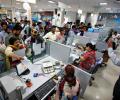
The Union Finance Ministry on Tuesday said that aggregate business of public sector banks (PSBs) has shown strong growth of 11 per cent in the first half of the financial year 2024-25 (H1FY25) to touch Rs 236 trillion. The operating and net profit were also robust. At Rs 1.5 trillion, operating profit grew by 14.4 per cent year-on-year (Y-o-Y) while the net profit saw an impressive 25.6 per cent jump at Rs 85,520 crore in the first half of FY25.

Fundraising momentum is expected to accelerate further in the New Year, potentially surpassing 2024's record figures
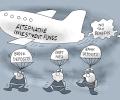
Alternative investment funds (AIFs) - investment vehicles favoured by the affluent - have topped $50 billion (Rs 4.3 trillion) in total investments for the first time during the April-June quarter, according to the latest data from the Securities and Exchange Board of India. The industry's commitments have approached Rs 12 trillion ($140 billion), marking a 40 per cent increase over the past year. The amount raised and deployed stood at Rs 4.74 trillion ($56 billion) and Rs 4.32 trillion ($51 billion), respectively, the data shows.

From the 30 Sensex firms, Mahindra & Mahindra, Bajaj Finance, Asian Paints, Nestle, Bharti Airtel, UltraTech Cement, Hindustan Unilever, ITC, and HDFC Bank were the major laggards. In contrast, Infosys, Tech Mahindra, Tata Motors, Axis Bank, Tata Consultancy Services and State Bank of India were among the gainers.

Benchmark equity indices Sensex and Nifty slumped over 1 per cent on Friday, tracking a weak trend in global markets and fresh foreign fund outflows. Falling for the third day running, the 30-share BSE Sensex tumbled 1,017.23 points or 1.24 per cent to settle at 81,183.93.

After a strong run in the midcap and smallcap indices, which surged 46 per cent and 43 per cent, respectively, on the National Stock Exchange (NSE) during Samvat 2080, analysts suggest that the rally in these segments may pause to catch its breath in Samvat 2081.

From the 30 Sensex firms, Mahindra & Mahindra, State Bank of India, Bharti Airtel, Hindustan Unilever, Kotak Mahindra Bank, UltraTech Cement, Adani Ports, and Tata Steel were the biggest gainers. ICICI Bank, IndusInd Bank, Asian Paints, Tech Mahindra, Infosys, HCL Technologies, Tata Consultancy Services, and Larsen & Toubro were among the laggards.

Enterprising women business correspondents, known as BC Sakhis, have facilitated transactions worth Rs 27,000 crore in Uttar Pradesh, earning Rs 75 crore in commission over the past four and a half years. BC Sakhis, appointed under the nationwide women empowerment programme, are members of self-help groups (SHGs) who are trained and certified to provide banking and financial services in rural areas.

Quarterly earnings from corporates, global trends, and trading activity of foreign investors will guide market sentiment this week, analysts said, adding that benchmark indices may face volatile trends. "The upcoming release of Q2 results will be closely watched, providing insights into corporate performance. "Meanwhile, the escalating tensions between Israel and Iran introduce a significant geopolitical risk, potentially leading to increased oil prices and market volatility.

India should become a regional hub for financial services and constantly engage in new activities to sustain economic growth, Union Finance Minister Jaswant Singh said on Thursday.

Foreign investors turned net sellers in October, withdrawing shares worth Rs 58,711 crore in the month so far owing to escalating conflict between Israel and Iran, a sharp rise in crude oil prices, and the strong performance of the Chinese market. The outflow came following a nine-month high investment of Rs 57,724 crore in September. Since June, Foreign Portfolio Investors (FPIs) have consistently bought equities, after withdrawing Rs 34,252 crore in April-May.

Benchmark Sensex bounced back from early lows and closed higher by nearly 376 points on Monday, snapping its four-day losing run following a rally in blue-chips ICICI Bank, HUL and HDFC Bank. The 30-share BSE Sensex rebounded 375.61 points or 0.46 per cent to settle at 81,559.54. The index opened lower and hit a low of 80,895.05 points in early trade.

The Securities and Exchange Board of India (Sebi) has permitted 100 per cent contribution from non-resident Indians (NRIs) and overseas citizens of India (OCIs) in the corpus of foreign portfolio investors (FPIs) based out of Gujarat International Finance Tec-City (GIFT City), the country's international financial services centre (IFSC). However, the Indian diaspora is yet to fully embrace this new route. The regulator allowed this route to enhance the fund ecosystem at GIFT City and attract genuine investments from overseas Indians.

Among the 30 Sensex firms, Bajaj Finance, Infosys, Adani Ports, JSW Steel, HCL Tech, Bharti Airtel, IndusInd Bank and Tata Motors were the biggest laggards. ICICI Bank, Bajaj Finserv, Titan, Nestle and HDFC Bank were among the gainers.

Religare Enterprises, a financial services firm, has disclosed that the Reserve Bank of India (RBI) turned down its application to appoint Rakesh Asthana as its whole-time director in May this year without citing any reasons. Asthana is a former top official of the Central Bureau of Investigation (CBI). In a notice to the stock exchanges, Religare said that while the company and Asthana were weighing the options of dealing with the letter of refusal by the RBI, it was also busy in preparing for the "herculean task" of making ready multiple applications to regulators.

Whether nominal or real, India's investment rate needs to increase by 3 to 4 percentage points of GDP to support 8 per cent real growth, recommends Nikhil Gupta.

Competition in the fast-growing quick commerce sector is heating up as Swiggy Instamart faces a tough challenge in narrowing the gap with Blinkit, which currently dominates the market. In the second quarter (Q2) of 2024-25 (FY25), Instamart's gross order value (GOV) rose by 42.1 per cent quarter-on-quarter (Q-o-Q) and 75.5 per cent year-on-year (Y-o-Y), reaching Rs 3,382 crore.
From the 30 Sensex firms, Tata Consultancy Services and HCL Technologies dropped over 3 per cent each. Infosys, Tech Mahindra, Sun Pharma and Tata Motors were the other major laggards. Bajaj Finance, Bajaj Finserv, Nestle, HDFC Bank, ICICI Bank and State Bank of India were among the biggest gainers.

Adani Ports was the biggest loser in the Sensex pack, declining 1.37 per cent, followed by ITC, Bharti Airtel, NTPC, Maruti, Asian Paints, Sun Pharma, Power Grid, Hindustan Unilever and Larsen & Toubro. In contrast, Bajaj Finserv, Bajaj Finance, IndusInd Bank, Tata Steel, Axis Bank and Tech Mahindra were among the gainers.
Religare has engaged McKinsey to help it build an emerging market investment bank.
Benchmark indices Sensex and Nifty climbed to fresh all-time highs on Thursday driven by buying in auto shares amid a sharp rally in Asian markets. The BSE Sensex jumped 666.25 points or 0.78 per cent to settle at an all-time high of 85,836.12. During the day, it reached a record intra-day peak of 85,930.43, surging 760.56 points or 0.89 per cent.

Benchmark Sensex rose by nearly 91 points to close at a fresh lifetime high while Nifty settled above the 25,400 level for the first time supported by firm global trends ahead of the much-awaited US Fed's decision on interest rates. Extending its record-setting spree for the second day, the 30-share BSE Sensex climbed 90.88 points or 0.11 per cent to settle at a lifetime high of 83,079.66. During the day, it rose by 163.63 points or 0.19 per cent to 83,152.41.

India's financial sector is dominated by large government-owned and private-sector banks.

'On the weekly chart, the Nifty 50 index has formed a bearish candle and remains below all short-term moving averages.'

NTPC was the biggest gainer on the Sensex chart, rising 2.44 per cent, followed by JSW Steel, Larsen & Toubro, ICICI Bank, Axis Bank, Nestle, Mahindra & Mahindra and Tata Steel. Bajaj Finance declined over 3 per cent. Hindustan Unilever, Bajaj Finserv, Adani Port and Asian Paints were the other laggards.
Foreign investors have continued selling in the Indian market, pulling out a massive Rs 85,790 crore (around $10.2 billion) from equities this month due to Chinese stimulus measures, attractive stock valuations, and the elevated pricing of domestic equities. October is turning into the worst-ever month in terms of foreign fund outflows. In March 2020, FPIs withdrew Rs 61,973 crore from equities.

Private equity (PE) activity in India between January and November 2024 recorded a total value of $30.89 billion across 1,022 deals, a 22.7 per cent increase in value and an 18.4 per cent rise in deal count compared to $25.17 billion across 863 deals during the same period in 2023. Notable large deals during the period include Walton Street India Investment Advisors at $1.5 billion, and KiranaKart Technologies at $1.35 billion.

 © 2026 Rediff.com - Advertise with us - Disclaimer - Privacy Policy - Sitemap - Feedback - About us - Terms of use - Grievances