
'Rising Covid cases and localised lockdowns are being closely monitored.'

Given the impact Covid-19 pandemic had over the world economy, analysts expect global central banks, especially the US Fed, to keep the liquidity tap open, which, in turn, is likely to keep the equity markets, especially those in the emerging markets, buoyant.

The 30-share Sensex ended down 563 points at 25,202.

India Inc on Monday said that the Interim Budget was 'absolutely' up to the expectations.

On the Sensex chart, losses were mainly driven by Hero MotoCorp, Tata Motors, Axis Bank, Tata Steel, Maruti and SBI -- falling as much as 6.19 per cent.
Emerging markets like India and China are witnessing a remarkable transformation, despite a slowdown in economic growth, lifting millions of people out of poverty, Federal Reserve Chairman Ben Bernanke has said.

Top gainers in the Sensex pack included Vedanta, Coal India, ICICI Bank, PowerGrid, HCL Tech and Bajaj Finance, rising up to 2.65 per cent.

All policy planners want low interest rate, says Jaitley

Any market correction, analysts say, would be an attractive entry point for risky assets, which should do well over the medium-to-long term.

If the CBDCs don't offer interest, why will people shift from cash to CBDCs?, asks Tamal Bandyopadhyay.

Rate-sensitive sectors like banks, auto and realty witnessed strong buying demand in trades today
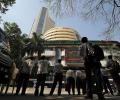
In the past four months, more than 4 million new accounts have been opened, taking the total to 44.3 million.

Tech Mahindra was the top laggard in the Sensex pack, cracking over 5 per cent, followed by Infosys, HDFC, IndusInd Bank, Reliance Industries and NTPC. On the other hand, Hero MotoCorp, L&T, Maruti, UltraTech Cement and Sun Pharma led the gainers' chart.

Instead of getting swayed by market gyrations, investors must stay invested for the long term, advises Sarbajeet K Sen.
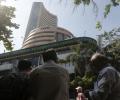
Yes Bank was the top gainer in the Sensex pack, soaring 24.03 per cent, after the lender said it had received a binding offer for $ 1.2 billion funding from an overseas investor. SBI, Infosys, Tata Motors, Bharti Airtel, HCL Tech and HDFC too rallied up to 7.69 per cent.

Most Asian currency and equity markets too suffered steep losses due to US rate hike fears.

A higher opening in the domestic equity market influenced the rupee uptrend

Sensex under pressure as Yellen signals rate hike; banking stock slip.

The markets have been unable to sustain at higher levels as a rise in bond yields globally, especially in the US have dented sentiment. Surging commodity prices, especially crude oil that have now hit $70 a barrel (Brent) coupled with inflation woes and fear of sporadic lockdown across major economic hubs back home as Covid cases rise have chased the bulls away. In the short-term, analysts expect the markets to remain volatile as they react to news flow - both from overseas and developments back home. Investors, they say, need to keep a tab on how the US treasury yields move, which in turn will have a ripple effect on how big money moves across developed (DMs) and emerging markets (EMs), including India.

'One way of doing this could be offering credit guarantee to the banks, say 10 per cent, for fresh loans given to micro, small and medium enterprises,' observes Tamal Bandyopadhyay.

Indian bonds remained volatile over the past week on uncertainties over the maiden offshore sovereign bonds issuance, according to a report by DBS Group Research.
State Bank of India's (SBI) two-year-long wait to expand its operations in the United States is set to end with the New York State Banking Department (NYSBD) clearing the bank's application for opening another branch, senior SBI officials confirmed.

The US Federal Reserve on Wednesday night hiked interest rates by 0.25%.

The report did not specify the impact the rate hike will have on India.
The 30-share Sensex ended down 151 points at 20,709 and the 50-share Nifty ended down 51 points at 6,167.

The Nifty has gained 2.6% so far this week, while the Sensex has climbed 2.85%
The RBI had opened special swaps windows to attract deposits from non-resident Indians and allow oil-marketing companies to source dollars.

The broader NSE Nifty ended 57 points, or 0.49 per cent, lower at 11,498.90 in its fourth straight day of losses.
Gold price is declining due to the strengthening of dollar in the wake of the US Federal Reserve's move to control rate on inflation concerns.

The S&P BSE Sensex slipped 305 points to end at 25,400 and the Nifty50 dropped 87 points at 7,783.

Shares of Yes Bank tanked over 15.52 per cent. Other losers in the Sensex pack included Tata Steel, Maruti, SBI, RIL, Tech Mahindra, ONGC, Vedanta, Bajaj Finance, Hero MotoCorp and TCS, falling up to 3.66 per cent.

Moody's has a 'Baa3' rating for India, with a positive outlook.
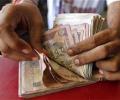
However, dollar's rise against other currencies overseas capped the gains
Markets slumped for fourth straight session this Monday as investors braced for the central bank meeting with caution.

The home currency failed to keep momentum going and largely traded in a narrow range with positive bias in the absence of any market moving factors

Not just India, but Asian peers such as Indonesia, South Korea, Thailand, Taiwan and The Philippines have seen sharp FPI outflows this year

This is its lowest level since August 30

S&P Global Ratings on Wednesday lowered India's economic growth forecast to 5.2 per cent for 2020, saying the global economy is entering a recession amid the coronavirus pandemic. The agency had earlier projected a growth rate of 5.7 per cent during the 2020 calendar.
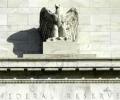
Strong dollar will impact financial system in India.
Ukraine fears weighed on sentiment, with Russia rejecting a peace proposal amidst civil war-like situation in the former Soviet union republic.
