
Leading brokerages have revised their charges with the true-to-label norms by the Securities and Exchange Board of India (Sebi) kicking in from Tuesday.
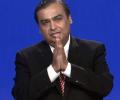
The Securities Appellate Tribunal (SAT) on Monday set aside the penalty imposed by Sebi on Reliance Industries Ltd's chairman Mukesh Ambani and two other entities in a case related to alleged manipulative trading in the shares of erstwhile Reliance Petroleum Ltd (RPL) back in November 2007. The ruling has come after all the entities appealed before the tribunal against the order passed by the Securities and Exchange Board of India (Sebi) in January 2021. In January 2021, Sebi imposed a Rs 25 crore fine on Reliance Industries Ltd(RIL), Rs 15 crore on Ambani, who is the company's chairman and managing director, Rs 20 crore on Navi Mumbai SEZ Pvt Ltd and Rs 10 crore on Mumbai SEZ Ltd in RPL case.

The Indian equity market clocked record average daily turnover (ADTV) in both the cash and derivatives segments in February amid a spike in volatility. The ADTV for the cash segment for both the exchanges combined came at Rs 1.27 trillion, while the same for the derivatives or the futures and options (F&O) segment stood at Rs 483 trillion in the previous month. The volumes for both cash and derivatives have almost doubled from a year ago on the back of rising retail participation in the world's fourth largest equity market.

'These are capex and infrastructure-linked sectors, PSUs or stocks of some corporate houses.'

The government on Friday proposed hiking the securities transaction tax on Futures & Options (F&O) contracts, a move that will increase the trading costs in the derivatives segment as well as help in curbing excessive trades. In the Finance Bill 2023, passed by the Lok Sabha on Friday, the Securities Transaction Tax (STT) on options is proposed to be increased to 0.0625 per cent from 0.05 per cent and on futures contracts to 0.0125 from 0.01 per cent. Analysts opined that higher STT will shore up the government's revenues to some extent and also discourage excessive trading since a large number of retail traders are losing money in the segment.

The Securities and Exchange Board of India (Sebi) is likely to notify soon stricter derivatives trading norms aimed at curbing speculative trading activity and curtailing losses of over Rs 50,000 crore incurred by retail investors every year. Based on the feedback received from industry participants, seven measures proposed by the market regulator in a consultation paper in July may be implemented with minor tweaks ahead of its forthcoming board meeting, said sources.

SEBI has published data showing that more than 90 per cent of investors lose money in futures and options, explains Harsh Roongta.

Stock markets would be driven by global trends and foreign investors' trading activity in the holiday-shortened week, analysts said adding that key equity indices may face volatile trends amid the monthly derivatives expiry on Thursday. This week markets will have just three trading sessions. Equity markets will remain closed on Monday for Holi and on Friday for Good Friday. "This week will be shorter due to market closure on both Monday for Holi and Friday for Good Friday.

The market capitalisation of BSE-listed companies jumped to a lifetime peak of Rs 404.18 lakh crore on Thursday helped by a five-day rally in benchmark indices, making investors richer by Rs 11.29 lakh crore. Recovering after a sell-off in early trade, the 30-share BSE Sensex climbed 486.50 points or 0.66 per cent to settle at 74,339.44 on Thursday. During the day, it surged 718.31 points or 0.97 per cent to 74,571.25.

Investors' wealth eroded by Rs 6 lakh crore in a single day on Wednesday as the BSE benchmark Sensex tumbled over 790 points. The 30-share BSE Sensex fell by 790.34 points or 1.08 per cent to settle at 72,304.88. During the day, it slumped 872.93 points or 1.19 per cent to 72,222.29.
Co-location may well have a majority share of futures and options (F&O) trading in 2023-24 once again. It accounted for 50.53 per cent of the National Stock Exchange (NSE) derivatives trading turnover in February, higher than the 50.1 per cent share seen in 2022-23 (FY23). The share on the BSE was higher though February numbers showed a dip relative to the previous year.

There are a number of steps taken that will leave more money in the hands of the taxpayers.
These include the reduction in tax rates under the new tax regime, increase in standard deduction, allowing tax collected at source to be adjusted against tax deducted at source from salaries, notes Harsh Roongta.

Stock markets are likely to remain range-bound in this holiday-shortened week amid a lack of any major domestic triggers, analysts said. Stock indices may also face volatility during the week amid the monthly derivatives expiry on Thursday. Equity markets would remain closed on Monday for Christmas.

With no major domestic market-moving event scheduled this week, stock market investors would largely focus on global trends and foreign fund movement, and may face volatility amid monthly derivatives expiry, analysts said. This week Federal Open Market Committee (FOMC) meeting minutes are due for release which would provide further cues to the market, Siddhartha Khemka, Head - Retail Research, Motilal Oswal Financial Services Ltd, said. "With all major events behind us, participants will take cues from global markets, crude and currency market movement.

The BSE has decided to move the expiry day of Bankex derivatives contracts from Friday to Monday, effective October 16, the bourse said on Wednesday. "New contracts of S&P BSE Bankex with Monday expiry will be generated on October 13, 2023, and will be available for trading with effect from October 16, 2023," the BSE said, citing the decision was based on the market feedback. The expiry of Sensex derivatives contracts will continue to be on Friday.

Having observed variations in capital gains tax computation, the revenue department is working on a mechanism to analyse futures and options (F&O) trade data and pre-initial public offering (IPO) transactions. "The directorate of I-T systems is working on certain risk-assessment parameters to access the data, which could be on the basis of buying and selling prices of shares in F&Os, variations in margins, fair market value versus IPO prices, etc. "The idea is to segregate and process the voluminous data on equity derivatives for effective use," said a senior government official privy to the plan.

With no major domestic market moving triggers this week, equities would continue to look at global factors, foreign fund movement and trend in the rupee for further direction, analysts said. "This week we have the August month F&O expiry where bulls are looking for rest after a gain in the August series," said Santosh Meena, head of research, Swastika Investmart Ltd. "There are not a lot of triggers but global cues, August month F&O expiry, and FIIs' behaviour will be important factors in the direction of the market," he noted.
Close on heels of the launch of Gift Nifty (earlier SGX Nifty), domestic exchanges are pushing for extension of trading hours for the onshore derivatives market, said sources. Bourses are waiting for a final approval from market regulator Sebi on the proposal to keep the derivatives market open for longer hours, they said. The move is aimed at attracting more trading members for onshore futures and options (F&O) contracts amid risk that global investors could prefer trading at Gift City given the tax benefits.

Global trends, trading activity of foreign investors and movement of oil benchmark Brent crude would dictate terms in the domestic markets this week, analysts said. Equity markets, which fell nearly 3 per cent last week, may face volatile trends amid the monthly derivatives expiry on Thursday. "This week marks the September month Futures and Options (F&O) expiry, which is expected to bring about volatility in the market," said Santosh Meena, Head of Research, Swastika Investmart Ltd.

'If you see another 1000-point correction, people may start panicking.'

Trading volumes for the equities cash segment remained soft, even as the benchmark indices rallied nearly 9 per cent in July. Meanwhile, volumes in the futures and options (F&O) market dipped marginally, but continued to hover at record levels. In July, the average daily turnover (ADTV) for the cash segment was Rs 46,602 crore, up 4.5 per cent month-on-month (MoM), but 26 per cent lower than the preceding 12-month average.

Investors are reluctant to take long-term positions this year after the spectacular gains in 2023. The delivery-based trades on the National Stock Exchange (NSE) have declined to below 36 per cent this year from an average of 38.1 per cent in 2023. Investors tend to seek delivery for stocks where they see a long-term investment opportunity or tactical positional trade.

The S&P BSE Midcap and the S&P BSE Smallcap indices have managed to stay afloat in a volatile January that saw the frontline indices hit their respective 52-week high levels and then slip. While the S&P BSE Sensex has lost over 2 per cent thus far in January, the S&P BSE Midcap and the S&P BSE Smallcap indices have gained nearly 2.5 per cent and 4 per cent, respectively during this period.
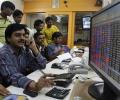
So far, brokers only reported margins at the end of the day, which is why they were able to give additional leverage even if the client didn't have minimum margins.

Heightened volatility and lacklustre returns continue to make a dent in retail participation in the equities cash market segment. The percentage of retail participation in the average daily turnover in the National Stock Exchange's (NSE's) cash segment has come down to 40.8 per cent in February 2023, from 52 per cent a year ago. At the peak, retail investors accounted for nearly two-thirds of cash market volumes in July 2020.

Among other measures, for stocks in F&O segment meeting certain criteria, Market Wide Position Limit might be revised to 50 per cent of the existing levels.

Regulator Sebi on Friday imposed penalties on Reliance Industries Ltd, its chairman and managing director Mukesh Ambani as well as two other entities for alleged manipulative trading in the shares of erstwhile Reliance Petroleum Ltd (RPL) back in November 2007. Fines of Rs 25 crore and Rs 15 crore have been imposed on Reliance Industries Ltd (RIL) and Ambani, respectively. Besides, Navi Mumbai SEZ Pvt Ltd has been asked to pay a penalty of Rs 20 crore and Mumbai SEZ Ltd has been directed to pay Rs 10 crore. The case pertains to sale and purchase of RPL shares in the cash and the futures segments in November 2007.

'I found it unbelievable that L&T said 45,000 jobs were waiting to be filled because of unavailability of suitable skillsets.' 'So, when the Opposition sweepingly says there are no jobs, I'm sorry... I'm not saying it's raining jobs, but there are jobs. The (skill) gap has to be bridged.'

Nextbillion Technology (Groww), the venture capital-backed broking platform, has dislodged Zerodha Broking as India's largest brokerage in terms of number of active clients. Groww had 6.63 million active clients at the end of September, as against Zerodha's 6.48 million, ending the latter's long run at the top. AngelOne and RKSV Securities (Upstox) were ranked third and fourth with 4.86 million and 2.19 million active clients, according to data available on the National Stock Exchange (NSE).

Sebi said it was closely monitoring the situation at the NSE following the disruption of trading due to technical issues.

Cash trading volume declined in 2022, even as benchmark indices outperformed their peers. The average daily trading volume (ADTV) for the cash segment fell 18 per cent year-on-year to Rs 61,392 crore (NSE and BSE combined). The ADTV for the futures and options (F&O) segment (NSE and BSE combined) stood at Rs 125 trillion (notional turnover), up 117 per cent from the previous year.

Ask rediffGURU and tax expert Mihir Tanna your income tax-related questions.

Market players said the new norms were more suited for online brokers, where clients were typically internet savvy.

'In case the El Nino pattern plays out negatively and/or the political situation becomes messy, we may see markets correcting and waiting for the situation to become clear by early/mid-2024.'

Amid a political furore over a meltdown in the Adani group shares, stock market data shows it is not only the plunge now but the sharp surge of the past also drew regulatory attention and enhanced surveillance. Adani group stocks have taken a huge beating on the bourses, losing billions of dollars in market value, after US-based activist short-seller Hindenburg Research made a litany of allegations, including fraudulent transactions and share price manipulation at the Gautam Adani-led group. The Adani group has dismissed the charges as lies, saying it complies with all laws and disclosure requirements.

Benchmark indices Sensex and Nifty retreated from over one-week highs to close lower on Wednesday due to profit booking in banking, IT and metal stocks amid weak global trends. After a two-day rally, the 30-share BSE Sensex dropped by 90.99 points or 0.16 per cent to settle at 57,806.49 in volatile trade. As many as 19 of its constituents declined while 11 advanced. The broader Nifty slipped by 19.65 points or 0.11 per cent to close at 17,213.60 with 31 of its stocks ending in the red.
With the markets scaling new highs, as many as 43 stocks from the Nifty50 index and 27 of the 30 scrips that are part of the S&P BSE Sensex are trading above their respective 200-day moving average (DMA). The 200-DMA is seen as one of the most relevant trend indicators by investors and traders, who believe that stocks and indices trading above this level possess strength and are likely to rally in the short to medium term, while the ones trading below this level are viewed as bearish and expected to see a sell-off. Wipro, UPL, Kotak Mahindra Bank, Hindalco, Infosys, Cipla, and Adani Enterprises are the only stocks from the Nifty50 pack that are still below their respective 200-DMA, the exchange data suggests.

The problem is with the broking model and what brokers are allowed to do, notes Debashis Basu.

'It is critical that the Covid curve does not have a fat tail and the chain is broken quickly.'

The broking industry's pecking order is set to change with Groww, a fin-tech startup from Bengaluru, poised to topple the industry's poster boy, Zerodha, as the leading brokerage in the number of active investors. According to data provided by the portal Topsharebrokers.com, Zerodha has 6.32 million active investors, while Groww is at 5.99 million. It is projected that Groww, which has grown at a much faster clip over the past two years, will surpass Zerodha this month, or next month.
