
While charger deployment is yet to begin, the scheme has supported the sale of 2.65 million EVs as of July 22.

The Ministry of Heavy Industries (MHI) anticipates disbursing approximately 4,700 crore in incentives under the automotive PLI scheme in FY27, more than double the previous two years, while also exploring financing mechanisms for electric buses and trucks and promoting domestic manufacturing of critical EV components.

Electric vehicle retail sales in India reached a new monthly record of 3,27,901 units in July, marking a 66 per cent increase over the previous year, with nearly one in eight vehicles retailed now being electric.

Skoda Auto is strategically navigating the competitive Indian automotive market by prioritising profitable growth, exploring new powertrain options like CNG and a limited diesel return, and gearing up for a locally produced electric SUV, all while expanding its retail footprint.

Tata Motors expands its market leadership in India's electric passenger vehicle (ePV) segment, capturing 39 per cent of the market in Q1FY27, while simultaneously strengthening its position as the nation's second-largest carmaker amidst fierce competition and rapid market growth.

Mountain drives are the ultimate test of an EV's stamina. Here is how the Sierra.ev fared over a rigorous test loop in the Nilgiris, says Rajesh Karkera/Rediff.com.
At an aggressive starting price of 18.79 lakh, the Tata Sierra.ev has a real-world range of 510 to 530 km with the 75 kWh battery pack on a single charge while the smaller 63 kWh battery coughs out a real-world range of 440 to 460 km, plus lifetime battery warranty as standard. And with the intelligent Quad-Wheel Drive system pushing out 504 Nm of torque, the EV flies from 0 to 100 km/h in just 5.8 seconds, says Rajesh Karkera.
First Drive: Why the New Tata Sierra Was Born to be an EV

The 2026 Tata Tiago EV has faster charging, is more spacious, has more features and a lifetime battery warranty. So how is st still so affordable, wonders Rajesh Alva.

Tata Motors Passenger Vehicles is gearing up for the next phase of electric vehicle adoption in India, targeting over 30% EV penetration by FY31. The company plans to launch four new products and over ten refreshes by FY31, expanding its portfolio to ten EV nameplates. This strategy aims to move beyond early adopters to engage the early and late majority consumers, focusing on enhanced range, faster charging, and improved battery technology.

Rajesh Karkera takes his family of EV disbelievers on a road trip to Alibaug on the Mahindra XEV 9e and comes back as a unit singing the EV's praise. This is his account.

India's electric vehicle market achieved a significant milestone in June 2026, accounting for over 12% of total vehicle retail sales for the first time. This growth, driven by strong demand across electric two-wheelers, passenger vehicles, and commercial vehicles, saw overall EV retail sales surge by 63% year-on-year to a record 306,220 units, indicating a mainstream shift in mobility.

Larsen & Toubro (L&T) is investing Rs 5,000 crore over five years to enter the automotive components sector, focusing on electric vehicle (EV) motors, safety systems, and connected-vehicle technologies, aiming to become a Tier-I auto supplier.

New players like Maruti Suzuki, VinFast, and Tesla are significantly expanding India's electric passenger vehicle (e-PV) market, capturing an 8.1 per cent share and contributing 18 per cent of incremental registrations in the first half of 2026, according to Fada Research data.

India's electric vehicle market is experiencing an unprecedented boom with a 37 per cent increase in new entrants, driven by supportive policies and infrastructure.

Fuel prices have risen by about Rs 7.5 per litre since May 15, as global crude oil prices surged due to the ongoing conflict in West Asia and supply concerns around the Strait of Hormuz.

Hyundai Motor India Ltd (HMIL) announced plans to make Tamil Nadu its 'flagship EV hub for India', committing over 26,000 crore in investment, enhancing localisation, and creating approximately 2,000 additional jobs over the next five to six years. The company will roll out two new EV models from its Chennai facility this year, including its first mass-market dedicated EV.

Tata Motors Passenger Vehicles Ltd (TMPV) announced a price hike of up to Rs 25,000 across its ICE and electric vehicle models, effective September 1, to mitigate rising input costs and inflationary pressures.

"There is a sharp jump that we have seen in bookings of EVs... The jump, at least in our case, in just two months, it is about 2 to 2.5 times of what it used to be"

Total automobile retail sales in India surged by 25.89 per cent year-on-year to 25,91,138 units in July, driven by GST rationalisation, ease of retail finance, and favourable festival timing, according to the Federation of Automobile Dealers Associations (FADA). This marks the first time all vehicle categories recorded their best-ever July sales.

Indian passenger vehicle manufacturers are significantly increasing production and stocking dealerships in anticipation of strong festival season demand, with new launches planned and supply bottlenecks being addressed. However, the industry faces potential moderation in growth during the second half of FY27 due to a high base from last year's post-GST surge, commodity inflation, and elevated inventory levels.

India's EV ecosystem is growing, but remains too underdeveloped to cushion a major oil supply shock.
VinFast has gone from an unknown brand to India's fifth-largest EV carmaker in just seven months, but its toughest battle is only beginning.

India is significantly expanding its crude oil sourcing to Latin America, with Venezuela emerging as a major supplier, as geopolitical disruptions in the Middle East and the Strait of Hormuz compel the world's third-largest oil consumer to diversify its energy supplies.

China sailed through the crisis in the Strait of Hormuz relatively unscathed even as the impact of its steps shielded other consuming nations from having to pay high crude oil prices.
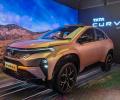
India's electric passenger vehicle market saw an 87.4 per cent year-on-year increase in FY26, reaching 233,246 units, primarily driven by the mid-size SUV segment (20-30 lakh price bracket), while the entry-level segment (sub-10 lakh) experienced a decline.

Mercedes-Benz India plans to continue introducing hybrid vehicles, including the new AMG E 53 plug-in hybrid EV, to meet consumer demand, viewing hybrids as a crucial bridge to full electrification despite the absence of supportive government policies.
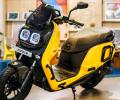
India's home-grown EV startups say the government's auto PLI scheme is helping big players while shutting out innovators building electric two- and three-wheelers from scratch.

The physical centres will operate on a monthly subscription model, where access would be limited to verified active gig workers and platform verification.

TVS Motor Company is strategically positioned for sustained outperformance in the domestic two-wheeler industry, propelled by increasing market share in scooters, premium motorcycles, electric vehicles (EVs), and robust export growth, according to analysts.
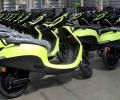
The Central government has approved an additional Rs 1,000 crore for electric two-wheelers (e2w) under the PM Electric Drive Revolution in Innovative Vehicle Enhancement (PM E-DRIVE) scheme, extending incentives for the segment until March 2028.

Following Prime Minister Modi's appeal, Delhi ministers are adopting measures like using public transport, electric vehicles, and virtual meetings to reduce fuel consumption and cut expenditure.

Protect your vehicle from the unpredictable monsoon season by understanding essential motor insurance add-ons like Engine Protect and Zero Depreciation, crucial for covering damages from floods, waterlogging, and preventing costly out-of-pocket expenses.
TVS Motor Company reported a significant 56.8 per cent year-on-year increase in net profit to 1,036 crore in Q1FY27, driven by record sales volumes, an improved product mix, and robust demand in both domestic and international markets, with management anticipating continued double-digit industry growth.

BMW Group India says every Re 1 depreciation in the rupee against the euro trims its profit margin by about 1 per cent, prompting the company to consider further price increases.

The Delhi government has approved the Delhi EV Policy 2.0, which will phase out fresh registrations of internal combustion engine (ICE) two-wheelers and three-wheelers over the next two years, starting with a ban on ICE 3Ws and N1 category LCVs from January 1, 2027, and ICE 2Ws from April 1, 2028.
Vietnamese automobile major VinFast is rapidly expanding its retail network in India, aiming for 75 dealerships across 60 cities by the end of 2026, while also building a comprehensive EV ecosystem.

The Maharashtra government has constituted a high-level committee to address road repairs, traffic congestion and management issues in the rapidly expanding Chakan industrial belt in Pune district, and set up a mechanism for time-bound redressal of industrial grievances.

Nissan Motor India aims to achieve a fourfold increase in domestic sales, targeting 100,000 units annually, and export another 100,000 vehicles from its Chennai plant by financial year 2027-28 (FY28), marking a significant revival of its presence in the Indian passenger vehicle market.
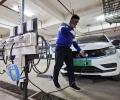
India's electric vehicle (EV) market experienced a significant surge in financial year 2025-26 (FY26), with e4W registrations nearly doubling and e2Ws growing by over 20%, propelled by expanding charging infrastructure, diverse model launches, and accessible financing.
