
Domestic PMI data, US Federal Reserve meeting minutes and the progress on India-US trade deal negotiations are likely to influence movement in the equity market in the week ahead, according to analysts. Moreover, the trading activity of foreign investors would also influence the equity market trends.

From the Sensex pack, HCL Tech, Infosys, Tata Consultancy Services, Hindustan Unilever, Sun Pharma and Titan were among the biggest gainers. In contrast, Tata Motors Passenger Vehicles, Maruti, Adani Ports and Bajaj Finance were among the laggards.

Bharti Airtel vice-chairman & managing director Gopal Vittal on Wednesday said while a call on exercising the option of converting pending spectrum dues into government equity would be taken by its board, the company had reached out to the Department of Telecommunications (DoT) to confirm whether it could do so. "On the adjusted gross revenue (AGR) conversion, it was simple.

From the Sensex pack, Asian Paints, Tech Mahindra, Tata Consultancy Services, Bajaj Finserv, Adani Ports, HCL Technologies, Bharti Airtel, Infosys, Trent, Reliance Industries, UltraTech Cement, Sun Pharmaceuticals, Eternal, Titan and Bajaj Finance were the gainers. On the other hand, Tata Steel, Tata Motors Passenger Vehicles, Tata Motors Commercial Vehicles, Bharat Electronics, Kotak Mahindra Bank and PowerGrid were the laggards.

Real Madrid are considering creating a subsidiary that would allow external investors to buy a stake of around 5% in the world's most valuable football club.

India's leading real estate developers are accelerating their push into plotted development, a segment once dominated by unorganised players but now reshaped by branded offerings, faster cash flows and evolving buyer preferences. This strategic shift is visible across markets such as Bengaluru, Chennai, Hyderabad, Gurugram, peripheries of the Mumbai Metropolitan Region (MMR) and even Tier-II cities.

The rupee breached 90-levels against the greenback for the first time on Wednesday, falling 6 paise to 90.02 in early trade, as banks kept buying US dollars at higher levels and FII outflows continued.

The convergence of artificial intelligence, evolving labour regulations and rising employee expectations will redefine how organisations manage pay, people and performance in the coming year, a report says.

Foreign investors continue to exhibit confidence in the country's equity market, injecting Rs 19,860 crore in May driven by favourable global economic indicators and strong domestic fundamentals. This positive momentum follows a net investment of Rs 4,223 crore in April, data with the depositories showed.

Mint Road's proposals on banks' M&A funding are cautious even as entrants root for more elbow room, and weigh business models.

Among Sensex firms, Bajaj Finance, Bajaj Finserv, Reliance Industries, HDFC Bank, Tech Mahindra and Axis Bank were the major gainers. However, Asian Paints, HCL Tech, Titan and Hindustan Unilever were among the laggards.

Currently, India has five publicly listed Reits: Brookfield India Real Estate Trust, Embassy Office Parks Reit, Mindspace Business Parks Reit Nexus Select Trust, and Knowledge Realty Trust.

Shares of Infosys surged nearly 4 per cent on Wednesday, a day before the opening of the tender window for its Rs 18,000-crore share repurchase programme. The buyback, which will see the company repurchase 100 million outstanding shares at Rs 1,800 each, will remain open until November 26.

Inflows into equity mutual fund (MF) schemes declined in May, logging their lowest tally in 13 months at Rs 19,013 crore. It came even as the gross systematic investment plan (SIP) inflows surged to a record high of Rs 26,688 crore.

Among Sensex firms, Axis Bank, HDFC Bank, Reliance Industries, ICICI Bank, Bharat Electronics and Larsen & Toubro were the biggest laggards. However, Asian Paints, Maruti, Bharti Airtel and Bajaj Finance were among the gainers.

Among Sensex firms, Tata Steel, HCL Tech, Bajaj Finance, Bajaj Finserv, Bharat Electronics and Eternal were the major laggards. However, Maruti, Mahindra & Mahindra, Tata Motors Passenger Vehicles and ITC were among the gainers.

The Union Cabinet's decision to raise the foreign direct investment (FDI) limit in the insurance sector to 100 per cent is unlikely to significantly boost foreign investment as distribution remains a critical factor, requiring overseas players to partner with Indian businesses, experts said.
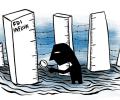
Leading non-banking financial company (NBFC) Shriram Finance on Friday said Japan-based MUFG Bank would invest Rs 39,618 crore, or $4.4 billion, to acquire a 20 per cent stake on a fully diluted basis through a preferential issue of equity shares.

The Union Cabinet on Friday approved 100 per cent foreign direct investment (FDI) in the insurance sector, a move that was welcomed by industry as it would help attract more capital and global expertise, while boosting insurance coverage in the country. A bill to amend the insurance law is likely to be tabled on Monday in Parliament, whose winter session is slated to conclude on December 19.
Among Sensex firms, Tech Mahindra, Infosys, Bajaj Finance, Bajaj Finserv, Eternal, Adani Ports, Hindustan Unilever and Bharat Electronics were the major laggards. However, Bharti Airtel, Axis Bank, Asian Paints and Titan were among the gainers.

'An asset must generate income. Equities yield dividends, bonds pay coupons, deposits give interest, and real estate earns rent.' 'Gold, silver, and even Bitcoin produce no income, they merely store value. So, they should not be compared to productive assets.'

The Reserve Bank of India (RBI) on Tuesday announced a fresh round of liquidity measures through open-market operations (OMOs) and a foreign exchange buy-sell swap, under which it will inject close to Rs 3 trillion into the banking system. The central bank said it would purchase Government of India securities worth Rs 2 trillion through OMOs, spread across four tranches of Rs 50,000 crore each to be conducted on December 29, January 5, January 12 and January 22.
From the Sensex pack, Asian Paints, ICICI Bank, PowerGrid, Larsen & Toubro, Bajaj Finserv, Bharti Airtel, Sun Pharmaceuticals, Maruti Suzuki India, Axis Bank, UltraTech Cement and HCL Technologies were the only gainers. On the other hand, Eternal, Tata Motors' commercial vehicles arm, Mahindra & Mahindra, Tata Steel, Bharat Electronics Ltd, Tata Motors Passenger Vehicles, Trent, Tata Consultancy Services, Hindustan Unilever, and Infosys were among the laggards.

The country's largest IT services company TCS on Thursday announced a tie-up with private equity major TPG for its upcoming data centre business, in which both the partners aim to invest Rs 18,000 crore. TPG will invest $1 billion or around Rs 8,870 crore in the AI data centre business christened as 'Hypervault', and hold a stake between 27.5-49 per cent in the venture.

Reserve Bank Governor Sanjay Malhotra on Friday said the central bank does not target any band for the rupee in the forex market, and allows the domestic currency to find its own correct level.

Maharashtra Deputy Chief Minister Ajit Pawar on Saturday said officials responsible for registering documents should have refused to process agreements that were not permissible under the law and clearly informed the parties concerned about such limitations.
India's second-largest telecom service provider Bharti Airtel will call in March 2026 the final tranche of about Rs 15,741 crore from its 2021 rights issue of Rs 21,000 crore, proceeds from which will be used towards retiring majority of non-government-related debt.

Among Sensex firms, Bajaj Finserv, Bajaj Finance, Tata Steel, Reliance Industries, Sun Pharma, Tata Motors Passenger Vehicles, Axis Bank and Infosys were among the major gainers. Bharti Airtel and Asian Paints emerged as the laggards from the pack.

Healthcare major Max Healthcare Institute delivered a healthy performance in the second quarter (July-September) of 2025-26 (Q2FY26). Strong patient volumes and average revenues not only boosted the top line but also aided the operating performance.

Ask rediffGURU Reetika Sharma your insurance, mutual fund and personal finance-related questions.

Ahead of the Union Budget 2026-27, Indian business houses have urged the government to make demergers tax-neutral, particularly in cases involving transfer of investments in associate companies with 25 per cent or more shareholding, under the new Income Tax Act. This may possibly help some companies planning to go public, according to a source.
Among Sensex firms, Power Grid, Eternal, Bharti Airtel, Axis Bank and Infosys were the biggest laggards. However, Mahindra & Mahindra, Sun Pharma, Kotak Mahindra Bank and State Bank of India were among the major gainers.

ICICI Prudential Asset Management Company has set a price band of Rs 2,061- Rs 2,165 per share for its Rs 10,600-crore initial public offering (IPO) that will open on Friday. At the upper end of the band, the country's largest asset manager will command a valuation of Rs 1.07 trillion.
Majority of equity fund managers were able to squeeze in some extra returns over their benchmarks in 2024-25 (FY25). While some managed to do so by delivering outsized returns during the equity market rally in the first half of the year (H1FY25), others succeeded by limiting the downside during the market downturn.

India's private-sector banks are likely to lose market share for a second consecutive year in 2025-26, as their loan books continue to expand much slower than overall bank credit.

Danish pharma major Novo Nordisk on Friday launched its blockbuster type 2 diabetes treatment injection Ozempic, globally popular for its weight-loss benefits.

Public sector banks have written off loans worth Rs 6.15 lakh crore in the last five and a half years, Parliament was informed on Monday.

'A work guarantee that can be switched off at will is no guarantee at all.'

'Foreign capital will continue to come directly into India, but companies have realised that GIFT City is a more cost-efficient way of channelling funds.'
From the Sensex pack, Eternal, Bharat Electronics Ltd, Trent, Axis Bank, State Bank of India, Bajaj Finance, Sun Pharmaceuticals, Asian Paints, Adani Ports, Hindustan Unilever, Reliance Industries, ITC, PowerGrid, Tata Motors Ltd's Commercial Vehicles business, and Bajaj Finserv were the gainers. Infosys, Tata Motors Passenger Vehicles, Tata Steel, ICICI Bank, Tech Mahindra, Titan, UltraTech Cement, Maruti Suzuki India, and Larsen & Toubro were the laggards.
 © 2026 Rediff.com - Advertise with us - Disclaimer - Privacy Policy - Sitemap - Feedback - About us - Terms of use - Grievances