
The Supreme Court of India has agreed to examine petitions challenging the constitutional validity of the Digital Personal Data Protection (DPDP) Act, 2023, focusing on concerns about its impact on the Right to Information Act.

Digital Personal Data Protection (DPDP) law aims to protect the privacy of Indian citizens while proposing a penalty of up to Rs 250 crore on entities for misusing or failing to protect digital data of individuals.

The Digital News Publishers Association (DNPA) has informed the Supreme Court that newsrooms will be forced to shut down if journalists are required to seek permission before publishing information under the Digital Personal Data Protection (DPDP) Act and its accompanying Rules. The Supreme Court has issued notices to the Union ministries of Law and Justice, and Electronics and Information Technology (MeitY) on the DNPA's petition.

A new law that defines how companies should process users' data came into force with the President giving assent to the Digital Personal Data Protection (DPDP) Act passed by Parliament in the just-concluded monsoon session. The law arms individuals with greater control over their data while allowing companies to transfer users' data abroad for processing, except to nations and territories restricted by the Centre through notification. It also gives the government power to seek information from firms and issue directions to block content.

The Supreme Court has sought the Centre's response on a petition filed by the Digital News Publishers Association (DNPA) challenging the Digital Personal Data Protection (DPDP) Act, 2023, and its accompanying Rules. The DNPA argues that the law, lacking exemptions for journalism, could impede news gathering and infringe upon citizens' right to information. The challenge highlights concerns over consent requirements for reporters and the Act's impact on the Right to Information.

The "construct of the DPDP Act" cannot be changed at this stage, though there may be some minor tweaks in the language of the Rules and formats in certain legitimate cases.

The draft rules have been issued after Parliament approved the Digital Data Protection Bill 2023 about 14 months back.

The United States Trade Representative (USTR) has expressed concerns that India's Digital Personal Data Protection (DPDP) Act, particularly the lack of a deemed consent mechanism for credit information companies, and the Information Technology (IT) Rules of 2021, along with frequent internet shutdowns, could negatively impact the ability of US companies to operate and trade in India.

BJP MP Raghav Chadha addressed the 12th IPU Global Conference of Young Parliamentarians in Samarkand, Uzbekistan, highlighting India's digital transformation journey. He emphasised how technology is widening access and promoting inclusion, citing UPI's success, affordable data, and robust data protection laws. Chadha also discussed India's digital cooperation with Uzbekistan and the importance of digital rights, safety, and skill development for all citizens.
Entities may be given about a year to tune their systems to comply with norms of Digital Personal Data Protection Act, 2023, Minister of State for Electronics and IT Rajeev Chandrasekhar said on Wednesday. Speaking to reporters on the sidelines of consultation with the industry, Chandrasekhar said the Data Protection Board and guidelines for the eight rules, including consent management, will be put in place within a month. "Industry wants some more time for age-gating, different timelines for transition for different data fiduciaries.

'One has to be very mindful because it will be applicable for big tech platforms and even for banks and insurers, whose business is completely different.'

Artificial intelligence major Anthropic has launched AI inference capabilities in India through Amazon Bedrock, allowing its Claude AI models to process data within the country's jurisdiction. This strategic move addresses the growing demand from Indian entities, particularly in regulated sectors, for compliance with local data processing norms as per the Digital Personal Data Protection Act. The initiative strengthens Anthropic's commitment to the Indian market, enabling secure and compliant AI deployment for sensitive workloads and fostering trust among major enterprises like Reliance, CRED, and NPCI.

The data protection bill introduced in Parliament on Thursday enables the government "to call for information" from data protection board, data collecting entities or intermediary, and safeguards the Centre from legal proceedings for "action taken in good faith" under the provisions of the legislation.

Indian banks and non-banking financial companies (NBFCs) are undertaking a comprehensive review and reset of their engagement terms with fintech firms, driven by the Reserve Bank of India's (RBI) draft Guidance on Regulatory Expectations for Data Governance and the stringent compliance requirements of the Digital Personal Data Protection (DPDP) Act, 2023, and its 2025 Rules.

WhatsApp is testing new ways for users in India to confirm their age as it prepares to comply with upcoming legal requirements, including those related to the Digital Personal Data Protection (DPDP) Act, the Meta-owned messaging platform said on Tuesday.

CAG Sanjay Murthy has urged statutory auditors to enhance their scrutiny of Public Sector Undertakings (PSUs) by examining systems, testing controls, and utilising data analytics to identify unusual transactions. Speaking at a workshop, Murthy stressed the importance of auditors understanding business to challenge judgments and ensure audits lead to better enterprise decisions. He also highlighted the critical need for PSUs to treat cyber security and data governance as core business risks, advocating for boardroom discussions on these issues and prompt incident reporting.

Former Rajya Sabha member Saket Gokhale has alleged that the Election Commission refused to disclose details of Chief Election Commissioner Gyanesh Kumar's official visits and the expenditure incurred from public funds, citing 'personal information' under the Right to Information Act.

The government on Thursday tabled the Digital Personal Data Protection Bill 2023 in the Lok Sabha with an aim to protect the privacy of Indian citizens, while proposing a penalty of up to Rs 250 crore on entities for misusing or failing to protect digital data of individuals.
The Rajya Sabha on Wednesday passed the Digital Personal Data Protection Bill 2023 by voice vote following a walkout by opposition members over the Manipur issue.

A data breach does not end when the headlines fade. For victims, stolen personal information can fuel fraud, identity theft and financial losses for years.

The new rules allow for a staggered implementation road map, giving companies, data fiduciaries, data principals, and other stakeholders up to 18 months to comply with the administrative guidelines under the DPDP Act.

A new report by ADP reveals that one in two Indian companies plan to adopt AI-powered payroll systems within the next 12 months, driven by the need for automation in workforce management, compliance, and compensation decisions. However, firms are increasingly cautious about data protection risks, especially with the implementation of the Digital Personal Data Protection (DPDP) Act, 2023.

Prime Minister Narendra Modi is promoting India as a global hub for digital infrastructure and artificial intelligence, highlighting the government's incentives for data center investments and inviting the world's data to reside in India.
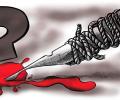
'By extending the definition of 'personal' to include institutions and not just individuals, the State has equipped itself with a tool to block access to most kinds of information.'
'We are in touch with industry to further compress the timelines.'

The government on Wednesday withdrew the Personal Data Protection Bill from Lok Sabha and said it will come out with a 'set of fresh legislations' that will fit into the comprehensive legal framework.

The Supreme Court has directed the Centre to explore a statutory framework to ensure social media intermediaries comply with Indian laws regarding minors, particularly concerning their inability to independently enter into contracts. The court highlighted the need for safeguards to protect children from potential harms on digital platforms, including exploitation and misuse of data, and asked the Solicitor General to examine incorporating these requirements into intermediary rules.

Insurance claims from cyberattacks on Indian banks and businesses have surged, particularly in the first half of FY27, with bank claims alone exceeding 150 crore. Despite this, premiums remain soft due to abundant reinsurance capacity, though experts warn of potential rate hikes if claims continue to rise.

DPDP Act (2023) gives individuals the right to decide how their personal data is collected and used. For many businesses, this means reworking longstanding data practices, notes Ravi Duvvuru.

'There were two options before the government -- create a complex, cumbersome law, which will cause a tremendous amount of compliance challenges for startups or say let's go back and do a clean slate, where we do a framework of laws and policies'
After withdrawing the personal data protection bill, the government is hopeful of getting a new legislation passed by the next Budget session of Parliament, Union Minister Ashwini Vaishnaw has said.

Cybersecurity specialists warn AI-driven attacks require continuous threat monitoring instead of periodic security checks.

After withdrawing the personal data protection bill, the government is hopeful of getting a new legislation passed by the next Budget session of Parliament, Union minister Ashwini Vaishnaw has said. The government on Wednesday withdrew the Personal Data Protection Bill from the Lok Sabha. The Joint Committee on Personal Data Protection Bill, 2019, headed by BJP member P P Chaudhary, had tabled its report in Lok Sabha on December 16, 2021.

Recently, an Air India flyer sent a legal notice to the airline seeking damages of Rs 30 lakh for the breach of personal data of 4.5 million passengers, including her husband and herself. Air India had informed the complainant of the data leak a month earlier, after it emerged that its passenger service system provider fell prey to a cyberattack in February. However, in the absence of a data protection law, India lacks a mechanism for compensation or grievance redress of consumers in such cases, say experts. Advocate Virag Gupta, a New Delhi-based cyber law expert, explains that a legal notice is a good beginning in the Air India case, but it raises many questions. These include whether sensitive personal information has been leaked and whether the airline is responsible or not, given that a passenger service system provider was also involved.
'Unless the government comes up with the rulebook, the technical requirements will not be clear to us.' 'Going by the Act, non-technical provisions can be complied with within six months.' 'But we need up to 24 months for provisions like parental consent.'

The government is introducing a 0.4% Merchant Discount Rate (MDR) on UPI person-to-merchant payments above Rs 2,000, effective October 15. This move ends the zero-MDR regime, aiming to fund UPI infrastructure and sustainability, as the previous government subsidy was insufficient to cover operational costs. Payments between individuals and most everyday merchant transactions will remain free.

Since the deadline for Justice B N Srikrishna Committee's feedback is December 31, the government is unlikely to table a data protection Bill in the winter session of Parliament.

Companies, particularly those that are notified as Significant Data Fiduciaries, will have to make extensive investments in data mapping, process modification, consent management tools, tools to enable Data Principal Rights, and establish a well-structured Data Privacy Officer organisation.

The Supreme Court has sought responses from the Union ministries of electronics and information technology and law and justice regarding a plea for safeguards for minors on social media. The NGO 'Just Rights for Children Alliance' filed the plea, arguing that social media platforms should not enter into contracts with children under 18, citing their statutory incapacity to contract and the risks of online harm.
