
The Centre is considering a gradual phasing out of certain direct tax exemptions meant for corporate and personal tax payers. This is among the tax proposals being discussed for the upcoming Union Budget 2022-23. A top policymaker said that according to the government's internal assessment, the percentage of corporates and individuals shifting to the new exemption-less tax regime has been very encouraging, and the Budget-makers expect many more to make the switch in the coming years. The person also said the finance ministry is exploring the option of rationalising the capital gains tax rates.

India remains an attractive destination for foreign direct investments (FDI) on account of healthy prospects of economic growth and its skilled workforce, according to a survey by Deloitte. A large proportion of international business leaders remain confident in India's short- and long-term prospects and are readying plans to make additional and first-time investments in the country, it said on Tuesday. "The survey, which questioned 1,200 business leaders of multinational corporations in the US, UK, Japan and Singapore, found that India remains an attractive destination for investments, scoring highly for its skilled workforce and prospects for economic growth," the survey - India's FDI Opportunity - said.

The total amount of fraud reported by banks showed a drop in 2020-21 - for the first time in eight years - though there is an emerging trend of private sector banks reporting a larger number of frauds related to card and internet banking. According to the latest data released by the Reserve Bank of India, commercial banks reported Rs 1.38 trillion of frauds in 2020-21, as compared to Rs 1.85 trillion in the previous year. The first half of the current fiscal year saw banks reporting frauds worth Rs 36,342 crore.

The government has tweaked the income tax laws to make it easier for the new owners of loss-making public sector undertakings (PSUs) to carry forward the accumulated losses and set them off against future profits. This will result in significant tax savings for the new owners if they are able to turnaround operations of the ailing PSU within a few years. This will, in turn, boost the post-tax earnings and returns for the new owners.
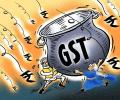
India's GST collection remained above Rs 1 lakh crore for the third month in a row at over Rs 1.17 lakh crore in September, raising expectations that second half of the year will post higher revenues. The tax collections in September on goods sold and services rendered was 23 per cent higher than Rs 95,480 crore collected in September 2020, and 27 per cent higher than Rs 91,916 crore collected in September 2019. The collection in September is the highest in five months since April, when revenue was at record high of Rs 1.41 lakh crore.

In a significant move, markets watchdog Sebi on Tuesday decided to implement the requirement to separate the positions of chairperson and managing director at listed companies on a voluntary basis and not make it mandatory for now. The development also comes against the backdrop of Finance Minister Nirmala Sitharaman recently saying the regulator should hear if Indian companies have a view on the matter even as she made it clear that she was not "giving a diktat". The top-500 listed entities were required to split the roles of chairperson and managing director/chief executive officer before the April 2022 deadline.

Goods and Services Tax (GST) collections at Rs 95,480 crore in September touched the highest level so far this fiscal, the finance ministry said on Thursday.

Welcoming the latest round of stimulus announced by Finance Minister Nirmala Sitharaman on Thursday, experts said the measures will support the economic recovery boosting demand, job creation and by providing funds to the MSME and stressed sectors. The fiscal impact of the stimulus is likely to be around 0.25-0.6 per cent of GDP in the current fiscal, they said.

Amid fears of a third wave of coronavirus pandemic and hardening of retail inflation, the Reserve Bank is likely to maintain status quo on interest rate and watch the developing macroeconomic situation for some more time before taking any decisive action on monetary policy. The RBI is scheduled to announce its bi-monthly monetary policy review on August 6 at the end of the three-day meeting -- August 4-6 -- of the Monetary Policy Committee (MPC). The RBI Governor-headed six-member MPC decides on the key policy rates.

GST mop-up likely to fall in May, June after touching record levels in April and March.

E-way bill generation, which is related to paying Goods and Services Tax (GST) and a key high-frequency indicator of economic activity, may have fallen to a five-month low in April as more cities experience lockdowns due to a surge in Covid-19 cases. In April e-way bill generation may decline to 55-58 million, which is the lowest since at least November. On the higher side, it is a 17 per cent decline over March.

Chartered accountants are readying themselves for a higher onus on individuals to report violations that they come across as part of their work. There has been a scramble to understand the implications as the non-compliance with laws and regulations (NOCLAR) comes into effect in less than six months. It is applicable from April 1, 2022 after being deferred earlier because of the Covid-19 pandemic.

GST revenue for the month of June stood at Rs 92,849 crore, a 2 per cent increase over the same month a year ago, the Finance Ministry said on Tuesday. The gross GST revenue collected in the month of June 2021 stands at Rs 92,849 crore of which central GST is Rs 16,424 crore, state GST Rs 20,397, Integrated GST Rs 49,079 crore (including Rs 25,762 crore collected on import of goods) and cess is Rs 6,949 crore (including Rs 809 crore collected on import of goods), the ministry said. The GST revenues for the month of June 2021 are 2 per cent higher than Rs 90,917 crore collected in June 2020.

Of the 1,145 offers made this year, consulting firms made up 34 per cent, followed by banking, financial services and insurance, pharma/healthcare, IT/ITeS and FMCG/retail.
A series of steps taken by the government to promote ease of doing business and liberalisation of foreign direct investment norms have helped India receive record FDI inflows so far this year, and implementation of measures like PM Gati Shakti, single window clearance and GIS-mapped land bank are expected to further push investments in 2022. Notwithstanding the global slowdown and the COVID-19 pandemic, total foreign direct investments into India rose to a record $81.72 billion in 2020-21. During April-July this fiscal, FDI (foreign direct investment) into the country increased by 62 per cent to $27.37 billion.

In signs of acceleration in economic activity, India's tax collections on goods sold and services rendered returned to over Rs 1 lakh crore in July after the second wave of Covid-related restrictions caused a blip in the previous month. Goods and Services Tax (GST) mop-up grew 33 per cent year-on-year in July to over Rs 1.16 lakh crore, indicating that the economy is recovering at a fast pace. In July 2020, the collection was Rs 87,422 crore. This is the second highest collection so far this fiscal after a record Rs 1.41 lakh crore mop-up in April.

However, that could only be for sectors where 100 per cent FDI is allowed under the automatic route and pose no risk to national security.

A day after joining the OECD-G20 framework for global minimum tax, the finance ministry on Friday said some significant issues including share of profit allocation and scope of subject to tax rules are yet to be addressed and a 'consensus agreement' is expected by October after working out the technical details of the proposal. Total 130 countries on Thursday agreed to a overhaul of global tax norms to ensure that multinationals pay taxes wherever they operate and at a minimum 15 per cent rate. India is in favour of a consensus solution which is simple to implement and simple to comply.

Sanjiv Mehta, chairman of the country's largest consumer goods company, HUL, believes that the second wave of the Covid-19 pandemic between April and June this year has been a mere pause in India's consumption story, and that it will not change the country's overall growth trajectory. India is poised for growth, especially in the fast-moving consumer goods (FMCG) sector, Mehta told shareholders at the company's annual general meeting on Tuesday. The signs of recovery are becoming evident with many states lifting lockdown restrictions in recent weeks.

The net indirect tax collection in 2020-21 grew 12.3 per cent annually to Rs 10.71 lakh crore, thereby exceeding the target set in revised estimates, the Finance Ministry said on Tuesday. The mop-up through indirect taxes, which include GST, Customs and excise duties, was Rs 9.54 lakh crore in 2019-20. In the Revised Estimates (RE) for 2020-21, the target was set at Rs 9.89 lakh crore. Net collections from Goods and Services Tax (GST) stood at Rs 5.48 lakh crore during 2020-21, an eight per cent drop compared to Rs 5.99 lakh crore in the previous fiscal year.

A week after the Income Tax Department's much publicised new e-filing portal went live, users continued to face technical glitches ranging from longer than usual logging time, inability to respond to notices and not all features functioning yet, chartered accountants said on Monday. The new portal, "http://www.incometax.gov.in/"www.incometax.gov.in, was launched last Monday (June 7), which the tax department as well as the government said was aimed at making compliance more taxpayer-friendly. But users complained of technical issues facing the site from the very first day and not everything has been fixed even after a week, chartered accountants (CAs) said, adding that taxpayers are unable to view past e-filed returns and many features/ facilities continue to be marked 'coming soon'. Finance Minister Nirmala Sitharaman herself had asked Infosys - the vendor which created the portal - and its Chairman Nandan Nilekani to fix the technical glitches.
With Goods and Services Tax (GST) officers under pressure to exceed the Rs 1-trillion collection mark per month, industry has faced a barrage of recovery notices and summons issued over the last one month across sectors, according to company executives. Industry bodies have claimed harassment by field officers, blocking of input tax credit, cancellation of GST registration, threats of arrest and steep penalties, impacting their working capital and operations. Company executives pointed at an atmosphere of apprehension and fear due to such notices and summons.

A rare bonhomie among three private telecom companies in raising tariffs coming on the back of a bailout package by the government may have helped the telecom sector avert a crisis but the challenges haven't ceased to exist as the industry faces a cash-guzzling task of rolling out 5G networks in the coming months. The sector that provides direct and indirect employment to millions is projected to see Rs 1.3 lakh crore to Rs 2.3 lakh crore of investments in the coming years in creating robust infrastructure and building telecom and network products that have been incentivised by the government through PLI and other initiatives. After years of cut-throat competition and the apex court ruling on payment of past statutory dues left some players in the lurch, billionaire Sunil Mittal's Bharti Airtel and struggling Vodafone Idea almost in tandem raised tariffs, taking the plunge they had long been talking about.

According to the survey by Deloitte India and National Human Resource Development, 35 per cent of Indian businesses are expecting a strong growth this year while another 45 per cent feel that it would be moderate.
Chief financial officers in the country are cautiously optimistic about the future and are neutral about their companies' performance in the short term, said the Deloitte India CFO Survey 2013.

Acquisitions may have played a role in much of the increase.

At present, the EPFO is mandated to invest 20-45 per cent of its incremental funds - of around Rs 1.5 trillion - in debt-related instruments.

The Centre plans to create a special window for strategically important investors such as sovereign wealth funds and pension funds that wish to invest over Rs 3,000 crore through a single transaction.

Seeking to provide a quicker and value-maximising outcome for stressed MSMEs, the government has introduced a pre-packaged resolution process for such enterprises by amending the insolvency law. Now, Micro, Small and Medium Enterprises (MSMEs) can seek resolution for their stress through the pre-packaged process under the Insolvency and Bankruptcy Code (IBC). An ordinance was promulgated to amend the IBC on April 4. Many MSMEs have been impacted by the coronavirus pandemic and experts opined that the latest amendment, which comes less than two weeks after the suspension of certain IBC provisions ended, is a welcome move.

GST collections in March touched a record high of over Rs 1.23 lakh crore, a 27 per cent growth over the year-ago period, the Finance Ministry said on Thursday. "GST revenues crossed above Rs 1 lakh crore mark at a stretch for the last six months and a steep increasing trend over this period are clear indicators of rapid economic recovery post pandemic," the ministry said. Closer monitoring against fake-billing, deep data analytics using data from multiple sources including GST, income tax and customs IT systems and effective tax administration have also contributed to the steady increase in tax revenue over last few months, it added.

Industry players believe the new DFI model will be initially risk capital, which will then be used to mobilise additional resources from development agencies such as World Bank.

India's Rs 4.5-trillion fast-moving consumer goods (FMCG) sector was one of the first to bounce back from the lockdown induced blues, reporting a year-on-year (YoY) growth in the October-December quarter last year. That said, the overall consumption figures continue to remain depressed. The FMCG market, which includes daily consumables like branded atta, hand sanitizers, edible oils, shampoos, razors, and so on, recorded 7.3 per cent value growth during the period, while the smartphone market grew by 21 per cent.

The bill to nullify retrospective taxation offers a fair solution within the framework of Indian law and Parliamentary sovereignty to companies which have been subjected to such demands, Finance Secretary T V Somanathan said on Thursday. Finance Minister Nirmala Sitharaman introduced 'The Taxation Laws (Amendment) Bill, 2021' in the Lok Sabha that seeks to withdraw tax demands made using a 2012 retrospective legislation to tax the indirect transfer of Indian assets. The Bill provides for the withdrawal of tax demand made on "indirect transfer of Indian assets if the transaction was undertaken before May 28, 2012 (i.e. the day the retrospective tax legislation came into being)."
India Inc is expected to offer average salary increments of 11.3 per cent this fiscal and those working in sectors like pharmaceuticals, health care and life sciences are expected to get a raise of 13.1 per cent.

According to official sources, the number reflects pick up in consumption and improvement in compliance as well.

Faced with prospect of its assets across the globe being seized just like Pakistan and Venezuela, the government decided to scrap retrospective taxation but the international embarrassment could have been avoided had 'attached' shares of Britain's Cairn Energy Plc not been sold, according to tax and legal experts. On Thursday, the government introduced a Bill in Parliament to scrap the tax rule that gave the tax department power to go 50 years back and slap capital gains levies wherever ownership had changed hands overseas but business assets were in India. The 2012 legislation was used to levy a cumulative of Rs 1.10 lakh crore of tax on 17 entities, including UK telecom giant Vodafone, but substantial punitive action was taken only in the case of Cairn.

The lingering slowdown, election-led uncertainties and strict regulatory interventions have been affecting growth and pulling down profits, according to a survey of chief financial officers.

Other decisions piled up include rationalisation of GST rate slabs, correction of inverted duty on certain items and inclusion of petroleum products.

The bulk of states' revenue comes from the devolution from the Centre's divisible tax pool, GST, VAT on petroleum, and excise duty on alcohol.

The I-T department issued a circular allowing manual filing of Form 15CA/15CB (required for foreign remittances) with banks till June 30, so that business transactions may go on. The forms will be uploaded online on the e-filing portal later, it added.
