Chinese import tariffs have unwittingly come to India's assistance to help boost imports of US liquefied petroleum gas (LPG) at rates cheaper than what it pays for supplies from West Asia, according to industry sources and shipping data.
After HPCL, the government headhunter struggled to find a suitable candidate for the top job at Bharat Petroleum, as most applicants were narrow specialists lacking multidisciplinary experience needed to run a large organisation. The Public Enterprise Selection Board (PESB) last month interviewed a dozen candidates including BPCL director (finance) Vetsa Ramakrishna Gupta and its director (refineries) S Khanna but found none suitable for the job of chairman and managing director of Bharat Petroleum Corporation Ltd (BPCL), according to a PESB order.

'Geopolitical stability could remove the crude oil risk premium.'

Move could fetch the exchequer Rs 14,000 cr

In an eventful week ahead, stock markets may face volatile trends before the RBI's interest rate decision and the US inflation data announcements, as investors continue to assess the broader implications of US tariffs on global economy and inflation, analysts said. Investors fear that a full-blown trade war will impact global trade and economic growth, according to market experts.

Some are treating the price correction as akin to a fiscal stimulus that could kick-start a new demand cycle in the economy.

The initial cost of the reserve, expected to become operational by 2012, was estimated at Rs 2,400 crore (Rs 24 billion), excluding the cost of crude oil. Strategic Petroleum Reserves Ltd, special purpose vehicle that is implementing the project, has asked Engineers India Ltd to work on the revised cost," said sources. EIL is the management consultant for this project.
The growth in production of eight key infrastructure sectors slowed down to 6.1 per cent in July this year due to a decline in the output of crude oil and natural gas, according to official data released on Friday. The growth rate, however, is up from 5.1 per cent in June.
An Indian official team is likely to visit Washington next week to iron out differences on certain issues before formally launching negotiations for the proposed India-US bilateral trade agreement (BTA), an official said. The visit, which comes within weeks of a high-level US team visiting India, indicates that the talks for the BTA are gaining momentum.

'The market's nervousness ahead of anticipated US tariffs has led to a significant downturn in Indian equities.'
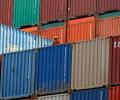
India's exports declined for the fourth month in a row in February to $36.91 billion due to volatility in petroleum prices and global uncertainties. The country's exports stood at $41.41 billion in the same month a year ago.

Dalal Street investors were a poorer lot on Monday as their wealth eroded sharply by Rs 14 lakh crore following a sharp decline in benchmark indices amid a global market meltdown due to recession fears. The 30-share BSE Sensex tumbled 2,226.79 points or 2.95 per cent to settle at 73,137.90. Intra-day, the benchmark slumped 3,939.68 points or 5.22 per cent to 71,425.01.

In a significant move, state-run oil producer Oil India Limited (OIL) has finished drilling its first well in the Andaman sea while Oil and Natural Gas Corporation (ONGC) has just started drilling operations in the area, said officials.

'I am more optimistic about India than before.'
For starters, the Iran situation is sure to have an impact on crude oil prices, as the world has little spare capacity.

India's unabated tryst with Russian crude oil is slowly coming to an end. The time has come for Indian refiners to navigate, creatively, the choppy waters of the post-honeymoon period, and for Indian policymakers to take cognisance of the broader impact on India from the spillover of the Russian crisis - after Washington's warning to transgressors last week. Shipments from Russia to India have averaged over 1.8 million barrels a day since February, according to data from Paris-based market analytics firm Kpler. But much of the crude shipped to India was non-sanctioned because it traded below a price cap set by the US led G-7 nations in December.

A year after a Hamas attack against Israel on October 7 and the ensuing Israeli invasion of the Gaza Strip, India's trade with most West Asian countries has largely escaped any major disruption, except with countries like Israel, Lebanon, and Jordan. However, repeated flare-ups of geopolitical tensions in the region continue to drive up shipping and logistics costs.

The Indian industry is paranoid about the USA's plan to impose reciprocal tariffs and wants early conclusion of a bilateral trade agreement, sources said on Wednesday. They said that the talks for the proposed bilateral trade agreement are going well.

The growth in production of eight key infrastructure sectors entered a negative zone after three-and-a-half years, contracting 1.8 per cent in August 2024 due to decline in output of coal, crude oil, natural gas, refinery products, cement and electricity, according to official data released on Monday. The growth rate was 6.1 per cent in July. The growth of core sectors -- coal, crude oil, natural gas, refinery products, fertiliser, steel, cement and electricity -- was 13.4 per cent in August 2023.

Lower crude oil costs and higher marketing margins are expected to raise the fortunes of oil marketing companies (OMCs) in the first quarter (Q1) of 2023-24 (FY24), while city gas distribution (CGD) companies could also benefit from lower spot prices of liquefied natural gas (LNG). However, in a break from the past, growth trends are expected to diverge for various segments within the broad energy sector. Analysts expect the earnings from gas production to go down for upstream national oil and gas companies such as Oil and Natural Gas Corporation (ONGC) and Oil India (OIL) due to the introduction of the new domestic gas pricing regime on April 1. After showing steep losses over the first half of 2022-23 (FY23), the marketing margins of OMCs have steadily recovered in four months.

The official said there are both challenges and opportunities for India as many of its competitor countries in exports, such as China Vietnam, Bangladesh, Cambodia and Thailand, face higher duties.
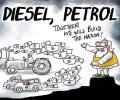
The government on Wednesday scrapped a week-old tax on the export of petrol and cut windfall taxes on overseas shipment of diesel and ATF as well as the one imposed on domestically produced crude oil after global oil prices fell. While the Rs 6 a litre export duty on petrol was scrapped, the tax on the export of diesel and jet fuel (ATF) was cut by Rs 2 per litre each to Rs 11 and Rs 4 respectively, government notifications showed. The tax on domestically produced crude was also cut to Rs 17,000 per tonne from Rs 23,250, a move that will benefit producers like ONGC and Vedanta Ltd.
India, the world's third largest oil consuming and importing nation, in July bought $2.8 billion worth of crude oil from Russia, second only to China which remains the largest importer of Russian oil, a report said. Russia emerged as India's biggest supplier of crude oil, which is converted into fuels like petrol and diesel in refineries, after Russian oil was available on discount following some European nations shunning purchases from Moscow over its invasion of Ukraine in February 2022.
Senior officials of India and the US will begin three-day talks on the proposed bilateral trade agreement in New Delhi on Wednesday amid threats of reciprocal tariffs from the Trump-administration, an official said. To formally start the negotiations on the pact, Assistant US Trade Representative for South and Central Asia Brendan Lynch, along with a team of officials, is in New Delhi.

US crude oil futures edged down on Tuesday after hitting an 8-week high of $82 a barrel on Monday.

'The favourable rupee-dollar exchange rate, there are opportunities we can tap.'

The output of eight key infrastructure sectors expanded by 2 per cent in September, though the growth was slower than the 9.5 per cent registered in the same month last year, according to official data released on Wednesday. The output of these sectors had contracted by 1.6 per cent in August. Out of the eight key sectors, three -- crude oil, natural gas and electricity -- recorded negative growth in September.
Crude oil volumes on the MCX platform touched a record level of 10.19 million barrels on Wednesday because of increased participation from investors amid high volatility in global crude prices. Although, there was a sharp fall in crude oil prices on Wednesday, but volumes remained upbeat, experts said, adding that prices were below $130 per barrel.

The US Fed interest rate decision, inflation data and FIIs are the key factors that are expected to drive stock markets this week, analysts said. Global trends will also be tracked by investors for further cues, they added. "The Indian stock market's future trajectory will be influenced by a blend of global and domestic factors.
The basket of crude oil India imports averaged $99 a barrel on Tuesday, the lowest level since April 2, a petroleum ministry official said. It had averaged $96.52 a barrel on April 1 and crossed the $100 mark on April 7.

Investors should avoid making drastic changes to their asset allocation during a market correction.

Fertiliser production dropped sharply by 11.5 per cent, crude oil by 5 per cent and natural gas by 0.9 per cent in October over the year-ago month

India and the visiting US officials have decided to hold a wrap-up session on Saturday morning to conclude the three-day talks on the proposed bilateral trade agreement, government sources said. They said the discussions are at a "very" early stage.
Crude oil futures again flirted with the $60 a barrel mark Friday as prices rose on speculative buying and fears of supply disruptions due to refinery glitches.

Top losers in the Sensex pack included M&M, SBI, Yes Bank, Asian Paints, HDFC, Tata Steel and L&T, shedding up to 2.55 per cent. The broader NSE Nifty settled 79.80 points, or 0.72 per cent, down at 10,996.10.

The real benefits can be seen when prices stabilise, preferably at levels acceptable to both consumers and producers.
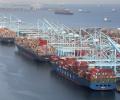
India and the US have decided to hold sector-specific talks in the coming weeks to finalise the structure of the proposed bilateral trade agreement (BTA), the government said on Saturday. The engagement between the two countries came in the backdrop of the USA's threat to impose reciprocal tariffs on its key trading partners, including India, on April 2.

Here is a list of Q & As to explain these issues and implications of the US move.
Though India has unilaterally scrapped duties on import of crude oil, it is not a binding commitment. Brunei's request to scrap duties on crude oil was acceded to since the commodity forms a bulk of its exports, the official said, adding this is not the case with Malaysia. India meets 75 per cent of its crude oil requirements through imports. As an inflation control measure, the government has scrapped import duty on the commodity.

Titan, Nestle, Hindustan Unilever, State Bank of India, Larsen & Toubro, ITC, Zomato and Bajaj Finserv were also among the laggards. Adani Ports, IndusInd Bank, Tata Motors and HDFC Bank were among the major gainers.
 © 2026 Rediff.com - Advertise with us - Disclaimer - Privacy Policy - Sitemap - Feedback - About us - Terms of use - Grievances