
Wholesale price-based inflation stood at 7.95 per cent in the corresponding week a year ago. Inflation, still nearly the lowest in three decades during the week, does not take into account policy rate cuts announced by the RBI in its annual credit policy.
The RBI's assessment of the economy, presented as a prelude to the policy announcement, was relatively downbeat. Conceding the persistence of a hostile global environment and domestic weakness, the RBI expects GDP growth during 2009-10 to be 6 per cent. This is slightly higher than the 5.7 per cent that reflects the median of its external forecasters' survey.
Mirroring weak cues from the overseas markets, the Sensex opened with a negative gap of 215 points at 10,765. The index thereafter tried to recover but slipped to lower levels after the Reserve Bank of India (RBI) announced its annual credit policy.
Bankers expect RBI to drop rates though there may not be any increase in aggregate liquidity as banks are parking surplus funds with the central bank. Some sectors like the small and medium enterprises, real estate have not been getting adequate funds and RBI may extend a refinance line or special facility whereby they can borrow at a subsidised rate.
A repo rate hike may hurt growth far more than it will help deal with an inflation rate that is already dropping.
China will deny bank loans to companies violating environmental rules under a 'green credit policy' in an effort to tackle worsening pollution, the state media reported on Thursday.
Making it easier for urban cooperative banks to extend housing loans, the Reserve Bank of India has relaxed the risk provisioning norm for purchase of residential properties up to Rs 30 lakh (Rs 3 million).
Finance Minister Chidambaram has summoned chiefs of public sector banks on May 1. This meeting will be held 2 days after the annual credit policy to review their financial performance in 2007-08. The move is being seen in banking circles as a message from the Centre to ensure that the public sector does not take interest rate cues from the central bank alone. Detailed agenda of the meeting has not been circulated. Bankers are waiting for signals from the RBI's monetary policy
Concerned over growing litigations against banks and high-handedness of recovery agents, the Reserve Bank on Tuesday issued strong warning to banks to check such practices or be barred from engaging such services.
The country's largest public sector lender State Bank of India on Thursday said that it does not expect the interest rates to go up in the short term.
Writer Jamal Mecklai muses about the state of mind of the RBI governor, post the credit policy. He gets into the mind of the governor and tries to guage his thoughts and reactions. Against all anticipation, the governor did not bow down to political pressure and the RBI rates were not hiked. He did a fine balancing acting between the two volatile factors -- market and the govt. He leaves the task of choosing between sub 5% inflation rate and 10+% growth rate to his successor.
For the first time after the government took drastic steps to rein in runaway price rise, inflation slipped to 7.14 per cent in the week ended April 5, 2008. In the previous week inflation had surged to a 40-month high of 7.41 per cent, mounting pressure on the Reserve Bank to further tighten money supply in its forthcoming annual credit policy later this month.
The Indian markets look extremely stretched. The Sensex valuations have gone up 19.28 per cent to 26 per cent since the lows triggered by the sub-prime crisis two months ago. Taiwan and Kospi, on the other hand, have not changed much. A Citi group report suggested that the RBI might hike CRR rates to suck out excess liquidity from the system. An increase of one per cent would draw out $7 billion from the system.
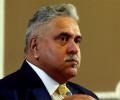
The agency has stated in detail in the charge sheet how funds of about Rs 400 crore were moved abroad in alleged violation of rules.
This Statement consists of two parts: Part I. Annual Statement on Monetary Policy for the Year 2007-08; and Part II. Annual Statement on Developmental and Regulatory Policies for the Year 2007-08.
Amid stock market crash and global financial crisis causing concern among the investors, a fall in inflation rate definitely comes as a relief.
The Reserve Bank kept bank rate unchanged at 6 per cent, short-term borrowing (reverse repo) was kept intact 6 per cent, lending (repo) at 7.75 per cent. Cash Reserve Ratio, a statutory deposit by commercial banks with the central bank, was retained at 7.5 per cent.
The RBI has announced its credit policy last week and auto financiers believe that consumers should 'wait and watch' before the interest rates on auto loans settle down.
Come January 31 and the RBI will announce its credit policy. To help you understand it, Get Ahead cuts through the RBI jargon.
Now that the quarterly monetary and credit policy announcement is out of the way, the macroeconomic policy focus must surely return to the critical issue of the exchange rate. The debate on what to do about it has been vigorous, on these pages and elsewhere, but, so far, it has not translated into a concrete statement about the direction which the policy is likely to take.
A fresh round of selling in late noon trades saw the index tumble to a low of 19,695 -- down 543 points from the peak. The Sensex finally ended with a loss of 194 points at 19,784. The NSE Nifty ended at 5,869, down 37 points.
Global rating agency S&P forecast on Tuesday a slowdown in Indian economy to 8.6 per cent this fiscal due to high interest rates and appreciating rupee but expected no change in key rates and cash reserve ratio in RBI's credit policy on October 30. But the strong domestic demand would ensure that India maintains high growth. The moderation from last year's 9.4 per cent to 8.6 per cent this year therefore reflected a soft landing, S&P said in its mid-year review.
At a time when inflation is hovering around 6 per cent, Reserve Bank on Friday said that a 5 per cent inflation this year is "certainly possible" and that India is likely to be "less affected" by global imbalances.
The Reserve Bank of India's decision to allow airlines hedge jet fuel in global markets came in for praise from the industry and the civil aviation ministry, but end-users are unlikely to benefit in the form of lower airfares.
Bankers were optimistic about the Reserve Bank's annual credit policy, which left all key rates unchanged, but feared that there could be tightening measures in the near future if it had to contain inflation around five per cent.
Economic growth projected at 8.5 per cent for 2007-08; Inflation to be close to 5 per cent.
Monetary and liquidity conditions have remained comfortable so far this fiscal, with strong acceleration in deposits to accommodate sustained growth of bank credit, the Reserve Bank said in the medium-term review of its credit policy for this fiscal.
A day after the Reserve Bank kept key interest rates unchanged, the International Monetary Fund on Wednesday said further interest rate increases are needed in India with monetary conditions still accommodative and credit expanding strongly.
Consumers may not have got any respite from high interest rates, but they also need not be apprehensive about further increase with the Reserve Bank of India giving a clear signal for stable monetary policy stance.
Inflation rises to 7.33 per cent for the week ended April 12 from 7.14 per cent in the previous week.
The Reserve Bank of India said on Tuesday it would accord highest priority to contain inflation within 5 to 5.5 per cent, while keeping its projection for economic growth during 2006-07 unchanged at 7.5 to 8 per cent.
Commercial banks were on Tuesday asked to improve credit quality by undertaking a segment-wise analysis and take steps to expand in those areas where credit demand is growing rapidly.

The rupee on Tuesday gained 14 paise to close at 61.88 against the dollar.
The Reserve Bank of India is expected to come out with comprehensive guidelines on the non-banking finance companies that are not involved in taking public deposits.
The Sensex is up 57 points at 14,269 in the opening trades
Inflation declined to 5.95 per cent during the week ended January 13 from a two-year high of 6.12 per cent in the previous week, primarily due to decline in prices of food products.
Reserve Bank of India Governor, Y V Reddy presented the Monetary and Credit Policy for 2006-07 on Tuesday.
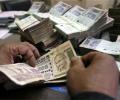
There is high demand for the US currency from importers
 © 2026 Rediff.com - Investor Information - Advertise with us - Disclaimer - Privacy Policy - Sitemap - Feedback - About us - Terms of use - Grievances