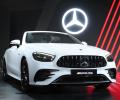
Electric vehicle (EV) penetration in the luxury car segment has seen a drop by nearly 3 percentage points in the GST 2.0 era with the internal combustion engine versions offering better total cost of ownership, according to industry players. While the trend is also visible in the mass market segment, it is the entry luxury segment that is witnessing a more marked shift towards internal combustion engine (ICE) vehicles as price difference between EV and ICE widened under the new GST rates.
'We expect this festival buying spirit to continue in October as well, with upcoming festivities including Dhanteras and Diwali, which traditionally witness spirited buying from customers.'

The share of EVs in the luxury segment rose from 7 per cent in January-May 2024 to 11 per cent during the same period in 2025, marking a 66 per cent growth in the electric luxury segment.
For the first time in history, the luxury car market is poised to cross the sales mark of 50,000 units in 2024, with Mercedes leading the way
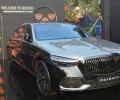
Mercedes-Benz India is looking at electric entry-level models to attract first-time luxury car buyers, as it sets eyes on another double-digit growth this year, its managing director and CEO Santosh Iyer said on Monday. The company, which launched all-electric entry SUV EQA 250 at an introductory price of Rs 66 lakh, has also introduced the new EQB 350 SUV (5-seater) priced at Rs 77.5 lakh and EQB 250+ SUV (7-seater) tagged at Rs 70.90 lakh (prices all India ex-showroom). It will also launch the EQS Maybach SUV and electrified G-Class models in India later this year.
German luxury carmaker Mercedes-Benz is considering assembling more electric vehicles at its plant in India not merely to gain cost advantage but also to meet its zero emission mobility and carbon neutral setup goals, according to a senior company official. Mercedes-Benz India, which currently assembles its flagship electric luxury sedan EQS at its Chakan unit, is considering localisation of other models depending on demand.

Luxury carmaker Mercedes-Benz India on Thursday said it will increase prices of its vehicles ranging between Rs 2 lakh to Rs 12 lakh across different models from April 1, to offset rising input costs specially the adverse impact of foreign exchange. This will be the second time in three months that the company is increasing prices of its vehicles. The ex-showroom price of the company's model range will increase by up to 5 per cent from April 1, 2023, the company said.

Sales of Mercedes-Benz in the country have jumped by 36.67 per cent to 16,497 units in 2022-23 amid high demand for its top-end vehicles, according to its India MD & CEO Santosh Iyer. "This is the highest-ever sales recorded by the company in any financial year," he stated. In the luxury car segment of India, Mercedes-Benz is the market leader with about a 42 per cent share.

German premium car maker Mercedes-Benz on Wednesday reported nearly 100 per cent growth in sales at 4,101 units in the domestic market in September of the current year. Mercedes-Benz India had sold 2,058 cars in the Indian market in the July-September period of 2020. The strong rebound in sales particularly in Q3 2021 retail, reflects the continuous V-shaped recovery witnessed since the pandemic affected second quarter (April-June), owing to the return of economic activities, a stable economy at large and an overall positive market outlook.
Many of these companies have a waiting period from 6-18 months now, indicating a rise in demand.

After a brief lull during the pandemic, there is a strong revival in luxury car sales, bolstered by more launches across price bands, replacement demand, ban on old diesel vehicles in the NCR, and 'revenge buying'.

The new car market is estimated at around 30,000 units a year in sales in a good year, whereas the used car market for luxury vehicles is estimated at around 60,000 cars annually.
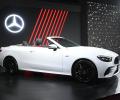
While Mercedes-Benz India expects 25 per cent of its India sales to come from EVs in the next four years, BMW says it estimates around 10 per cent of sales to come from those in the near future.
'Since we have a long waiting period, customers will be able to see cars for the next one year which are going to be produced and block (book) them.' 'So, if there is a wedding or a birthday in October, they can already check its availability in that month and block it.'

Equipped with a host of features including seats with massaging function, climate control, remote controlled door, 15 speaker surround sound system, the car also has agility control suspension system.
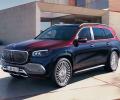
This SUV will look as cool in 2030 as it might have in 2010 and ultimately that's what drives the core appeal of Mercedes-Benz and its products -- being classic, says Pavan Lall.

The company now offers seven different models of SUVs in India compared to two models a decade ago and contributes around 40 percent of sales up from 30 percent a couple years ago.

There are a whopping 10 sedans slated for a launch in India this year. Rajesh Karkera/Rediff.com gives the lowdown.

Automakers are caught in a chicken-and-egg situation: Prices have to come down if volumes are to increase, and volumes won't increase unless prices come down, notes Pavan Lall.

While the overall passenger car industry is expected to grow at around seven per cent a year in the next five years, SUV growth is expected to be over 10 per cent.
 © 2026 Rediff.com - Investor Information - Advertise with us - Disclaimer - Privacy Policy - Sitemap - Feedback - About us - Terms of use - Grievances