
Net direct tax collection grew about 8.82 per cent to over Rs 18.38 lakh crore in the current fiscal till January 11 due to slower refunds and better corporate tax mop-up.

Around 24 paise will come from borrowings and other liabilities, 10 paise from non-tax revenue like disinvestment, and 2 paise from non-debt capital receipts, the Budget documents showed.

'Among corporates, about 60% of income is now reported under the new tax regime.'
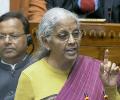
The 2026-27 Budget, seeking to harmonise the government's imperative to grant certainty while ensuring a rational tax policy, had several notable announcements to usher in halcyon days, says Mukesh Butani.

India's net direct tax collections contracted 1.3 per cent to about 5.63 trillion as of July 10, with corporate taxes dropping 3.7 per cent and non-corporate taxes recording a fractional 0.04 per cent contraction, Income Tax department data released on Friday revealed.

Here are the key numbers to watch out for in the Union Budget for 2025-26:

'We kept this Budget on a larger plank, rather than on one incident, however serious.'

Finance Minister Nirmala Sitharaman's biggest challenge will be to find a new growth driver, particularly against the backdrop of a global economy ravaged by heightened uncertainty and fragmentation, financial markets on a precipice, and global commodity prices on a continued uptrend.

Net direct tax collection grew 8 per cent to over Rs 17.04 lakh crore this fiscal till December 17 on slower refunds and higher advance taxes from corporates, the income tax department data showed on Friday.

The key question is how much of the latest growth record represents recovery from the 2020-2021 downturn, and what is the sustainable growth rate now, asks T N Ninan.
The core dilemma remains: Why provide further stimulus to an economy that is already booming at an 8 per cent growth rate? asks Rajeswari Sengupta.
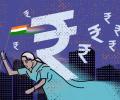
The government's indirect tax collection is expected to increase by 8.3 pc in the financial year 2025-26 (FY26), according to a report by ICICI Bank. The report also noted that this growth is higher than the 7.1 per cent increase seen in FY25 and is mainly driven by rise in GST revenue from strong urban consumption. It said "The increase is driven by higher goods and services tax collections which in-turn is explained by boost to urban consumption".

Net direct tax collection dipped 3.95 per cent to Rs 6.64 lakh crore so far this fiscal, mainly on account on higher refunds, according to government data released on Tuesday. Direct tax includes taxes on income paid by companies, individuals, and by professionals, and other entities.

GST 2.0 may cushion consumers against US tariffs, but like the 2019 corporate tax cut, it risks being another tactical fix rather than a structural growth strategy, expects Debashis Basu.

There has never been a moment in India's history when it has been so adrift in the world, so confused about what it stands for and against and so humiliated, asserts Aakar Patel.

Net direct tax collection so far this fiscal stood at Rs 4.59 lakh crore, 1.39 per cent lower compared to the mop-up during the corresponding period of last fiscal, as advance tax collections slowed, government data showed. Advance tax collection during April 1-June 19, 2025 grew a meagre 3.87 per cent to Rs 1.56 lakh crore.

These changes certainly bring India's GST a lot closer to what an ideal GST would look like, points out Karan Bhasin.

The next many decades belong to India as the global economic powerhouse, and it will be essential to continue demonstrating policy stability, as the country aspires to be the world's manufacturing hub, Maruti Suzuki India MD and CEO Hisashi Takeuchi said on Friday.

'That is going to have an impact on literally every one, whether you buy a toothpaste, a safety pin, a car, shoes or medicines or you go to a diagnostic centre.'

Companies may foot less of the tax bill for some time yet. The corporate share of net direct tax collections has been lower in 2024-25 than in previous years. The corporate segment accounted for 45.6 per cent of total net direct tax collections as of March 16, compared to 48.1 per cent on the same date in 2023-24 (FY24).

In a stunning victory, Indian-American lawmaker Zohran Kwame Mamdani defeated former governor Andrew Cuomo in the Democratic primary race for New York City mayor
Net direct tax collection grew 13.13 per cent to over Rs 21.26 lakh crore so far this fiscal aided by by higher advance tax mop up, government data showed on Monday. During the year, the government collected Rs 10.44 lakh crore from four instalments of advance tax as against Rs 9.11 lakh crore in the previous fiscal, registering a growth of 14.62 per cent.

Indian-origin lawmaker Zohran Kwame Mamdani stunned in the Democratic primary race for New York City mayor, upsetting former governor Andrew Cuomo.

Zohram Kwame Mamdani would be the city's first Muslim and Indian American mayor if elected New York mayor this November.

From FY20 to FY24, the revenue forgone due to tax incentives for individuals and Hindu undivided families stood at Rs 8.7 trillion, significantly higher than the Rs 4.53 trillion forgone for corporations.
The government wants new domestic companies to set up their manufacturing units fast and hence the concessional tax rate of 15 per cent has been extended by a year till March 2024, revenue secretary Tarun Bajaj said on Friday. Stating that direct and indirect tax collections are going up and have good buoyancy, Bajaj said it means that the corporate sector is also doing well, and India's tax to GDP ratio could be "highest ever" in the current year. The Budget 2022-23 presented on February 1 has proposed that the concessional 15 per cent corporate tax rate would be available for one more year till March 2024 for newly incorporated manufacturing units.

Highlights of the announcements made by Finance Minister Nirmala Sitharaman on the reduction in corporate tax and other fiscal relief measures for the economy to promote growth and investment.

The government's capital expenditure in the April-November period of financial year 2024-25 (FY25) continued to contract with a 12.3 per cent decline year-on-year (Y-o-Y), according to data released by the Controller General of Accounts on Tuesday.

For every rupee in the government coffer, the biggest pie of 66 paise will come from direct and indirect taxes, according to the Union Budget 2025-26 documents. Around 24 paise will come from borrowings and other liabilities, 9 paise from non-tax revenue like divestment, and 1 paise from non-debt capital receipts, the Budget documents said.
Net direct tax collection grew 16.12 per cent to over Rs 9.95 lakh crore so far this fiscal on higher advance tax mop up. Refunds worth over Rs 2.05 lakh crore were issued, a 56.49 per cent jump over the same period last fiscal. The net personal income tax (PIT) collection grew 19 per cent to Rs 5.15 lakh crore between April 1 and September 17.
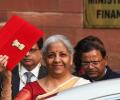
'... that it once again shies away from renewing its commitment to strategic divestment,' points out A K Bhattacharya.

The increased tax target comes at a time when consumer spending and sales growth are slowing down and most companies are not investing in new capacities.
Net direct tax collection grew 18.3 per cent to about Rs 11.25 lakh crore as of October 10 this fiscal, government data showed on Friday. The mop-up includes personal income tax collection of Rs 5.98 lakh crore and corporate tax collection of Rs 4.94 lakh crore.

ITRs with zero tax liability have increased to 55.7 million in FY25.

That's a big change that was made possible due to corporate tax cuts. Corporation tax collection in FY22 will be lower than even the FY18 levels, reports

Foreign companies now pay less tax relative to their earnings than at any time in more than three decades. Foreign private companies paid 24.36 per cent of their pre-tax profit as tax in 2023-24, show numbers from the Centre for Monitoring Indian Economy (CMIE).

'The market's sharp decline recently has shaken the confidence of retail investors, leading to increased selling.'

Finance Minister Nirmala Sitharaman will present her 8th straight Budget and all eyes will be on the much-expected tax relief for the middle class. Sitharaman had in her first Budget in 2019 replaced the leather briefcase -- which had been in use for decades for carrying Budget documents -- with a traditional 'bahi-khata' wrapped in red cloth.

While experts pointed out the impact of corporation tax cuts cannot yet figure in collections as most companies are yet to decide on their choice, government officials said a part reason for slow collection is the tax cut.

'We are not incentivising the old tax scheme. These taxpayers will also shift to the new regime after comparison.'
 © 2026 Rediff.com - Investor Information - Advertise with us - Disclaimer - Privacy Policy - Sitemap - Feedback - About us - Terms of use - Grievances