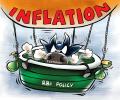
The RBI, which mainly factors in CPI for arriving at its bi-monthly monetary policy, has been mandated by the government to ensure that inflation remains at 4 per cent, with deviation of 2 per cent on either side.
Data suggests that households too are expecting inflation to subside, with the three-month-ahead and the one-year-ahead expectations declining by 40 basis points, reports Abhishek Waghmare.

The 30-share Sensex ended down 12 points at 25,610.

The rate of price rise for consumer foods eased to 4.7 per cent in January, from 4.96 per cent in December.

Prospects of China hiking interest rates increased as inflation rose to 3.1 per cent in May, surpassing the government target of 3 per cent.

The Karnataka government is also expected to follow suit and withdraw its decision to raise the variable DA.

'Decide on an asset allocation you are comfortable with and stick to it for the long term.'

The Model Code of Conduct for the ongoing Lok Sabha elections has come in the way of release of routine economic data like the consumer price indices.

'If you see the composition of items which are causing this spike in prices, most of them have little to do with the kharif harvest, except for pulses and vegetables to some extent.' 'I don't know on what basis the government is claiming that food prices will moderate in the weeks to come.'
The 30-share Sensex ended down 84 points at 21,171 and the 50-share Nifty closed 25 points lower at 6,308.

Analysts at foreign brokerage Bank of America Merrill Lynch said the RBI will cut rates by 0.25 per cent in December, and follow it up with a 0.15 per cent in February.

The inflation in the food basket spiked to 7.89 per cent in October 2019 as against 5.11 per cent the preceding month.

The wholesale price inflation was negative for 10 weeks in a row, but retail prices of items consumed by people in villages rose at the rate of nearly 13 per cent in the month of July.
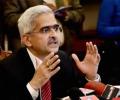
The Reserve Bank of India on Friday decided to leave benchmark interest rate unchanged at 4 per cent but maintained an accommodative stance as the economy faces heat of the second Covid wave.

Total debt for listed Indian companies excluding financials fell only 4 per cent to $368 billion in the year ended in March 2015.

Declining vegetable prices brought down the retail inflation to a 15-month low of 4.59 per cent in December and within the comfort zone of the Reserve Bank, government data showed on Tuesday. It is for the first time during the current fiscal that the Consumer Price Index (CPI) based inflation print is below 6 per cent or in the RBI's target range of 2 to 6 per cent. The central bank factors in the CPI-based inflation while arriving at its monetary policy. The inflation in December 2020 came down from 6.93 per cent in November, mainly on account of 10.41 per cent decline in vegetable prices over the year-ago period.
Analysts say RBI will cut rates because the liquidity crunch that began this time last year is still hurting the economy and also with an eye on the August industrial production numbers, which showed a contraction by 1.1 per cent -- the steepest in seven long years.

The Reserve Bank of India on Thursday raised its inflation projection to 5.1-4.7 per cent for the second half of the current fiscal on the back of spike in prices of vegetables such as onion and tomatoes.

On overall basis, the inflation in the food segment increased to 4.42 per cent in November as compared to 1.9 per cent in the preceding month.

Minutes of the MPC meeting show Das felt economy needs more monetary stimulus as inflation outlook remains uncertain.

After unseasonal rains, supply disruptions and pandemic-induced woes pushed retail inflation well over the Reserve Bank's comfort zone in 2020, the scenario is likely to stay that way at least in the short term as economic recovery slowly gains foothold. For most part of this year, pricier food items pushed the retail inflation, based on Consumer Price Index (CPI), higher in the range of 6.58-7.61 per cent, except for March when the reading was 5.91 per cent. Experts believe retail inflation is likely to average around 6.3 per cent this fiscal and mostly will remain sticky going forward owing to pick-up in demand across sectors.

Consumer prices rose an annual 5.11 per cent (2012 base) in January.

Although there is headroom for further monetary policy action, at this juncture it is important to keep our arsenal dry and use it judiciously: RBI's Das.

Consumer food price inflation, under a new series published by the government, eased to 5.59 per cent last month from 7.67 per cent in September.
The 30-share Sensex ended up 222 points at 25,229 and the 50-share Nifty ended up 73 points at 7,527.
.jpg)
A Reuters poll had forecast retail inflation would edge up to 8.48 per cent from 8.31 per cent in March.

Top losers include Hero MotoCorp, HDFC, SBI, Infosys, HCL Tech, ICICI Bank, Bajaj Finance, ONGC, Bajaj Auto and IndusInd Bank, falling up to 2.63 per cent.
A wider fiscal deficit despite higher divestment will be a disappointing beginning.
What's encouraging is that the process of unwinding some of the extraordinary steps taken in last July-August is continuing, so moreliberalisation is back on their agenda.
The 30-share Sensex closed 56 points at 23,815 and the 50-share Nifty closed flat at 7,109.
Higher inflation might just be the necessary cost that we need to bear in making a transition to a higher growth trajectory.

These companies provide better quality jobs and so it is particularly reassuring to see these jobs grow faster than the overall growth of jobs in India, says Mahesh Vyas.

Former finance minister P Chidambaram on Friday rejected Finance Minister Arun Jaitley's contention in Lok Sabha that UPA government left behind double digit inflation.
A Kotak research report expects RBI to cuts rates by 50 basis points in the first half of 2019. RBI will announce its sixth bi-monthly monetary policy on February 7.

Raghuram Rajan said on Friday it is not clear India needs a so-called "bad bank.

CPI inflation is on the decline since July.
There are respected names arguing both for and against this recommendation of the Urjit Patel committee.
Inflation targeting is not de facto a kind of shock therapy that the RBI wants to administer.

Food prices for consumers last month rose 12.16 per cent from a year earlier, slower than November's 14.72 per cent rise.

The Seventh Pay Commission had decided to choose the CPI-IW as the index for adjusting inflation for central government employees.
 © 2026 Rediff.com - Investor Information - Advertise with us - Disclaimer - Privacy Policy - Sitemap - Feedback - About us - Terms of use - Grievances