
Bullish on the Indian market, Japanese companies dealing in consumer durables are all set to strengthen their presence in India by targeting niche categories and expanding their reach to tier-2 markets. The Rs 25,000-crore consumer durables market in India is currently dominated by Korean companies -- LG and Samsung.

'We never go overboard on any stock, no matter how good it may seem.'

Titan was the top gainer in the Sensex pack, rising over 3 per cent, followed by M&M, Reliance Industries, Axis Bank, TCS, Maruti and Infosys. NSE Nifty surged 122.10 points to 15,885.15.
Consumer durables major Videocon and Kishore Biyani's Future group have entered into an agreement to source consumer durables.
The rankings on the value are set to change. A role reversal is silently taking place in the Indian consumer durable business landscape. LG, which has built a huge reputation and amassed a significant market share on the back of affordable pricing, is consciously promoting higher end products. The Korean company has undertaken a strategic initiative to position itself as a maker of premium consumer electronics.
Videocon's consumer durable and electronics chain Next has opened nearly 330 stores in the last two and half years, making it the largest chain in the country. Turnover is expected to cross Rs 1,000 crore (Rs 10 billion) in this financial year. Business Standard caught up with Next's Director K S Raman on the company's growth plans.
Manoj Kumar, CEO, e-Zone and Electronics Bazaar, said,"The Mega e-Zone, measuring 25,000 sq ft and above in area, is being developed as a destination store for electronics purchase. The store will offer seamless space for brands to retail their own merchandise."

Experts believe while escalation with Pakistan might not have a significant impact on trade economics, both India and China have major trade and investments in each others' economies. While the dispute might continue, it could have a temporary effect on the markets.

ICICI Bank was the top gainer in the Sensex pack, rising over 3 per cent, followed by ITC, SBI, HCL Tech, Axis Bank, Bajaj Finserv and Tech Mahindra. NSE Nifty advanced 32 points to 15,856.05.

The combined share of customs and excise duties, service tax, and value-added tax in India's gross domestic product reached an all-time high of 10.5%.
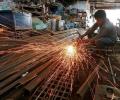
Industrial production contracted by 1.9 per cent in November, entering the negative territory after a two-month gap, mainly due to poor showing by manufacturing and mining sectors, official data showed on Tuesday. The manufacturing sector -- which constitutes 77.63 per cent of the index of industrial production (IIP) -- recorded a contraction of 1.7 per cent in November 2020, as per data released by the National Statistical Office (NSO). Mining sector output too witnessed a decline, shrinking 7.3 per cent.
Traditional categories in consumer durables are declining in their popularity, while higher-end products are catching up with middle-class consumers.
Manufacturing sector, which constitutes over 77 per cent of the index, showed a decline of 0.4 per cent in June as compared to a growth of 7.5 per cent in the same month last year.
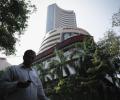
Results of some blue-chip companies exceeded expectations, providing additional thrust, traders said.

In May, Satpal Singh, who runs a dairy business with three buffaloes in Jewar, near Noida, was worried about the steep spike in input costs. Singh said dry fodder rates, which cost Rs 1,500-2000 per tractor trolley last year, were quoting at Rs 4,500-5,000. The price of other cattle feed ingredients (that include mustard meal and similar mixes) had also gone up from Rs 2,000 per quintal to Rs 3,100-3,200 per quintal.

ONGC was the top gainer in the Sensex pack, rallying around 6 per cent, followed by IndusInd Bank, L&T, UltraTech Cement, Titan, SBI and NTPC. NSE Nifty settled 32.10 points up at 14,707.80.

Bullish on the Indian market, Japanese consumer durables company Panasonic said on Thursday it was ready to increase investments in the country and line up new products.

'The markets have corrected almost 8-9 per cent from their highs, so one can accumulate quality stocks at reasonable prices.'

With decline in number of fresh COVID-19 cases and easing of restrictions, the country's gross domestic product (GDP) will grow at 8.5 per cent in FY2021-22, according to credit rating agency Icra Ratings. It expects the gross value added (GVA) at basic prices (at constant 2011-12 prices) to grow at 7.3 per cent in FY2022. "The impact of the second wave of COVID-19 and the ensuing state-wise restrictions was seen across a variety of high frequency indicators in April-May 2021.

The Index of Industrial Production (IIP) grew by 1.4 per cent in November as most components like manufacturing, electricity, mining, primary goods, and consumer durables witnessed a slowdown, according to data released by the National Statistical Office (NSO) on Wednesday. This is on the base of a decline of 1.7 per cent in November 2020 and before the new Covid variant started impacting economic activity. IIP growth was lower than the 4 per cent expansion recorded in the previous month but was better than a 1.6 per cent contraction seen in November 2020. Separately, rising prices of kitchen staples pushed retail inflation, or rate of price increase, to 5.59 per cent in December 2021, bringing it close to the upper band of Reserve Bank's comfort zone.

ONGC was the top loser in the Sensex pack, shedding 4 per cent, followed by Bharti Airtel, SBI, IndusInd Bank, NTPC, Sun Pharma and ITC. On the other hand, Bajaj Finance, Bajaj Auto, Reliance, Bajaj Finserv and Asian Paints were among the gainers.
.jpg)
A discount on the product may make a credit card loan seem cheaper than a consumer durable loan. But missing a payment in case of the former will mean exorbitant charges.
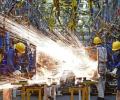
Industrial production declined by 10.4 per cent in July, mainly due to lower output of manufacturing, mining and power generation, as per the government data released on Friday.

Stocks of public sector companies, especially the oil refining and marketing companies (OMCs) - Bharat Petroleum Corporation Limited (BPCL), Hindustan Petroleum Corporation Limited (HPCL) and Indian Oil Corporation Limited (IOC) - logged gains on Tuesday in a weak market. While the Nifty lost nearly 1 per cent in trade on Tuesday, the Nifty CPSE index - a gauge of performance of central public sector enterprises on the National Stock Exchange (NSE) - gained over 3 per cent in intra-day trade. The rally in PSU stocks comes on the back of the BPCL chairman, Arun Kumar Singh suggesting in the company's annual general meeting (AGM) on Monday that the government intends to complete the divestment process in the OMC by March 2022.

Consumer Electronics and Appliances Manufacturers Association Consumer has also welcomed the move saying the it would improve the sentiments and strengthen the growth.

This is reflected in an improvement in their sentiments as well, explains Mahesh Vyas.

Banks have started refunding borrowers the compound interest charged on specified loan accounts during the moratorium period. Last week, the Reserve Bank of India (RBI) had asked all lending institutions, including non-banking financial companies, to ensure that the scheme of waiver of interest on interest for loans up to Rs 2 crore for the six-month moratorium period is implemented by November 5.

Agriculture and allied activity loans are not eligible for the interest on interest waiver announced by the government last week, the finance ministry has clarified.

IndusInd Bank, Kotak Bank, ICICI Bank, Sun Pharma, Bajaj Finance and Ultratech Cement were prominent gainers. NSE Nifty rose 176.65 points to 14,867.35.

Industrial production in May slowed to 2.7 per cent from 5.6 per cent a year ago, dragged down by manufacturing, strengthening the case for an RBI rate cut.

In the last few years, zero per cent financing has become quite attractive as consumers aspire to buy the latest products, especially in categories such as mobile phones and television sets.

'Rahul inspired Indian industry with an ethos, an ethos of being more confident, more independent, more thorough, more competitive, more generous, more public-spirited, and more national and more international all at once,' remembers Naushad Forbes.

The DTH industry has to pay entertainment tax to state governments and service tax to the central government.

The Korean major, as part of its rural push, has begun an "attack district" project with focus on 80 key districts to increase sales of its TVs, refrigerators and washing machines

'We will be hoisting the tiranga, but this kind of celebration is uncalled for when the farmers in this country are dying by suicides, their families are ravaged by poverty and farmers are not enjoying any freedom.'

ONGC was the top loser in the Sensex pack, shedding around 5 per cent, followed by Sun Pharma, PowerGrid, Bajaj Finance, IndusInd Bank, Dr Reddy's and Maruti. On the other hand, Reliance Industries, Titan, HDFC Bank and ITC were the gainers.
 © 2026 Rediff.com - Advertise with us - Disclaimer - Privacy Policy - Sitemap - Feedback - About us - Terms of use - Grievances