
Why did the company zero in on RBL Bank to understand the business of banking? While the M&M investors heaved a sigh of relief, one gentleman must have been all smiles after this, RBL Bank MD and CEO R Subramaniakumar, notes Tamal Bandyopadhyay.

British banking major RBS on Thursday said it expects the Reserve Bank to cut key rate by 25 basis points or 0.25 per cent in its monetary policy review next week, leaving the cash reserve ratio (CRR) unchanged.
Reserve Bank of India's move to cut cash reserve ratio has been welcomed by analysts.
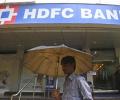
In a mixed bag for HDFC Bank ahead of the parent HDFC's merger with itself, the Reserve Bank of India has declined to make exceptions on certain aspects, and has offered some leeway on others. The country's largest private sector lender, which is aiming to conclude the merger with the home finance major by July, had written to the central bank seeking certain forbearances after announcing the $40-billion merger in April last year. In an exchange filing this evening, HDFC Bank said it received a response from RBI on Thursday and also said that there are a few pending issues.

Cash reserve ratio is the amount of funds banks need to park with the apex bank in cash.

The RBI's surprise rate hike may have been prompted by its inability to convince the government to cut excise duty on petrol and diesel and take other supply-side measures to tame runaway inflation, sources aware of the central bank's thinking said on Thursday. There has been a record Rs 10 a litre increase in petrol and diesel prices in a matter of 16 days beginning March 22, which has further fuelled the already high commodity prices. The RBI, which is mandated to ensure inflation is under 6 per cent, acted with a 0.40 per cent increase in repo rate to check prices before they went completely out of hand.

Demonetisation of the high value currency notes of Rs 500 and Rs 1,000 did not have any discernible impact on currency in circulation (CIC) in the country, which has soared by almost 83 per cent since its announcement on November 8, 2016. The Supreme Court on Monday upheld the decision of the government on demonetisation. On November 8, 2016 Prime Minister Narendra Modi had announced demonetisation of old Rs 1,000 and Rs 500 banknotes and one of the key objectives of the unprecedented decision was to promote digital payments and curb black money flows.

The Reserve Bank is expected to go for another rate hike of 0.40 per cent at the scheduled review of the monetary policy next week, a foreign brokerage said on Friday. The central bank's rate setting panel will follow it up with a 0.35 per cent hike in rates at the next review in August, or make it into a 0.50 per cent hike next week and a 0.25 per cent increase in August, to make the total quantum of rate hikes at 0.75 per cent, the report by Bofa Securities said. On May 4, the Reserve Bank of India (RBI) hiked rates by 0.40 per cent, and Governor Shaktikanta Das has already called a rate hike at the forthcoming review as a "no brainer" given the pressure to maintain its core mandate of inflation in the targeted band of under 6 per cent.

Mortgage lender HDFC Ltd on Wednesday announced an increase in its benchmark lending rate by 5 basis points (bps), a move that will make loans dearer for both existing and new borrowers. This is the third hike effected by HDFC in the last one month. "HDFC increases its Retail Prime Lending Rate (RPLR) on housing loans, on which its Adjustable Rate Home Loans (ARHL) are benchmarked, by 5 basis points, with effect from June 1, 2022," the housing finance company said in a statement.
Interest rates on home and retail loans are expected to rise, as a fallout of Reserve Bank announcing a 0.5 per cent hike in Cash Reserve Ratio (CRR) to squeeze money supply to rid the economy of inflation. The CRR, the amount of funds banks are required to park with the apex bank, has been raised to 8 per cent to suck out Rs 18,500-crore liquidity from the system.
The central bank's move will infuse Rs 20,000 crore (Rs 200 billion) into the markets.

Liquidity in the banking system has slipped into a deficit for the first time in three weeks, prompting banks to borrow the largest quantum of funds from the Reserve Bank of India (RBI) in around a month and a half. The key catalyst for the sudden tightening in liquidity was due to outflows on account of advance tax payments, which occur towards the end of a quarter. Analysts also cited other factors such as a currency leakage and possible interventions by the RBI in the foreign exchange market, which contributed to the tighter liquidity conditions.

Based on the current momentum, the funds likely to be raised through the RBI's relaxed window would be $3.5 billion-$4 billion.
RBI goes in for 50-basis point increase in two stages.

Services sector activities improved further and touched a five-month high in April driven by a surge in incoming new work orders that boosted business activity and supported a renewed increase in employment, according to a survey. The seasonally adjusted S&P Global India Services PMI Business Activity Index jumped to 57.9 in April, from 53.6 in March, highlighting a sharp rate of expansion that was the fastest since last November amid mounting price pressures. For the ninth straight month, the services sector witnessed an expansion in output.

The government has introduced friendly policies for the infra sector
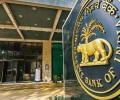
Talks of a merger between HDFC Bank and parent HDFC Ltd had gained steam nearly eight years ago, when the Reserve Bank of India allowed banks to issue long-term bonds to fund infrastructure and affordable housing. At that time, key executives at both entities denied any such proposal. And today, the merger has been officially announced by the two players.

Finance Minister Nirmala Sitharaman has said the recent interest rate hike by the Reserve Bank was not surprising for her but the timing was, asserting that the rising cost of funds will not impact the government's planned infrastructure investments. For the first time since August 2018, RBI had on May 4 delivered a blunt 40 basis points increase in key repo rate to 4.40 per cent, and also hiked the cash reserve ratio by 50 basis points to 4.5 per cent after an unscheduled meeting of the rate setting panel, citing increased inflation pressures following the Ukraine war and the resultant spike in crude oil prices. Retail inflation printed at 6.9 per cent in March and the April reading is forecast to top 7.7 per cent.
The Reserve Bank of India on Friday cut short-term lending rate by 0.25 per cent.

Retail depositors are earning negative returns on their bank deposits and hence, there is a need for reviewing taxes on interest earned, economists at the country's largest lender SBI have said. If not for all the depositors, the taxation review should be carried out for at least the deposits made by senior citizens who depend on the interest for their daily needs, the economists led by Soumya Kanti Ghosh said in a note, which pegged the overall retail deposits in the system at Rs 102 lakh crore. At present, banks deduct tax at source at the time of crediting interest income of over Rs 40,000 for all the depositors, while for senior citizens the taxes set-in if the income exceeds Rs 50,000 per year.

A day after the Reserve Bank of India's (RBI's) Monetary Policy Committee hiked the policy repo rate by 50 basis points (bps), several commercial banks, including ICICI Bank and Bank of Baroda, raised their external benchmark-linked loan rates by an equal amount on Thursday. HDFC, the country's largest mortgage lender, too, increased its interest rates on housing loans by another 50 bps. In total, it has raised rates by 85 bps since May 4, when the RBI had increased the repo rate by 40 bps in an off-cycle meeting.

HDFC Bank, the country's largest private-sector lender, lost to competition wholesale loans of around Rs 50,000 crore after it increased interest rates in May, said Chief Financial Officer Srinivasan Vaidyanathan in an analyst call. "There were some customers who were offered lower rates by other market participants. "But we decided not to cut back on our rates," he said while addressing analysts after the announcement of the bank's Q1 earnings.

SBI Research has projected the Indian economy to grow at 7.5 per cent in 2022-23, an upward revision of 20 basis points from its earlier estimate. As per official data, the economy grew by 8.7 per cent in FY22, net adding Rs 11.8 lakh crore in the year to Rs 147 lakh crore, the report said, adding this was however only 1.5 per cent higher than the pre-pandemic year of FY20. "Given the high inflation and the subsequent upcoming rate hikes, we believe that real GDP will incrementally increase by Rs 11.1 lakh crore in FY23. "This still translates into a real GDP growth of 7.5 per cent for FY23, up by 20 basis points over our previous forecast," SBI chief economist Soumyakanti Ghosh said in a note on Thursday.

Foreign investors have pulled over Rs 6,400 crore from the Indian equity market in the first four trading sessions of the ongoing month when the Reserve Bank of India (RBI) and US Federal Reserve raised interest rates. Given the headwinds in terms of elevated crude prices, inflation, tight monetary policy among others, FPIs' flows in India are expected to remain volatile in the near term, Shrikant Chouhan, Head - Equity Research (Retail), Kotak Securities, said. Foreign Portfolio Investors (FPIs) remained net sellers for seven months to April 2022, withdrawing a massive amount of over Rs 1.65 lakh crore from equities. This was largely on the back of anticipation of a rate hike by the US Federal Reserve and due to the deteriorating geopolitical environment following Russia's invasion of Ukraine.
There are however, enough dovish signals in the governor's statement to indicate a pro-growth policy going forward.

MSS bonds are issued with the objective of providing the central bank with a stock of securities with which it can intervene in the market for managing liquidity. These securities are not issued to meet the government's expenditure.

Concerned over inflationary pressures in the economy, the Reserve Bank of India (RBI) is bringing down surplus liquidity in the system rapidly. It has fallen to pre-Covid levels and almost 2 per cent of banks' net demand and time liabilities (NDTL). NDTL shows the difference between the sum of demand and time liabilities (deposits) of a bank (with the public or the other bank) and the deposits in the form of assets held by the other bank.

The Reserve Bank of India has raised inflation projection to 6.5 per cent with an upside bias by this fiscal end from 5 per cent projected earlier.

India's current account deficit is expected to deteriorate in the current fiscal on account of costlier imports and tepid merchandise exports, according to the Finance Ministry's monthly economic review. The review released on Thursday by the ministry also said that global headwinds would continue to pose a downside risk to growth as crude oil and edibles, which have driven inflation in India, remain major imported components in the consumption basket. For the present, it said, "their global prices have softened, as fears of recession have dampened prices somewhat. This would weaken inflationary pressures in India and rein in inflation."
The unexpected interest rate hike by the RBI on Wednesday will have the banking system on average making a 10-15 bps gains on the yields, with private banks making larger gains as 57 per cent of their loans are linked to external benchmark rate and 40 per cent to the marginal cost of lending rates, as per a report. Stating that lenders and borrowers will face volatile times with the Reserve Bank raising the repo rate by 40 bps to 4.40 per cent and the cash reserve ratio (CRR) by 50 bps on May 4 in an off-cycle policy move, India Ratings said the market rates had already been moving higher before the move. The 364-day T-bills have moved up 120 bps and 10-year G-sec by 140 bps since May 2020, when the repo rate was cut to a record 4 per cent, which led to an expectation of a faster and sharper rise in interest rates in the system but the central bank stayed the course to support the fragile economy battered by the pandemic.
Battling a sharp surge in inflation, the Reserve Bank is all for a smooth monetary policy response and the desire to have smaller hikes led it to tighten the policy in an off-schedule meet, a source said on Thursday. Inflation has been massively impacted by Russia's invasion of Ukraine and will in due course also reflect the dent caused by Indonesia banning palm oil exports, the source aware of central bank thinking said, indicating that there was no other option but to respond. "The idea is to have a smooth policy response, not to put in large cold turkey responses," the source said, making it clear that the preference is for smaller magnitude responses and not larger ones.
IT majors and Maruti Suzuki down 8% were the top losers among Sensex-30.
Snapping its six-day losing streak both benchmarks rallied over 1% after RBI kept key policy rates unchanged.
Industry body Confederation of Indian Industry said with the government having announced a clear road map for fiscal consolidation and non-food inflation demonstrating a secular decline, conditions are conducive for RBI to have intervened with a repo and cash reserve ratio reduction.
After the Reserve Bank unveiled the third quarterly review of the monetary policy, several bankers said that they may not go in for rate cut immediately.
The central bank held the cash reserve ratio at 4 per cent.
RBI Governor Duvvuri Subbarao on Tuesday defended the bank's decision to keep the key policy rate unchanged saying inflation could rise to above 8 per cent in the near-term.
The Reserve Bank has decided to keep the cash reserve ratio (CRR) of scheduled banks unchanged at 4.0 per cent of their net demand and time liabilities and keep the policy repo rate under the liquidity adjustment facility (LAF) unchanged at 7.25 per cent.

Industry houses are emphatic with the RBI pruning repo rate and CRR by 0.25 per cent each after a long nine months in its third quarter monetary policy review.
 © 2026 Rediff.com - Investor Information - Advertise with us - Disclaimer - Privacy Policy - Sitemap - Feedback - About us - Terms of use - Grievances