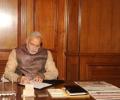
In the second major decision to end the UPA government's legacy, Prime Minister Narendra Modi on Tuesday scrapped four cabinet committees, including one on Unique Identification Authority, as part of his efforts to minimise decision-making processes.

If sources in the Congress party are to be believed, a hike in the price of petrol, diesel and cooking gas seems "inevitable".

The meeting was earlier planned to discuss price rise and formulate an action plan to combat it. But as Union agriculture, food and civil supplies minister Sharad Pawar is in Maharashtra and Railway Minister Mamata Banerjee is camping in Kolkata, the meeting has been rescheduled for October 19.

The meeting assumes importance as prices of essential commodities continued to surge though the rate of price rise has come down in the recent weeks.

The decision was taken by the Cabinet Committee on Prices, chaired by Prime Minister Manmohan Singh in New Delhi.
The extent of the government's concern about inflation was evident at the meeting of the Cabinet Committee on Prices, which started at 8 pm on Monday and went on past 12 midnight. Commerce Minister Kamal Nath challenged Agriculture Minister Sharad Pawar to explain why wheat import this season had been delayed.
Ahead of the crucial meeting of the Cabinet Committee on Prices for considering options to tame rising inflation, Commerce and Industry Minister Kamal Nath said on Monday the government is looking at further cuts in duties on import of essential commodities. "Yes, we are looking at further cuts. There is increase in international oil prices and it has to be met with import duty caliberation which we are considering," Nath told reporters in New Delhi.
The Cabinet Committee on Prices chaired by Prime Minister Manmohan Singh on Thursday reviewed inflation, including rising onion prices and decided to take further measures like cut in taxes and improving supply of essential commodities.
Speaking at the function, Nath asked exporters to provide inputs for a mechanism for refund of local taxes to them. "We are in the process of formulating the scheme and will incorporate valid suggestions from exporters," he said.
The Cabinet Committee on Prices is likely to ban exports of steel and steel products. The other measures being considered include levying an ad-valorem duty on iron ore exports and bringing down the excise duty on steel to 8% from the current level of 14%. Steel ministry is considering many steps to bring down steel prices. Also, reimbursement of service tax on foreign agents used by exporters will be further increased. Ban on exports is not the only solution, experts say.
According to unconfirmed reports, North India has seen a Rs 3 hike. A Delhi-based dealer said the companies had told him that the price would go up by Rs 5 a bag in a day or two. "The companies raised wholesale prices and we passed on the burden to consumers," said a Mumbai-based dealer who did not want to be named. The present retail price in Mumbai is Rs 274 per bag. Market sources said Chennai had seen a hike of Rs 3.
The decisions were taken at a meeting of the Cabinet Committee on Prices at Prime Minister Manmohan Singh's official residence in Delhi on Monday night. The CCP approved ban on export of non-basmati rice with immediate effect and decided to extend the ban on pulses export for one more year from Monday, Finance Minister P Chidambaram told reporters after the meeting that lasted over three hours.
While explaining the steps taken by the government of India to check rising prices, Dr Singh reminded the state governments of their responsibility of keeping prices under control.
Finance Minister P Chidambaram said on Thursday that the government would ensure ample supplies of essential commodities including food grains to check prices and assured more fiscal steps to contain inflationary pressures.
Promising to keep prices down ahead of the festival season, the government on Friday said it would ensure adequate supply of essential commodities and take more fiscal and monetary steps to contain inflation
 © 2026 Rediff.com - Investor Information - Advertise with us - Disclaimer - Privacy Policy - Sitemap - Feedback - About us - Terms of use - Grievances