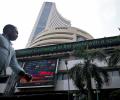
BSE on Monday relaunched Sensex and Bankex derivative contracts in its bid to boost derivative trading at the country's premier bourse. The relaunch of derivative contracts comes with a reduced lot size of futures and options and a new expiry cycle of Friday from Thursday earlier, BSE said. Derivatives are considered to be high-risk-reward financial instruments aimed at hedging risk in the equity market.

'All commercial and banking transactions happen in South Mumbai.'

Among Sensex firms, Tata Motors, Bharti Airtel, Bajaj Finance, Maruti, Bajaj Finserv, ICICI Bank, HDFC Bank and Reliance Industries were the major gainers. However, Hindustan Unilever, UltraTech Cement, Bharat Electronics and ITC were among the laggards.

Jane Street could do what they did because of the most fundamental flaw in the Indian stock market: a fragmented, fractured, fissured, fistula-ed liquidity stream, points out Shankar Sharma.

Among the Sensex pack, Kotak Mahindra Bank, Bharti Airtel, IndusInd Bank, Tata Motors, ICICI Bank, Bajaj Finance, State Bank of India and Titan were the biggest laggards. Larsen & Toubro, Infosys, HDFC Bank, Tata Consultancy Services, HCL Technologies and Tata Steel were the biggest gainers.
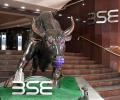
'It is like a chicken-and-egg situation.' 'All these product tweaks are innovative, but traders won't move unless there is liquidity.' 'And liquidity cannot be generated until traders move.'

Food delivery and quick commerce firm Eternal, which owns the Zomato and Blinkit brands, on Monday reported a consolidated net profit of Rs 25 crore for the June quarter, as continuing investments in quick commerce and going-out businesses weighed on its bottom line. Titan, Hindustan Unilever, Bharat Electronics, Maruti, ICICI Bank and Mahindra & Mahindra were also among the gainers. However, Tata Motors, Adani Ports, State Bank of India and Reliance Industries were among the laggards.

The domestic stock market will continue to monitor the Israel-Iran conflict and its impact on global supplies besides prices of crude oil this week, analysts said. Global trends and trading activity of foreign investors would also drive investors' sentiment during the week.
Research and development (R&D) spending by BSE 100 companies has grown steadily, rising from 0.89 per cent of revenue in FY20 to 1.32 per cent in FY24, averaging around 1 per cent over the period in-between, according to data compiled from Bloomberg and company annual reports. Also, these companies more than doubled their R&D spending in absolute terms over these five years: From Rs 25,041 crore to Rs 63,072 crore. While this reflects a prioritisation of innovation, corporate R&D investment remains relatively conservative.

Tata Steel, Maruti, Tata Motors, Infosys, Bharti Airtel and Tech Mahindra were also among the laggards. However, Trent, Asian Paints, Hindustan Unilever, ITC, Kotak Mahindra Bank, and Reliance Industries were the gainers.

Benchmark stock indices Sensex and Nifty closed higher in a range-bound trade on Tuesday following gains in Reliance Industries and HDFC Bank. The 30-share BSE Sensex rose by 90.83 points or 0.11 per cent to settle at 83,697.29 with 13 of its constituents closing higher and 17 in the red.

Maruti, IndusInd Bank, Bajaj Finserv, Eternal, Mahindra & Mahindra, Tata Steel, Kotak Mahindra Bank, Titan, HDFC Bank, and NTPC were among the other major gainers. Bharti Airtel and Sun Pharma were the laggards.
Stock markets declined for the second day in a row on Friday, with the Sensex tumbling 721 points due to heavy selling in financial, IT and oil & gas shares amid persistent foreign fund outflows.
Among Sensex firms, Mahindra & Mahindra, Tech Mahindra, State Bank of India, Infosys, Adani Ports and ITC were the major gainers. However, Eternal, Sun Pharma, Tata Steel, Tata Motors, Bajaj Finance and Bharat Electronics were among the major laggards.
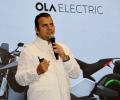
Ola Electric could gain market share in the near term with relatively less disruption expected due to rare earth magnets shortage, according to a report by Goldman Sachs. The company has successfully developed heavy rare earths (HRE) free motors which are scheduled for production deployment in Q3 FY26.

From the Sensex firms, Trent, Tech Mahindra, Bajaj Finserv, Reliance Industries, Infosys, Kotak Mahindra Bank, HCL Technologies, and NTPC were among the biggest laggards. However, Eternal, Tata Motors, Sun Pharma, Tata Steel, and Titan were the gainers.
Sun Pharma, NTPC, Maruti, Bharti Airtel, Trent and Axis Bank were also among the gainers. However, Tata Motors, Power Grid, Eternal, Bajaj Finserv and Hindustan Unilever were among the laggards.
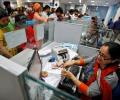
Banks have tightened their cyber security network to ward off any cyber threat in the wake of India launching missile attacks on Pakistan and Pakistan-occupied Kashmir. Banks have also improved their security at the branches near border areas due to heightened threat of a counter attack.

GST 2.0 may cushion consumers against US tariffs, but like the 2019 corporate tax cut, it risks being another tactical fix rather than a structural growth strategy, expects Debashis Basu.
HCL Tech, Adani Ports, Eternal, Maruti, Reliance Industries and Asian Paints were among the gainers. HDFC Bank, ICICI Bank, Bharti Airtel and Infosys added to the rally. IndusInd Bank emerged as the only laggard.

Equity markets this week will turn their focus on the RBI's interest rate decision, Q1 earnings from several blue-chip firms and tariff-related news for further cues, analysts said. Moreover, trading activity of foreign investors and trends in global equity markets will also drive investors' sentiment.

Equity investors would track global market trends, inflation data and trading activity of foreign investors for further cues this week, analysts said. Moreover, progress of monsoon and developments related to trade talks would also be monitored by investors, experts noted.
HCLTech on Monday reported a 9.7 per cent decline in consolidated net profit for the April-June quarter of this fiscal year at Rs 3,843 crore as the IT services firm and pegged the revenue growth guidance at 3-5 per cent for FY26. HCLTech had logged a net profit (attributable to owners of the company) of Rs 4,257 crore in the year-ago period, according to a regulatory filing.

Among Sensex firms, Eternal, Infosys, Tata Consultancy Services, Tech Mahindra, Reliance Industries, Asian Paints, HCL Tech and Adani Ports were the laggards. Power Grid, Bajaj Finance, NTPC, State Bank of India and IndusInd Bank were among the gainers.

Some of the key names include: Maruti, M&M, Ashok Leyland, Britannia, Ultratech, JK Cement, Havells, Voltas, Amber, Metro, Trent, LemonTree, Indian Hotels, Niva Bupa, HDFC Life, IGL, Acme Solar, Suzlon, Swiggy, Delhivery, ICICI Bank, HDFC Bank, Bajaj Finance, Shriram Finance," according to a report by Motilal Oswal Financial Services.
Leading stock exchange BSE on Tuesday postponed the removal of Jio Financial Services Ltd, the demerged non-banking financial services unit of Mukesh Ambani-led Reliance group, from all the S&P BSE Indices to August 29. Earlier, the stock was scheduled to be removed from the indices on August 24. Jio Financial Services Ltd (JFSL) got listed on the bourses on Monday and hit the lower circuit for the second day in a row on Tuesday.
Stock markets are in for an event-heavy week ahead with a raft of Q1 earnings from blue-chips, the US Fed interest rate decision and foreign investors trading activity driving investors' sentiment, analysts said. Macroeconomic data announcements, monthly auto sales numbers and global market trends would also guide movement in the domestic equities, they said.

Sun Pharma, Tata Steel, State Bank of India, Axis Bank, Tata Motors, Larsen & Toubro and ICICI Bank were also among the Sensex gainers. HCL Tech, UltraTech Cement, Nestle and Hindustan Unilever were among the laggards.

Benchmark equity indices Sensex and Nifty settled with marginal gains on Thursday in a highly volatile trade amid the scheduled monthly derivatives expiry and muted trend in the US markets. The 30-share BSE Sensex closed 86.53 points or 0.13 per cent higher at 66,988.44, registering its third day of gains. During the day, it hit a high of 67,069.89 and a low of 66,610.35.

Tata Steel and Tata Motors dropped over 10 per cent each. Larsen & Toubro, HCL Technologies, Adani Ports, Tech Mahindra, Infosys, Tata Consultancy Services, Reliance Industries and Mahindra & Mahindra were the other big laggards.

Life Insurance Corporation (LIC) , the country's largest domestic institutional investor (DII), has seen a Rs 46,000 crore erosion in the value of its equity holdings amid market downturns in July. The benchmark indices, Nifty 50 and BSE Sensex, have slipped 2.6 per cent from their June 2025-end level to 24,837 and 81,463.09 respectively.
Engineering and construction conglomerate Larsen & Toubro (L&T) on Monday announced the listing of the country's first environmental, social and governance bonds on the NSE, raising Rs 500 crore through debentures. In a filing to BSE, the company said it "has listed India's first ESG bonds on the National Stock Exchange (NSE), setting a precedent for a greener and more sustainable financial future in India".
Benchmark stock indices Sensex and Nifty declined on Monday, extending the losing run to the fourth day amid selling in IT shares and foreign fund outflows. The 30-share BSE Sensex dropped by 247.01 points or 0.30 per cent to settle at 82,253.46. During the day, it fell 490.09 points or 0.59 per cent to 82,010.38 but recovered some of the losses towards the close.
From the Sensex firms, Axis Bank, Kotak Mahindra Bank, Maruti, UltraTech Cement, Bajaj Finance, ICICI Bank, Reliance Industries, Tata Steel, Bharti Airtel and HDFC Bank were among the major laggards. However, Trent, State Bank of India, Bharat Electronics, Titan and Bajaj Finserv were among the gainers.

In her letter to the Sona BLW board, Rani Kapur said documents executed by her at a time of "mental and emotional vulnerability" were being misused.

Equity benchmark indices Sensex and Nifty hit their fresh record levels on Thursday after lower inflation numbers raised hopes of an interest rate cut by the RBI. Besides, heavy buying in capital goods, consumer durable and industrial stocks also helped the indices, traders said. Retail inflation continued its downward slide to reach a one-year low of 4.75 per cent in May due to a marginal decline of prices in the food basket and remained within the Reserve Bank's comfort zone of below 6 per cent, according to government data released on Wednesday.

From the Sensex pack, Sun Pharma, Eternal, Tata Motors, Bajaj Finance, IndusInd Bank and Bajaj Finserv were among the major laggards. In contrast, Tech Mahindra, Infosys, Asian Paints and Maruti were among the gainers.
Markets investors became richer by Rs 27.10 lakh crore as the BSE benchmark Sensex continued to rally for the sixth trading day, surging nearly 6 per cent during this period. On Monday, the 30-share BSE bellwether gauge jumped 1,078.87 points or 1.40 per cent to settle at an over six-week high of 77,984.38. During the day, the benchmark zoomed 1,201.72 points or 1.56 per cent to 78,107.23.

Among the Sensex firms, Kotak Mahindra Bank, Bajaj Finserv, Bajaj Finance, Adani Ports, Trent, State Bank of India, Titan and Tata Consultancy Services were the laggards. However, Maruti, Infosys, NTPC, Asian Paints, Eternal and Hindustan Unilever were among the biggest gainers.

Dalal Street investors were a poorer lot on Monday as their wealth eroded sharply by Rs 14 lakh crore following a sharp decline in benchmark indices amid a global market meltdown due to recession fears. The 30-share BSE Sensex tumbled 2,226.79 points or 2.95 per cent to settle at 73,137.90. Intra-day, the benchmark slumped 3,939.68 points or 5.22 per cent to 71,425.01.
