
India will be the world's third-largest economy by 2028 as it becomes the world's most sought-after consumer market and gains share in global output, driven by macro stability influenced policy and better infrastructure, Morgan Stanley said. From a $3.5 trillion economy in 2023, the Indian economy is projected to expand to $4.7 trillion in 2026, which will make it the fourth largest in the world behind the US, China and Germany.
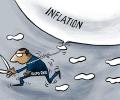
'As the Budget has taken some measures to spur growth, similar action from the MPC may be expected.'

Shares of Tata Consultancy Services (TCS), the country's largest IT services provider, continue to remain under pressure, hitting a new eight-month low of Rs 3,624.90 intraday on Tuesday before closing at Rs 3,631, down 1.19 per cent. In the past two trading sessions, the stock price has declined 4 per cent on fears of a slowing US economy.

The Union Finance Ministry on Tuesday said that aggregate business of public sector banks (PSBs) has shown strong growth of 11 per cent in the first half of the financial year 2024-25 (H1FY25) to touch Rs 236 trillion. The operating and net profit were also robust. At Rs 1.5 trillion, operating profit grew by 14.4 per cent year-on-year (Y-o-Y) while the net profit saw an impressive 25.6 per cent jump at Rs 85,520 crore in the first half of FY25.

Since Sanjay Malhotra took office as governor in December, the Reserve Bank of India (RBI) has adopted a more accommodative stance, which bodes well for banking and the economy as they navigate a growth slowdown, according to analysts.

Brokerages expect a further slowdown in Indian firms' revenue and earnings growth in Q4FY25, following low single-digit growth in the preceding three quarters, as factors like weak consumer demand and credit growth linger on.

From the 30 Sensex firms, NTPC, Nestle, Titan, Kotak Mahindra Bank, Maruti, Hindustan Unilever, Bharti Airtel and HDFC Bank were the biggest gainers. HCL Technologies, Tata Consultancy Services, Adani Ports, Larsen & Toubro, JSW Steel, State Bank of India, Tech Mahindra and Bajaj Finance were among the laggards from the pack.

Marico's January-March quarter (Q4) results were slightly better than consensus. Revenue was up by 1.7 per cent year-on-year (Y-o-Y) to Rs 2,280 crore. Ebitda grew by 12.5 per cent Y-o-Y to Rs 440 crore. Adjusted PAT was up 10.3 per cent Y-o-Y to Rs 320 crore.

Continuing the downward trend, retail inflation fell to a five-month low of 4.31 per cent in January, mainly due to a decline in the prices of vegetables, eggs, and pulses. The Consumer Price Index-based retail inflation was 5.22 per cent in December and 5.1 per cent in January 2024. The previous low inflation was in August 2024 at 3.65 per cent.

IT services major HCL Technologies (HCLTech) on Monday reported a 10.51 per cent increase in consolidated net profit to Rs 4,235 crore in July-September quarter of FY25, as the company raised the lower band of its growth guidance on the back of better-than-expected performance. The Noida-headquartered firm had posted a net profit of Rs 3,832 crore in the year-ago period. HCLTech increased the lower band of its revenue growth guidance to 3.5-5 per cent year-on-year in constant currency, against a guidance of 3-5 per cent in the first quarter.

Of the six-member rate-setting monetary policy committee, five members voted for a 25 bps cut while one by 40 bps, the RBI said.

A sharp correction in stock prices, signs of rural recovery, and lower raw material costs have not been enough to change brokerages' cautious stance on the top-listed paint companies. Concerns over rising competition and weak demand continue to weigh on sentiment.

Investors need to carefully assess country-specific risks. 'This is especially true of a market that is less transparent than the US.'
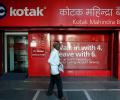
Kotak Mahindra Bank's net interest margin is likely to swell after the Reserve Bank of India (RBI) lifted its restrictions on the private lender that barred it from issuing fresh credit cards and onboarding new customers through digital mode, brokerages said on Thursday. The bank's net interest margin (NIM) has seen a decline of over 35 basis points (bps) since the restrictions were imposed by the regulator in April 2024.

Home appliance maker Crompton Greaves Consumer Electricals reported better than expected performance in the second quarter (Q2) of 2024-25 (FY25), outperforming peers due to a strong showing in the electrical consumer durables (ECD) segment. The company's standalone sales rose by 10.5 per cent, while the ECD segment continued its growth momentum with a 12.5 per cent increase in revenues, driven by volume and pricing gains.

The VBL board approved the purchase of SBC Tanzania for Rs 1,304 crore and SBC Beverages Ghana for Rs 127 crore. These own manufacturing/distribution rights for NARTD (PepsiCo branded) beverages in Tanzania and Ghana. The acquisitions will help VBL gain ground in East and West Africa.

Balance-level delinquencies in the credit card segment saw a 17 basis points (bps) year-on-year (Y-o-Y) rise in the quarter ending June 2024 (Q1FY25). In all other credit segments, including personal loans, delinquencies declined even as retail credit growth moderated, consequent to banks tightening the supply of credit to the unsecured segments, a report by TransUnion CIBIL said on Monday. Data shows that balance-level delinquencies, measured in terms of 90 days or more past due, in the credit card segment stood at 1.8 per cent in Q1FY25- highest among all other credit segments.

After a quiet April-June quarter in 2024-25 (FY25), the operational and financial performance of India's largest listed hotel company, Indian Hotels Company, clearly rebounded in the July-September quarter (Q2) of FY25. With double-digit growth in the average room rate (ARR) and higher occupancy, the Taj Hotels chain owner reported a 16 per cent revenue increase and a 30 per cent rise in operating profit.

The US Fed rate cut of 50 basis points is unlikely to have any significant impact on foreign inflows into India, Economic Affairs Secretary Ajay Seth said on Thursday. He said the US Federal Reserve has done what it assesses is good for the largest economy in the world, but the RBI will take a decision on interest rate cut keeping the Indian economy in mind. "It is a positive for the global economy, including the Indian economy. "It is a 50 basis points cut from a high level.

Dr Nagesh Kumar, one of the three new MPC members, wanted the MPC to reduce the repo rate by 25 basis points to 6.25%.

'If you look at where inflation (headline and core) is today in India and where the rates are, there's clearly room to cut rates.'

DIIs owned equities worth Rs 73.5 trillion, just 1.9 per cent less than FPIs. This marks a significant change from a decade ago.

After two weeks of buying, FPIs turned net sellers in Indian equities this week, with a net withdrawal of Rs 976 crore amid a strengthening US dollar and steady rise in US 10-year bond yields, impacting investor sentiment. Foreign Portfolio Investors (FPIs) began the week on a positive note, investing Rs 3,126 crore in equities during the first two trading sessions (December 16-20).
Benchmark Sensex hit the historic 83,000 level for the first time on Thursday and the Nifty settled at a lifetime high after a rally in blue-chip shares, surge in global markets and foreign fund inflows. A sharp fag-end rally drove the 30-share BSE Sensex to the 83,000 level for the first time. The barometer surged 1,593.03 points or 1.95 per cent to hit its lifetime intra-day peak of 83,116.19 in the last hour of trade.

The Reserve Bank of India (RBI) on Wednesday announced to increase the policy repo rate by 50 basis points to 4.9 per cent, the second hike in five weeks aimed at quelling the inflation. The MPC vote was unanimous and has decided to keep stance withdrawal from accommodative, RBI Governor Shaktikanta Das said in a press conference on Wednesday. The decision was taken during a three-day meeting of the RBI's Monetary Policy Committee (MPC) to review the interest rates in the country. The MPC voted unanimously to increase the policy repo rate by 50 bps to 4.90 per cent," Das said.
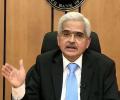
The Reserve Bank is unlikely to cut the benchmark interest rate in its forthcoming bi-monthly monetary policy review later in the week as retail inflation is still a cause of concern, and there is a possibility of the Middle East crisis deteriorating further, impacting crude oil and commodity prices, say experts.

With this lending rate reduction, the bank has lowered 40 bps so far this fiscal year in five successive rate cuts beginning April.

'The central bank has highlighted that the slowdown in growth has been limited to a few sectors and overall growth is expected to pick up in the second half of the year.'

In the Union Budget for Financial Year 2023-24 (FY24), Finance Minister Nirmala Sitharaman had held forth on the need for better governance and investor protection in the banking sector. She had proposed certain amendments to the Reserve Bank of India Act (RBI Act), 1934; the Banking Regulation Act (BR Act), 1949; and the Banking Companies (Acquisition and Transfer of Undertakings) Act, 1970.

'By March-end, we should have closure of the PNC portfolio. After completion of PNC acquisition.'

The US Federal Reserve's interest rate decision is the biggest event that would drive sentiments in the domestic stock market this week, besides a host of macroeconomic data from the global front and trading activity of foreign investors, analysts said. The Indian equity market had an exceptional last week, with both the Nifty and Sensex hitting their all-time high levels on Thursday.
Public sector banks (PSBs) posted 16.1 per cent year-on-year (Y-o-Y) growth in net profit at Rs 39,974 crore during the June 2024 quarter. While net interest income (NII) showed subdued growth of 7.1 per cent, provisions and contingencies declined by 10.5 per cent Y-o-Y. This aided the bottom line to show steady growth.

Bajaj Auto reported steady results in Q1FY25, with revenue surging 16 per cent year-on-year (Y-o-Y), operating profit registering a growth of 24 per cent Y-o-Y, and margins swelling 20.2 per cent. The profitability was aided by 50 basis points (bps) on the accrual of PLI benefits. The domestic prospects for two-wheelers are healthy, though the response to the newly launched CNG motorcycle is a key monitorable.
The cumulative rate hikes of 2.5 percentage points by the central bank since May 2022 negatively impacted headline inflation by 1.60 per cent, a paper by senior RBI staffers said on Monday. "Policy rate increases have anchored inflation expectations and modulated aggregate demand, generating disinflationary responses," the paper by Deputy Governor Michael Patra, Indranil Bhattacharyya, Joice John and Avnish Kumar, said.

'The RBI's MPC will maintain the current policy rates (6.50%) at the policy meeting, given ongoing inflationary pressures.'

After a strong show during the September quarter (Q2FY25) and favourable demand conditions, going ahead, the country's largest player in the room air conditioner segment, Voltas is well placed to improve its market share. Expectations of record volumes in FY25 for the sector and the company's strategy of prioritising market share over margins could help the leader expand share in the room AC segment.

Analysts are of the view that long-term investors could continue to hold the stock, irrespective of the MSCI development.

The performance of banking and information technology (IT) stocks has had a significant impact on the composition of diversified mutual fund (MF) portfolios. Over the past two months, these sectors have become increasingly dominant, now constituting nearly 30 per cent of the total allocation in many diversified MF portfolios.

Exactly a fortnight ahead of the Reserve Bank of India's (RBI's) next monetary policy review, a key market indicator of interest rates - the overnight indexed swap (OIS) - suggests that the central bank may tighten policy by 35 basis points and then refrain from further rate hikes. RBI Deputy Governor Michael Patra recently described the OIS as the primary instrument for hedging interest rate risk in India. The six-member Monetary Policy Committee (MPC) of the RBI will meet on December 5-7.

A Rs 525-crore contingency provision during the July-September period led to a 19 per cent fall in IndusInd Bank's share price on Friday (October 25). Contingency provisions are generally made when a lender expects more bad loans in the coming quarters. Shares of the bank on Tuesday (October 29) declined 1.53 per cent to settle at Rs 1,038.2 apiece on the BSE.
