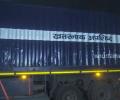
Forty years after the Bhopal gas tragedy, 377 tons of hazardous waste has been shifted from the defunct Union Carbide factory for its disposal, an official said.

A group of people in Dhar, Madhya Pradesh, performed 'Shavasana' (corpse pose) to protest against the proposed disposal of Union Carbide waste, connected to the Bhopal gas tragedy, in the district. They claim the disposal would harm the health of locals and the environment. The waste has been brought from Bhopal for incineration in Pithampur. Protests have been ongoing since the arrival of the waste last month, and local authorities are conducting an awareness campaign to address concerns.

The unloading of 337 tonnes of hazardous waste from the defunct Union Carbide factory in Bhopal began at an incineration unit in Pithampur, Madhya Pradesh. The exercise, which commenced amid protests from locals concerned about its impact on health and environment, is being carried out following safety regulations. The waste, comprising soil, reactor residues, pesticide remnants, and other materials, has been transported from Bhopal to Pithampur for disposal. The Madhya Pradesh Pollution Control Board has asserted that the chemical effects of certain substances in the waste have diminished. The local administration has launched an awareness campaign to address concerns regarding the disposal process.
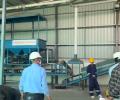
The trial incineration of 10 tonnes of waste from the Union Carbide plant in Bhopal, responsible for the 1984 gas tragedy, began on Friday afternoon in Pithampur, Madhya Pradesh. The process, ordered by the Madhya Pradesh High Court, is expected to take 72 hours to complete. The waste includes soil, reactor residues, pesticide residues, and other materials. The State Pollution Control Board says the chemicals in the waste have become "almost negligible" and there is no presence of methyl isocyanate gas. The incineration process is being monitored by the Pollution Control Board and broadcast live.

The incident comes a day after the town was rocked by protests against the disposal plan amid a bandh call given by the Pithampur Bachao Samiti.

Residents of Tarpura village near Pithampur, Madhya Pradesh, are protesting against the incineration of 337 tons of toxic waste from the 1984 Bhopal gas tragedy at a local facility. They fear the process will be hazardous to health and the environment, despite government assurances. The protest comes after the Madhya Pradesh High Court ordered the transfer of the waste to Pithampur within four weeks. The incident has raised concerns about the potential contamination of soil, underground water, and water sources in the area. The administration has deployed a large police force and held meetings with local residents to address their concerns.
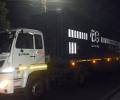
Two men were hospitalised after they set themselves afire on Friday amid a bandh call in Madhya Pradesh's Pithampur against the planned disposal of 337 tonnes of Union Carbide waste in the industrial town, an official said.
'Why should we disclose classified information to satisfy those who doubt our Hydrogen Bomb capability?'

A bus-borne museum will take the experiences of Bhopal gas victims round the country, says Rrishi Raote

India has an appalling record on industrial safety.
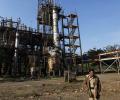
Just months before the deadly gas leak in Bhopal killed 15,000 people, journalist Rajkumar Keswani -- who passed into the ages on Friday, May 21, 2021 -- had warned that the 'city stood on the edge of a volcano'.

Photojournalist Chandu Mhatre, one of the first to reach Bhopal after India's worst industrial disaster ravaged the city, remembers his worst seven days, in a conversation with Vaihayasi Pande Daniel/Rediff.com.
 © 2026 Rediff.com - Investor Information - Advertise with us - Disclaimer - Privacy Policy - Sitemap - Feedback - About us - Terms of use - Grievances