
Passengers travelling by the nation's airliners could now have to pay increased fares as the country's oil majors have decided to hike aviation turbine fuel (ATF) prices by 8 per cent to a maximum of Rs 2,525.43 per kilolitre.

The Netherlands has emerged as India's fifth-largest export destination in 2021-22 (FY22), jumping from its 10th position a year ago. Exports to the fifth-largest economy in the European Union (EU) bolted 94 per cent to $12.5 billion in the financial year ended March 31. In FY22, the Netherlands surpassed Hong Kong, Singapore, the UK, Germany, and Nepal to become India's largest export destination in the EU. Germany, which was earlier India's top European export destination (eighth position), has now dropped two ranks to 10th place.

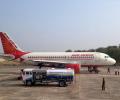
IOC, BPCL and HPCL on Thursday afternoon stopped ATF supplies to Air India at six airports - Kochi, Pune, Patna, Ranchi, Vizag and Mohali - over payment defaults. AI flights from these places were tanking up from other airports.
When the Tatas re-boarded Air India on January 27 last year, the price of aviation turbine fuel was at over Rs 80,000 per kilolitre. Rupee was trading at around Rs 74 to a US dollar. The Omicron variant of Covid-19 was in prevalence - barely a week earlier, India had reported over 340,000 cases on a single day. Seven-day home quarantine of international travellers was the norm.
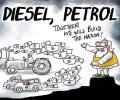
The government on Friday slapped an export tax on petrol, diesel and jet fuel (ATF) while also joining nations like the UK in imposing a windfall tax on crude oil produced locally. A Rs 6 per litre tax on export of petrol and ATF and Rs 13 per litre tax on export of diesel is effective from July 1, finance ministry notifications showed. Additionally, a Rs 23,250 per tonne tax was levied on crude oil produced domestically.

The rupee depreciation will work in favour of students who are currently studying in the US and plan to secure a job that pays in dollars.

Global energy supermajor BP plc on Thursday said it is about to open its first 'Jio-bp' branded petrol pump in partnership with Reliance Industries near Mumbai.
Refuting all the allegations, IOC has clarified that no monopolistic situation exists in supply and pricing of aviation turbine fuel (ATF) to airlines.

Rising fuel prices, intense competition and inability to pass on spiralling expenses have been negatively impacting the domestic airlines.

The three state-owned oil companies have decided to defer snapping fuel supplies to Air India. The airline owes the three firms over Rs 5,000 crore in past fuel bills.

Amid record-high fuel prices, Finance Minister Nirmala Sitharaman on Monday said there is no proposal as of now to bring crude oil, petrol, diesel, jet fuel (ATF) and natural gas under the Goods and Services Tax (GST). When the GST was introduced on July 1, 2017, amalgamating over a dozen central and state levies, five commodities - crude oil, natural gas, petrol, diesel, and aviation turbine fuel (ATF) - were kept out of its purview given the revenue dependence of the central and state governments on this sector. This meant that the central government continued to levy excise duty on them while state governments charged VAT. These taxes, with excise duty, in particular, have been raised periodically.

Despite the increase, at Rs 64.32 per litre ATF costs less than petrol and diesel.
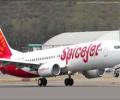
He said the ministry was looking forward to suggestions from the state governments and discussions were underway with all the stakeholders to arrive at a policy which would bring back growth in the aviation sector.

Most of them had to wind up operations due to high operating cost, expensive fuel and longer than expected gestation period.

Air India had last year faced about two-month-long strike by its pilots.

Veterans in the travel industry, a well-known corporate lawyer, and a marquee US-based hedge fund have backed the upcoming low-cost airline Akasa Air. Founded by former Jet Airways chief executive officer (CEO) Vinay Dube, the venture counts ace stock trader and investor Rakesh Jhunjhunwala as its biggest financial backer with an investment of around Rs 300 crore. A person with knowledge of the development said most of the people were well known to Jhunjhunwala and Dube, who approached them during the conception stage.

Govt may grant infrastructure status to the aviation industry to enable it to access finances at cheaper rates
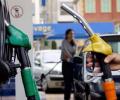
This is the second straight increase in ATF price this month. Rates were hiked by a record 56.5 per cent (Rs 12,126.75 per kl) on June 1. Simultaneously, petrol and diesel prices were hiked for the 10th day in a row.
SpiceJet COO says ATF price cut is need of the hour.

Besides urging the Centre for extension of loan moratorium, the hotel and travel industries have also demanded deferment of GST and advance tax payments and waiver of fees for all forthcoming licences and permits.
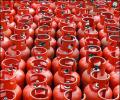
The price of non-subsidised cooking gas (LPG) was on cut by Rs 21 per cylinder and that of jet fuel (ATF) by a steep 3 per cent on the back of falling international oil rates.
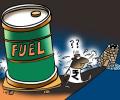
The GST Council might on Friday consider taxing petrol, diesel and other petroleum products under the single national GST regime, a move that may require huge compromises by both central and state governments on the revenues they collect from taxing these products. The Council, which comprises central and state finance ministers, in its meeting scheduled in Lucknow on Friday, is also likely to consider extending the time for duty relief on COVID-19 essentials, according to sources in the know of the development. GST is being thought to be a solution for the problem of near-record high petrol and diesel rates in the country, as it would end the cascading effect of tax on tax (state VAT being levied not just on the cost of production but also on the excise duty charged by the Centre on such output).
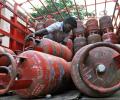
The cost of non-subsidised LPG -- the one that consumers buy after exhausting their quota of 12 bottles of 14.2-kg at below market price -- has been cut by Rs 100.5 to Rs 637.

But demand has shown signs of pick up in the last 10 days of April after the government allowed resumption of economic activity beyond the urban municipal limit.

The economy is gaining traction with gradual pick up in manufacturing activity and moderation in contraction of services, spurred by comfortable liquidity conditions, an RBI article on Tuesday said. Observing that the retreat of the second wave of coronavirus pandemic has been slow, the RBI in an article on the 'State of Economy' said, the aggregate demand conditions are buoyed by the release of pent-up demand post unlock, while the supply situation is improving with the monsoon catching up to its normal levels and sowing activity gaining pace. "Reaffirming the traction that the economy is gaining, the manufacturing activity is gradually turning around, while contraction in services has moderated.
'This is a huge step in promoting the 'Make in India' mission as this bio-fuel would be produced from Tree Borne Oils sourced from tribal areas and farmers.'

Jet Airways on followed its smaller rival SpiceJet and hiked fares by a steep 25 per cent to mitigate the impact of the sharp fall in the rupee value and a near 15 per cent spike in oil prices of late.
No immediate comment was available from airlines on the impact of the price hike on passenger fares.
Govt says domestic carriers' financial health a concern.

Aviation turbine fuel or jet fuel price was on Wednesday hiked by a steep 9.2 per cent, while that of non-subsidised cooking gas was raised by Rs 21 per cylinder.
In a much-needed relief to cash-strapped airlines, this is the second straight monthly reduction in rates and the biggest single cut ever.
The new government may also introduce a separate scheme for revival of stranded gas-based power projects
ATF price in Delhi was reduced by Rs 4,765.5 per kilolitre (kl), or 11.9 per cent.
This is the second straight increase in jet fuel rates in as many months.

'Windows shook and rattled, and the thunderous growl of the engines doused even the sound of our noisy helicopter till such time the plane had lifted itself into the skies and disappeared from view.'

The government has not taken any decision to privatise Air India, however, it was close to finalising a short-term strategy to strengthen the burgeoning civil aviation sector, including slashing taxes on jet fuel.
ATF or jet fuel price has been cut marginally while rate of non-subsidised cooking gas LPG has been hiked by Rs 27.50 a cylinder.
 © 2026 Rediff.com - Investor Information - Advertise with us - Disclaimer - Privacy Policy - Sitemap - Feedback - About us - Terms of use - Grievances