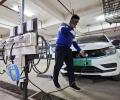
The Indian government has made electric vehicles (EVs) the default choice for staff car procurement across ministries and departments, setting a higher price cap of 20 lakh for EVs compared to 10 lakh for ICE vehicles. Concurrently, new guidelines have been issued for procuring electronic devices, incentivising 'Make in India' products with a higher price ceiling.

While in the case of bigger cars, the industry wants the distortion with smaller cars and the tax differentials to be narrowed, it wants duties to be reduced from 24%-27% to a uniform 22% irrespective of size of the vehicle and its engine displacement.

Domestic passenger vehicle dispatches in India surged by 36.5 per cent year-on-year to 4,39,309 units in August, marking the highest ever sales for the month, according to the Society of Indian Automobile Manufacturers (SIAM).

Domestic passenger vehicle dispatches in India increased by 21.8 per cent year-on-year to 4,54,574 units in September, while two-wheeler sales rose 13.5 per cent to 24.63 lakh units, according to SIAM data.
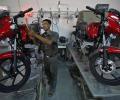
Bajaj Auto received the highest incentive payout under the government's Production-Linked Incentive (PLI) scheme for automobiles and auto components in FY26, securing approximately 625.65 crore. Despite exceeding investment targets, the scheme has significantly underperformed in job creation and incremental sales, generating only 46% of projected jobs and 23% of targeted sales by March 2026.

Andhra Pradesh has successfully converted 526 out of 714 investment projects received since June 2024, achieving a conversion rate of nearly 74 per cent by project count. These projects represent investments worth Rs 17.2 trillion with an employment potential of 1.93 million jobs, showcasing the state's commitment to translating investment commitments into on-ground projects.

Indian automakers like Tata Motors Passenger Vehicles and Mahindra & Mahindra are experiencing increased semiconductor procurement costs due to surging demand from AI data centres. This global shift is tightening chip supplies for conventional automotive applications, forcing manufacturers to pay premiums and build inventories to maintain production, with concerns about prolonged supply constraints and rising prices for memory chips.

India's entry-level passenger vehicle market is experiencing a significant recovery, with mini car wholesales surging 86.3 per cent year-on-year in the first half of FY27, driven by improved affordability and stronger overall demand.

India's electric vehicle market is experiencing an unprecedented boom with a 37 per cent increase in new entrants, driven by supportive policies and infrastructure.
India's leading two-wheeler manufacturers, including TVS Motor, Bajaj Auto, and Hero MotoCorp, are preparing for a deceleration in growth during the second half of financial year 2026-27 (H2FY27). This anticipated slowdown is attributed to a high base effect from last year's GST rate cut, inconsistent rural demand, and a growing disparity between premium and entry-level segments.

Indian stock markets are set to be influenced by a confluence of factors this week, including escalating geopolitical tensions, particularly concerns over US-Iran conflict, volatile crude oil prices, and the ongoing quarterly earnings season. Additionally, the US midterm elections, foreign investor activity, and key macroeconomic data releases will also be closely monitored by investors.

Formula One stakeholders have unanimously approved the return to 2.1-litre turbocharged V8 engines from 2030, aiming for less complex, lighter, and cheaper power units with limited hybridisation, enhancing attack-oriented racing and fan experience with a louder sound.

Honda Motorcycle and Scooter India has maintained its position as the top-selling player in the retail two-wheeler market for the fourth consecutive month in October, intensifying its challenge to long-time leader Hero MotoCorp. This consistent performance, driven by strong scooter sales and shifting market dynamics, has significantly narrowed the gap between the two giants, with Honda now clearly establishing itself as a formidable contender for the market leader slot in the coming years.

A cyberattack on an automaker can spread through its wider supply chain and create significant financial losses.

Lakshmi Venu, daughter of TVS Group's Venu Srinivasan, has formally sought a partition of the joint family assets, citing her equal rights under the Hindu Succession Act, 1956, as amended in 2005. This move escalates a succession dispute over the ownership and control of key businesses within the prominent Indian automobile group.

India's passenger vehicle (PV) exports saw a 17 per cent year-on-year decline in August, contrasting sharply with a 36.5 per cent surge in domestic dispatches, which reached a record high for the month as automakers prepared for the festive season.
Domestic passenger vehicle dispatches in India surged by 34.3 per cent year-on-year to 4,57,810 units in July, marking the auto industry's strongest-ever July sales, according to the Society of Indian Automobile Manufacturers (SIAM).
Electric vehicle (EV) sales in India are growing faster than the industry's ability to produce and deliver them, leading to supply shortages at dealerships during the peak festival season. This surge in demand is attributed to rising conventional fuel prices, making EVs a more attractive option for cost-conscious buyers.

A year after GST rates were rationalised, retail growth in automobiles has sustained beyond the initial festival surge, led by two-wheelers and passenger vehicles (PVs), with the Fada data showing rural markets emerging as a key driver of the post-GST demand recovery.

Citron, a brand under Stellantis, anticipates that three-fourths of its sales in India will originate from Tier-II, Tier-III, and smaller cities within the next five years, a significant increase from its current 55 per cent, as it expands its retail network beyond major urban centres.
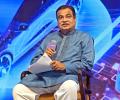
Union Minister Nitin Gadkari has called for Indian companies to form joint ventures with US companies to leverage new technologies, while also expressing an ambitious target to make India's automobile industry the world's number one within five years.

Tata Motors is maintaining its lead over Mahindra & Mahindra in the race for the second position in India's passenger vehicle market, largely driven by its strong performance in electric vehicle sales. Both companies are aggressively expanding their SUV and EV portfolios and scaling up production to meet surging demand, indicating a fierce competition ahead.

India has achieved its highest-ever annual Foreign Direct Investment (FDI) inflow of USD 94.53 billion in FY 2025-26, with cumulative FDI reaching USD 843 billion since 2014-15, announced Commerce and Industry Minister Piyush Goyal. Production Linked Incentive (PLI) schemes have also significantly boosted investment, production, exports, and job creation.

Indian automobile retail sales reached a record 25,36,920 units in September, marking a 31.82 per cent year-on-year growth, with passenger vehicles recording their highest-ever September sales at 4,27,213 units, according to the Federation of Indian Automobile Dealers (FADA).

US Secretary of State Marco Rubio visited Reliance Industries' Jamnagar refinery, a day after calling India a crude oil refining 'superpower', and met with top Indian business leaders Gautam Adani and N Chandrasekaran to advance bilateral ties in energy, trade, investment, and defence.

A report in the Reserve Bank of India's (RBI's) monthly bulletin suggests that satellite-based night-time lights data and Google search trends can significantly improve quarterly economic growth estimates for Gujarat, Maharashtra, and Karnataka, reducing errors by up to 62 per cent.
India's automobile retail sales surged by 21.83 per cent year-on-year in June, reaching 25,57,234 units, marking the best June ever recorded across all segments, according to the Federation of Automobile Dealers Associations (FADA).

Why the industry's public position changed is difficult to say. What the developments did establish, though, is that ethanol-blended petrol has become one of the country's most politically and commercially sensitive policy issues.

Indian benchmark stock indices, Sensex and Nifty, closed lower due to profit-taking, a spike in wholesale price-based inflation, and firm crude oil prices, despite some support from easing intraday crude oil prices and rupee appreciation.

India's government is set to release its draft National Steel Policy for public consultation, aiming for over 600 million tonnes of steelmaking capacity and 500 million tonnes of consumption by 2047. The policy will also introduce a ~5,000-crore scheme to incentivise small steel producers for carbon emission reduction and address challenges like raw material availability and technological dependence.

Zoho co-founder Sridhar Vembu argues that predictions of AI's catastrophic outcomes are overstated and a global pause in AI development is improbable. He urges India to adopt an independent AI strategy, focusing on extensive foundational R&D across sectors, while remaining wary of market monopolisation attempts by major tech players. Vembu also highlights concerns about AI's impact on human judgment, skill development, and job markets, particularly for junior professionals.

Korean auto major Hyundai plans to invest an additional Rs 4,000 crore in Maharashtra by 2030, aiming to nearly double capacity at its new Pune manufacturing plant to 320,000 units per annum in a phased manner, a top company executive said.
As India's festive season approaches, passenger vehicle dealers are seeing a notable increase in inventories, yet discounts remain surprisingly moderate compared to previous years, signalling a tighter demand-supply balance in the automotive market.

'In the past, when the Indian markets have been flat for two years, the next year's returns have ranged between 5 per cent and 55 per cent.'
Zoho cofounder Sridhar Vembu dismisses exaggerated fears about AI's catastrophic potential and global development pauses. He advocates for India to adopt an independent AI strategy, fostering partnerships while avoiding entanglement in US-China tech rivalry. Vembu stresses extensive investment in foundational R&D across sectors, distinguishing it from costly frontier AI model development. He also highlights concerns about AI's impact on human judgment, skill erosion, and job disruption, particularly in software engineering, while remaining optimistic about new economic opportunities.

According to the data released by the Society of Indian Automobile Manufacturers (SIAM), motorcycle sales in last month declined by 9.16 per cent to 7,99,139 units from 8,79,721 units in the same month previous year.

India's automobile retail sales reached an unprecedented 24.23 lakh units in August, marking a 17.51 per cent year-on-year growth, with alternative fuels (CNG, hybrid, and electric) collectively surpassing petrol in the passenger vehicle segment for the first time.

India remains one of the Hyundai Motor group's most important and strategic markets globally. The initiative positions India as a strategic core market for the group's growth, emerging market expansion, and next-generation automotive innovation.

'As long as the vehicle has a flex engine, it is irrelevant if the mixture is 15 per cent or 30 per cent; the performance is the same.'

India needs to move beyond ease and cost of doing business and focus on the "speed of doing business" as the next leg of reforms to sustain economic growth and private investment, Confederation of Indian Industry (CII) President R Mukundan said.
