
Diplomatic and other sources say the two organisations believe they can play a role because they are intrinsically linked to policy-making in Pakistan.
The top United States commander in Afghanistan has said that they are facing difficulties in their latest military campaign against the Taliban due to lack of cooperation from Pakistan.General Stanley McChrystal, the commander of the International Security Assistance Force and US Forces in Afghanistan, is believed to have pursued this line in his secret visit to Islamabad over the weekend, during which he met President Asif Ali Zardari and Army chief Gen Ashfaq Parvez Kayani.
The 26/11 trial is expected to take an interesting turn with the counsel for Fahim Ansari contemplating the inclusion of Pakistan army chief General Ashfaq Pervez Kayani's name as the main conspirator.
In an interview to CBS Face the Nation, Chairman of America's Joint Chief of Staff Admiral Mike Mullen said Pakistan Army chief Ashfaq Parvez Kayani is focused on both -- the threat from India and that from internal insurgency.
Insiders say that General Kayani's decision to extend Pasha's service has been made to ensure the continuity of the army's offensive against extremists in the troubled tribal regions of the country.
With international pressure mounting on Pakistan to cooperate in bringing the Mumbai attack perpetrators to justice, President Asif Ali Zardari and powerful army chief Ashfaq Parvez Kayani today discussed the security situation across the country and tensions with India.There was no official word on the meeting, though Dawn News channel said
Admiral Mike Mullen, the chairman of the Joint Chiefs of Staff, who just couldn't stop praising Pakistani Army General Ashfaq Parvez Kayani , told Congress Thursday that Kayani has purged the so-called 'rogue' elements from the ISI who are in cahoots with the Taliban.
Pakistan's armed forces will mount an equal response "within minutes" if India carries out any surgical strike inside the country, army chief Gen Ashfaq Parvez Kayani has reportedly assured the nation's leadership.
Pakistani President Asif Ali Zardari met Prime Minister Yousuf Raza Gilani and army chief Gen Ashfaq Parvez Kayani on Saturday night to discuss the fallout of the coordinated terrorist strikes in Mumbai amid India's accusations about possible Pakistani links to the attacks. This was the second meeting on Satruday of the three top leaders
Moderate to brisk voting was recorded in the two constituencies of Ganderbal and Kangan in north Kashmir Sunday as authorities again clamped undeclared curfew in the rest of the Valley to prevent the proposed separatist march in Srinagar.
The international community, including India, must offer the Pakistan government all the help and encouragement that it needs to fight and root out the menace of radical extremism, or else the terrorists will spread their tentacles far and wide -- including, eventually, into India.
Sharif, who has urged the masses to defy a government clampdown and join a nationwide protest, said the "chances of army takeover is absolutely nil".
Pakistan's report on its probe into the dossier provided by India into the Mumbai terror attacks was on Monday examined in Islamabad, by a top level cabinet committee, headed by Pakistan Prime Minister Yousuf Raza Gilani, before being handed over to New Delhi.
Highest levels of Pakistan's security apparatus, including army chief General Ashfaq Parvez Kayani, might have been aware of the plot to bomb the Indian embassy in Kabul in July, United States intelligence and security officials believe, a media report has said.They also believe that the attack was aided by Pakistan's infamous Inter Services Intelligence agency."It's very difficult to imagine he (General Kayani) was not aware," a senior American official said.
Pakistan President Asif Ali Zardari is locked in a power struggle with the army over his plans to ease tensions with India and his assertion that Taliban, not India, is the greatest threat to his country, a news report said today.
In a bid to defuse tensions between India and Pakistan, United States on Monday rushed its top Army official to Islamabad, to hold discussions with the country's political leadership. US Joint Chiefs of Staff Admiral Mike Mullen arrived in Islamabad today on an unscheduled visit, second after the November 26 terror strikes in Mumbai that killed more than 180 people. Mullen met Pakistani national security advisor Mehmood Ali Durrani shortly after his arrival.
Congress chief Sonia Gandhi and superstar Shah Rukh Khan have been ranked among the 50 most powerful people in the world by prestigious United States-based magazine 'Newsweek' magazine, in a list topped by President-elect Barack Obama.Pakistan army chief Ashfaq Parvez Kayani, who controls the country's nuclear weapons, is placed 20th on the list of the global 'power elite', at the beginning of 2009 in the magazine's January issue.
In the wake of the Mumbai terror attacks, the Pakistan Army chief has informed the country's leadership that if tensions with India mount further, the military will have to move troops from its restive tribal areas to the eastern borders, ending the war against local militants.
Pakistan on Saturday did an about turn on sending the Inter-Services Intelligence chief to India, in connection with the probe into the terrorist attacks in Mumbai, saying a representative of the spy agency would be sent instead of him.The decision was made at a late night meeting between President Asif Ali Zardari and General Ashfaq Parvez Kayani, the chief of the powerful army. Prime Minister Yousuf Raza Gilani also joined the meeting.
A high-level meeting chaired by Pakistan Prime Minister Yousuf Raza Gilani in Islamabad took stock of the deteriorating security situation in the restive Northwestern Frontier Province and authorised Army Chief Ashfaq Parvez Kiyani to lead a military effort in this regard.
The United States has ruled out a military coup in Pakistan in the wake of the political chaos saying Army Chief General Ashfaq Kayani is a staunch supporter of democracy and doesn't want to take over like his predecessor Pervez Musharraf did in 1999.
Amid intense US pressure to deliver on the war on terror, the chief of Pakistan's powerful Inter Services Intelligence has been shunted out of Islamabad and replaced by Lieutenant General Ahmad Shuja Pasha, considered close to the reform-minded Army Chief Ashfaq Parvez Kayani.
While officials of the two allies offered few details on Wednesday about what was decided or even discussed at the meeting -- including any new strategies, tactics, weapons or troop deployment -- the star-studded list of participants and an extreme secrecy surrounding the talks, New York Times said the talks underscored how gravely the two nations regarded the growing militant threat.
The people of Pakistan are in a dark, foreboding mood.According to an International Republican Institute opinion poll, as many as 86 percent of Pakistanis believe their country is headed in the wrong direction.
Pakistan's army chief General Ashfaq Parvez Kayani on Monday emphasised the need to avoid a conflict with India in the wake of the Mumbai attacks as China launched a diplomatic initiative to ease tensions by dispatching a top diplomat to Islamabad. Kayani's comments, believed to be his first on the situation, came during his talks with Chinese Vice Foreign Minister He Yafei, who is in Islamabad.
The Pakistan Army on Monday issued orders to recall nearly 300 officers deployed with various departments of the government and security agencies.
Pakistan on Friday test-fired the nuclear-capable, medium-range 'Ghauri' missile.

Adults are as likely as children to fall prey to diseases that immunisation can potentially prevent.
Musharraf called the Army "the saviour of Pakistan" and said: "Bina iske, Pakistan ka vajood nahi" (without the army, Pakistan has no identity). That was said as much for the domestic audience as for Uncle Sam.

He said as of now the strike, which began on Monday, will continue till Saturday morning and a decision to continue it further would be taken in a meeting.
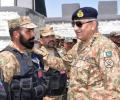
If Imran Khan delays his assent to General Bajwa's recommendations any further, it could imply he is taking stock of possible serious dissent within Pakistan's top army echelons, says Rana Banerji, who headed the Pakistan Desk at the Research and Analysis Wing, India's external intelligence agency.
Kiyani is a non-controversial officer, who had in the past not come to notice for any dubious association with the Taliban or Al Qaeda or any of Pakistan's fundamentalist organisations.
Kayani 'reaffirmed the commitment of the Pakistan Army to the Kashmir cause in line with the aspirations of the Pakistani nation', said a statement issued by the military. Kayani's comments came in the wake of Pakistan People's Party co-chairman Asif Ali Zardari's remarks that India and Pakistan should not let their relations be held hostage to the Kashmir dispute.
Pakistan's Army is to ask the country's embattled President Pervez Musharraf to relinquish office in a week's time as its top brass would not want him to be impeached, a news report said on Saturday.
Gen Kiyani has already withdrawn regular army troops from South Waziristan as demanded by Baitullah and has lifted the economic blocade imposed against the Mehsuds.
Nawaz Sharif's brother Shahbaz may hold talks with Pakistani Army generals soon to negotiate a deal before the deposed premier returns home, most probably on September 9, a leading daily reported on Monday.
In a letter written to the officers, Gen Kiyani said the role of the Armed Forces had already been defined in the country's laws and Constitution and there was no role of the Army in the country's politics.
Emerging reports from Pakistan suggest that Pakistan President Pervez Musharraf might opt to step down in the wake of a meeting with the Army chief though the President himself denied the news. Musharraf held a meeting with army chief Gen Ashfaq Parvez Kayani at the Army House in Rawalpindi on Wednesday night that lasted over three-and-half hours.
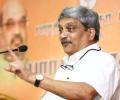
Parrikar had compared the neigbouring country to "hell" and asserted that it should stop human rights violations in Balochistan.
President General Pervez Musharraf on Wednesday handed over charge of the Pakistan army to General Ashfaq Pervez Kiyani.
 © 2026 Rediff.com - Investor Information - Advertise with us - Disclaimer - Privacy Policy - Sitemap - Feedback - About us - Terms of use - Grievances