
Corporate margins and profits in India remain vulnerable to changes in crude oil prices in the international market. Historical quarterly data from listed companies (excluding banks, finance and insurance, oil and gas, and power sectors) indicate an adverse correlation between corporate margins and crude oil prices.

'The government is trying to kickstart the investment cycle in India and while the corporate investments are yet to gather momentum, there are early signs of the same.'

Higher inflation has again become a matter of concern for fast-moving consumer goods (FMCG) companies. After prices of commodities like sugar and wheat moved higher and stabilised at those levels, the crude oil too surged, adding to FMCG firms' worries. Besides, a dry spell in August in the ongoing monsoon season impacted rural demand.

Equity benchmarks Sensex and Nifty ended on a mixed note on Wednesday as the euphoria about the Budget fizzled out, with investors going for profit-taking ahead of the Fed interest rate decision. The 30-share BSE benchmark Sensex climbed 158.18 points or 0.27 per cent to settle at 59,708.08 after it trimmed most of the intra-day gains. During the day, it had zoomed 1,223.54 points or 2 per cent to 60,773.44.

Renewed inflationary pressures, led by a spike in prices of vegetables and cereals, have cast a spell on the equity markets in the past month. The BSE Sensex and Nifty50 have declined up to 2 per cent each during the period, clipping the 13 per cent rally from the March lows, shows data from ACE Equity. Investors typically consider shares of fast-moving consumer goods (FMCG) companies as defensive bets, putting their weight behind them in a falling market.

Existing mutual fund investors have time till March 31 to nominate a beneficiary or opt out of it by submitting a declaration form, failing which their folios will be frozen, and they will not be able to redeem investment. The Securities and Exchange Board of India (Sebi), in its circular on June 15, 2022, made it mandatory for mutual fund subscribers to submit the nomination details or declaration to opt out of the nomination on or after August 1, 2022. Later, the deadline was extended to October 1, 2022.

Irregular rainfall and a pick-up in commodity costs are expected to weigh on the demand and margins of fast-moving consumer goods (FMCG) companies. Most companies reported a sharp expansion in gross margins in the April-June quarter (first quarter, or Q1) of 2023-24 (FY24), given the lower prices of key raw materials and earlier price hikes. Furthermore, there were expectations that cost savings being passed on could reflect in volume growth going forward. However, these hopes could be dashed if demand recovery, especially in the rural segment, stalls, and gains on the raw material front start to recede.

'Gold prices thrive on volatility and more so when the stock markets trend downward.'

'Investors should hold equity assets for 3 to 5 years.'

'Comparing the rates of interest with PSU banks, the three- and five-year time deposit rates of the post office are more favourable.'

Hotel companies, which have experienced substantial share price gains in the past six months, are not only expected to post robust revenue growth in the seasonally weak July-September quarter (second quarter, or Q2) of 2023-24 (FY24), with the trend continuing in the second half (H2) of FY24, but according to some analysts, they will also benefit from a structural uptrend in progress. To begin with, larger players in the listed hotel sector are expected to report strong growth in Q2 compared to the year-ago quarter. Led by higher demand from the business segment, the sector is expected to achieve a growth rate of 15-30 per cent.

Equity benchmarks ended modestly higher on Friday after the Reserve Bank raised the key interest rate in an effort to cool stubbornly high inflation and defend the rupee. Continuous foreign fund inflows into the capital markets and softening crude oil prices also helped the bourses regain momentum, traders said. The 30-share BSE Sensex ended 89.13 points or 0.15 per cent higher at 58,387.93 after facing volatility during the fag-end of trade. During the day, it climbed 350.39 points or 0.60 per cent to 58,649.19. The broader NSE Nifty went up by 15.50 points or 0.09 per cent to finish at 17,397.50.

Benchmark stock indices Sensex and Nifty spurted over 1 per cent at close on Monday following buying in IT, oil and gas and banking shares bolstered by firm global trends. Rising for a second straight session, the 30-share BSE Sensex rallied 760.37 points or 1.41 per cent to settle at 54,521.15. During the day, it jumped 795.88 points or 1.48 per cent to 53,760.78. The broader NSE Nifty advanced 229.30 points or 1.43 per cent to 16,278.50 as 41 of its constituents advanced.

Equity benchmark indices Sensex and Nifty bounced back on Thursday to close higher by nearly 1 per cent on gains in banking, IT and auto shares amid mixed global trends. The 30-share BSE Sensex rose by 443.19 points or 0.86 per cent to settle at 52,265.72. During the day, it rallied 694.26 points or 1.33 per cent to 52,516.79. The NSE Nifty advanced 143.35 points or 0.93 per cent to 15,556.65.

Markets continued to fall on Monday, with the Sensex declining 94 points as investors remained cautious amid unabated selling by foreign funds and elevated crude oil prices ahead of the RBI's policy decision later this week. The 30-share BSE Sensex declined 93.91 points or 0.17 per cent to end at 55,675.32. During the day, it tanked 473.49 points or 0.84 per cent to 55,295.74.
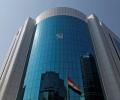
Capital markets regulator Sebi on Tuesday barred five brokerage houses for up to six months from making fresh applications seeking registration as commodity brokers as they failed to meet 'fit and proper' criteria in the NSEL case. The affected brokerage houses include India Infoline Commodities, Anand Rathi Commodities and Geofin Comtrade (banned for 6 months each), and Phillip Commodities and Motilal Oswal Commodities Broker (for 3 months each). "There were enough red flags for a reasonable person to come to conclude that what was being offered as paired contracts on NSEL were not spot contract in commodities," Sebi said in five separate orders.

Since its October high last year, the stock of innerwear major Page Industries has been on a downtrend, shedding a little over 30 per cent of its market value. Higher competitive intensity, muted volumes, pressure on margins, and rich valuations have led to downgrades for the stock. The October-December quarter (third quarter, or Q3) performance was lower than the Street's expectations - both on volumes/sales and margins.
PowerGrid was the top gainer in the Sensex pack, rising around 4 per cent, followed by ITC, Bajaj Finance, Infosys, NTPC and Tech Mahindra. NSE Nifty advanced 117.15 points to 17,072.60.

SBI was the top loser in the Sensex pack, shedding around 3 per cent, followed by Bajaj Finserv, Tech Mahindra, Sun Pharma, Bajaj Finance and Axis Bank. Nifty fell 143.60 points to 17,873.60.
Bajaj Finance was the top gainer in the Sensex pack, rising around 3 per cent, followed by Infosys, Titan, Reliance Industries and HCL Tech. NSE Nifty rose 27 points to 17,248.40.
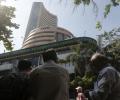
ICICI Bank was the top gainer in the Sensex pack, soaring nearly 11 per cent, followed by Axis Bank, Dr Reddy's, SBI, M&M and Tech Mahindra. NSE Nifty advanced 10.50 points to 18,125.40.

After three consecutive years of infusing huge funds, foreign portfolio investors retreated from the Indian equity markets in a big way in 2022 with the highest-ever yearly net outflow of nearly Rs 1.21 lakh crore. The huge outflow, which surpasses by a big margin the previous record of Rs 53,000 crore net withdrawal in 2008, came amid aggressive rate hikes by central banks globally but 2023 is expected to be better on positivity about overall macroeconomic trends in India, experts said. Apart from global monetary tightening, volatile crude, rising commodity prices along with Russia and Ukraine conflict led to an exodus of foreign money in 2022.

A term plan's premium is lower than that of a wholelife plan.

Tata Steel was the top gainer in the Sensex pack, jumping over 6 per cent, followed by Sun Pharma, L&T, M&M, PowerGrid, Bajaj Finserv, TCS and Infosys. On the other hand, Wipro, Asian Paints, HDFC Bank, IndusInd Bank and HCL Tech were among the laggards.

The rupee extended its losses and slumped 60 paise to close at a record low of 77.50 (provisional) against the US dollar on Monday, pressured by the strength of the American currency overseas and unabated foreign fund outflows. Forex traders said risk appetite has weakened amid mounting concerns about inflation that may trigger more aggressive rate hikes by global central banks. At the interbank foreign exchange market, the rupee opened lower at 77.17 against the greenback, and finally settled for the day at 77.50, down 60 paise over its previous close.

IndusInd Bank was the top gainer in the Sensex pack, soaring over 7 per cent, followed by Bharti Airtel, HCL Tech, Tata Steel, Tech Mahindra and Dr Reddy's.

ICICI Bank, HUL, HDFC Bank, M&M, Ultra Cement, IndusInd Bank and Tech Mahindra were among the losers in the Sensex pack. NSE Nifty slipped 13.95 points to 17,355.30.

Equity benchmark Sensex on Monday crashed about 1,546 points to sink below the 58,000-level due to across-the-board selloff tracking sluggish global markets. Besides, persistent foreign capital outflows continued to affect the market sentiment, traders said. Benchmark indices started the session on a weaker note and the selling intensified during afternoon trade, with almost all sectoral indices ending in the red. The 30-share BSE Sensex ended 1,545.67 points or 2.62 per cent lower at 57,491.51.

PowerGrid was the top loser in the Sensex pack, shedding around 3 per cent, followed by Asian Paints, Axis Bank, Kotak Bank, Bajaj Auto, SBI and M&M.

Equity benchmark Sensex rallied 478 points on Monday after gains in index majors HDFC, Infosys and Kotak Bank despite a negative trend in the global markets.

Tech Mahindra was the top gainer in the Sensex pack, rising over 3 per cent, followed by Dr Reddy's, PowerGrid, Kotak Bank, Sun Pharma, ICICI Bank and M&M. On the other hand, IndusInd Bank, Asian Paints, Maruti and Bharti Airtel were among the laggards.

Equity investors became poorer by over Rs 9.75 lakh crore in two days of heavy decline in the equity market, with the Sensex plunging 1,457 points on Monday. The 30-share BSE benchmark tanked 1,456.74 points or 2.68 per cent to settle at 52,846.70 on Monday. It had ended 1,016.84 points or 1.84 per cent lower at 54,303.44 on Friday.

Stock market investors are expecting a balanced Budget with a focus on job creation, increased spending on infrastructure, reigning in the deficit, and bringing the economy back on track, experts said on Wednesday. Stock markets have been subdued in the run-up to the Union Budget with BSE's benchmark Sensex is almost flat so far this month. Even the corporate earning season failed to excite the markets, while some indices like IT and bankex have seen some positive movements.

Ultratech Cement was the top gainer in the Sensex pack, surging nearly 3 per cent, followed by M&M, Maruti, Tata Steel, TCS, L&T, SBI and HUL. NSE Nifty advanced 52.35 points to 18,308.10.

A K Prabhakar, senior VP and Head - Equity Research (Retail), Anand Rathi Financial Services Ltd, will host a chat on Friday, June 14, between 4 pm and 5 pm.

Will Murthy's return change the fortunes of Infosys? If yes how soon will the table be turned?

'Higher than expected inflation in the US or the European Union, faster than expected tightening by the major central banks, break out of a war in Europe, and withdrawal of portfolio equities from the emerging markets are factors which can result in equity market corrections.'

Public sector banks have raked in more profits in the three months ended June on the back of a persistent decline in bad loans and the trend may have a positive bearing on their balance sheets in the coming quarters. In the June quarter, Bank of Maharashtra (BoM) and State Bank of India (SBI) were in the lowest quartile as far as Gross Non Performing Assets (NPAs) and net NPAs were concerned, according to an analysis of the quarterly financial numbers published by the public sector lenders. Cumulatively, all the 12 public sector banks reported a profit of about Rs 15,306 crore in the three months ended June, registering an annual growth of 9.2 per cent. However, leading public sector lenders -- SBI and PNB -- posted lower profits in the June quarter.

If your flight is cancelled or delayed or you miss one, a travel insurance policy can cover the costs at such times and help you book a new one.

HCL Tech was the top gainer in the Sensex pack, rising over 2 per cent, followed by Infosys, Reliance Industries, Tech Mahindra, Bajaj Auto and M&M. On the other hand, IndusInd Bank, Kotak Bank Bank, Power Grid, Sun Pharma and Asian Paints were among the laggards.
 © 2026 Rediff.com - Investor Information - Advertise with us - Disclaimer - Privacy Policy - Sitemap - Feedback - About us - Terms of use - Grievances