
Bharti Airtel's homegrown cloud platform, Airtel Cloud, has acquired approximately 40 customers within a year of its launch, with a significant portion coming from the manufacturing sector. The platform, designed for Indian companies, offers sovereign, telco-grade cloud infrastructure, connectivity, and GenAI-based provisioning, addressing the growing demand for secure, India-hosted data solutions, particularly for sensitive workloads and regulated sectors.

Shabnam Sinha is set to take over as the Chairperson of Airtel Payments Bank for a three-year term starting October 1, 2026, succeeding Sunil Mittal, who concludes his tenure as non-executive Chairman.

The combined market valuation of four of India's top-10 most valued firms eroded by Rs 87,960.29 crore last week, with Bharti Airtel experiencing the largest decline, amidst a bearish trend in the equities market.

Bharti Airtel, India's second-largest telecom operator, reported a 37.3 per cent rise in consolidated net profit to 8,167 crore for Q1 FY27, driven by the addition of high-paying premium customers, despite missing Bloomberg consensus estimates.
Bharti Airtel's first-quarter (April-June/Q1) performance for 2026-27 (FY27) surpassed estimates across most metrics, fuelled by robust growth in both its India and Africa operations, with significant increases in average revenue per user (Arpu) and subscriber additions.
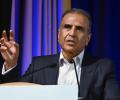
Bharti Airtel is strategically shifting its focus towards data centres, cloud services, and financial services as key drivers for its next phase of growth, leveraging significant past investments in digital infrastructure, as outlined by Chairman Sunil Mittal in the company's Annual Report for 2025-26.

Airtel, which upgraded all postpaid customers to priority plans, argued that the service did not throttle or degrade the experience for its prepaid customers, forming the majority of its 368 million customers in the country.

Indian benchmark equity indices, Sensex and Nifty, rallied in early trade, driven by positive global market trends and easing crude oil prices, despite the US Federal Reserve's hawkish stance tempering overall sentiment. Track Sensex, Nifty on September 18.

Indian benchmark indices, Sensex and Nifty, closed significantly higher, driven by a combination of easing crude oil prices, fresh foreign fund inflows, and a positive trend observed in global equities.
Indian benchmark indices, Sensex and Nifty, saw gains in early trade, driven by a notable drop in crude oil prices and renewed buying interest from Foreign Institutional Investors (FIIs).
Bharti Airtel added 7.64 trillion in value over the past five years, making it the biggest wealth creator in India's private sector, while the IT sector, including TCS, Infosys, and Wipro, collectively lost 8.5 trillion in value, according to the latest Burgundy Private Hurun India 500 report.

Indian benchmark equity indices, Sensex and Nifty, closed mixed on Friday. While a drop in crude oil prices offered some relief, weakness in IT stocks and several Tata Group counters, including a significant dip in Tata Chemicals and ongoing boardroom issues at Tata Sons, limited a broader market recovery.

Indian benchmark indices, Sensex and Nifty, closed nearly flat on Thursday, influenced by the US Federal Reserve's interest rate hike and indications of further monetary tightening. Despite some intraday gains, caution prevailed, with foreign institutional investors continuing to offload equities. Meanwhile, the National Stock Exchange of India's (NSE) mega initial public offering opened for subscription, garnering 39 per cent subscription on its first day.

The benchmark BSE Sensex rebounded by 362 points, ending a four-day losing streak, driven by strong buying in metal, private banking, and oil and gas shares, while the broader NSE Nifty saw modest gains despite paring some advances in the closing session.

Indian benchmark indices, Sensex and Nifty, closed higher on Thursday, breaking a three-day losing streak, driven by late buying in financial heavyweights like HDFC Bank and Axis Bank, despite persistent geopolitical tensions and crude oil prices exceeding USD 100 per barrel.

Indian benchmark indices Sensex and Nifty experienced significant declines in early trade, driven by soaring crude oil prices amidst escalating tensions in West Asia, coupled with weak global market trends and foreign fund outflows.

Indian benchmark indices, Sensex and Nifty, experienced a sharp decline at the close of trade, with the Sensex dropping 539 points and the Nifty falling below 24,100, primarily due to selling pressure in HDFC Bank and ongoing geopolitical uncertainties.

Indian benchmark indices, Sensex and Nifty, closed lower on Monday due to elevated crude oil prices, escalating US-Iran hostilities, and concerns over a potential US interest rate hike, impacting investor sentiment.

The Delhi Metro Rail Corporation has partnered with Airtel Payments Bank to launch co-branded RuPay National Common Mobility Cards (NCMC), enabling seamless payments across various transit networks nationwide.
Indian benchmark indices, Sensex and Nifty, experienced declines in early trade due to elevated crude oil prices, escalating US-Iran hostilities, and renewed concerns over a potential US interest rate hike.

The combined market valuation of five of India's top-10 most valued firms eroded by Rs 1 lakh crore last week, with IT giant Tata Consultancy Services (TCS) experiencing the largest decline amidst a bearish trend in domestic equities.
Indian benchmark indices, Sensex and Nifty, closed lower on Wednesday, reversing early gains due to profit-taking and weakness in sectors like IT, FMCG, and consumer durables, despite support from lower crude oil prices.

The Indian government has introduced a 0.4% transaction fee on Unified Payments Interface (UPI) payments exceeding Rs 2,000 for merchants, effective October 15, marking the end of nearly six years of free service. Person-to-person transfers and small-value transactions below Rs 2,000 remain free. The new Merchant Discount Rate (MDR) is capped at Rs 300 for transactions above Rs 75,000, with differentiated rates for essential sectors and investments, and safeguards to prevent costs from being passed to consumers.

The Indian government has introduced a 0.4% Merchant Discount Rate (MDR) on UPI person-to-merchant (P2M) transactions exceeding Rs 2,000, effective October 15. This move ends nearly six years of fully free UPI payments, though person-to-person (P2P) transfers and small P2M payments remain free. The charges aim to bolster investment in UPI infrastructure, with specific exemptions and caps for essential sectors.

Indian benchmark equity indices extended their losing streak for a fourth consecutive day, with the Sensex tumbling 417 points due to rising crude oil prices and a significant sell-off in IT stocks, impacting overall investor sentiment.

Indian benchmark indices, Sensex and Nifty, closed marginally lower due to elevated crude oil prices, fresh US-Iran tensions, and expectations of a tighter monetary policy from the US Federal Reserve, despite strong domestic GDP growth.
Indian stock markets closed lower due to selling in IT and FMCG shares, triggered by renewed tensions in West Asia which led to a rally in crude oil prices and concerns over inflation and interest rates.
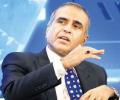
Telecom czar Sunil Bharti Mittal plans to hand over the reins of Bharti Airtel to his children in the next decade and desires that promoter firm Bharti Telecom regains over 50 per cent stake in the company.
Indian benchmark equity indices, Sensex and Nifty, rebounded in early trade after a three-day slide, driven by strong buying in blue-chip bank stocks and a firm trend in global markets, supported by easing US bond yields and record foreign-currency deposit inflows.
Indian benchmark indices Sensex and Nifty experienced declines in early trade, driven by a surge in Brent crude oil prices above USD 91 per barrel due to escalating tensions between Iran and the US, alongside an increase in US 10-year bond yields. Track Sensex, Nifty on August 18.

Reliance Jio's reintroduction of Jio Prime membership with a price lock until September 2027 and the retention of its entry-level daily unlimited data plan at ~299 rupees are seen by industry analysts as strong indicators of imminent tariff hikes across the Indian telecom sector.
Indian benchmark equity indices, Sensex and Nifty, experienced declines in early trade due to renewed tensions in West Asia, which led to a rebound in crude oil prices, coupled with weak global market trends and foreign fund outflows.
Indian benchmark indices Sensex and Nifty opened higher, driven by a significant drop in crude oil prices and a positive trend in global equities, with foreign fund inflows further bolstering domestic markets.
Indian benchmark equity indices, Sensex and Nifty, experienced declines in early trade due to a surge in Brent crude oil prices, which rose above USD 90 per barrel, coupled with subdued global cues and ongoing US-Iran skirmishes. Track Sensex, Nifty on Auigust 12.
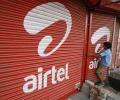
Bharti Airtel reported a 33.5 per cent decline in consolidated net profit to Rs 7,325 crore for the March 2026 quarter, primarily attributed to one-time provisions for statutory and tax liabilities.
Indian benchmark indices, Sensex and Nifty, experienced declines in early trade, primarily due to a surge in crude oil prices and a retreat in Wall Street, as investors reduced exposure to risk assets amidst geopolitical uncertainty. Track Sensex, Nifty on August 7, 2026.
Indian benchmark indices Sensex and Nifty closed lower, with the Nifty recording its fourth consecutive day of decline, primarily due to elevated oil prices and ongoing geopolitical tensions between the US and Iran, which dampened investor sentiment.

Despite recent share price dips, Bharti Airtel is strategically positioned for growth, driven by investments in data centres via Nxtra, a potential tariff hike, and strong performance in Africa, alongside efforts to deleverage and expand its subscriber base in underpenetrated rural markets.

'Wages have not risen. Rural wages have stagnated. The growth was 0.7 per cent last year. For casual and irregular labour, the wage growth is negative.'
Indian benchmark indices, Sensex and Nifty, experienced significant declines, with the Sensex falling 493 points and the Nifty dropping for the sixth consecutive day, primarily due to elevated crude oil prices reaching USD 91 per barrel and diminishing hopes for a diplomatic resolution in West Asia.
