
Geopolitical tensions, trade policy uncertainties, volatility in international commodity prices and financial market uncertainties pose considerable risks to India's economic growth in the coming year, the finance ministry cautioned on Wednesday. "Global trade continues to be affected by uncertainty in the policy environment... tariff-related developments in multiple countries have heightened trade-related risks, affecting investment and trade flows globally.
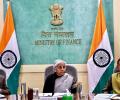
The Budget assumes significance as it comes on the back of lower-than-expected growth numbers during the second quarter and geopolitical uncertainty.

India's manufacturing sector growth moderated in August as output and sales rose at slowest rates since January, while competitive pressures and inflation concerns hampered business confidence, a monthly survey said on Monday. The seasonally adjusted HSBC India Manufacturing Purchasing Managers' Index (PMI) stood at 57.5 in August, below July's reading of 58.1 but above its long-run average of 54.0, signalling a substantial improvement in operating conditions.
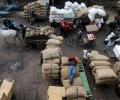
India's economic growth slowed to a 15-month low of 6.7 per cent in April-June 2024-25, mainly due to poor performance of the agriculture and services sectors, government data showed on Friday. The gross domestic product (GDP) expanded by 8.2 per cent in the April-June quarter of 2022-23. India, however, remained the fastest-growing major economy, as China posted a 4.7 per cent growth in April-June 2024.
India's economy grew by 13.5 per cent in the first quarter of the current fiscal, mainly due to the base effect, official data showed on Wednesday. The gross domestic product (GDP) had expanded by 20.1 per cent in the corresponding April-June period of 2021-22, according to data released by the National Statistical Office (NSO). Many analysts had projected the Indian economy will expand at a double-digit growth rate due to the base effect.

Among the bank groups, under the baseline scenario, public sector banks' gross NPA ratios may increase to 13.2 per cent by September 2020 from 12.7 per cent in September 2019.

The World Bank report said Brand Northeast would build on elements such as healthy living, environmental sustainability, social responsibility, service orientation, among others.

India's economic growth rate this fiscal is estimated to be sharply lower at 5 per cent, lowest in a decade, on account of poor performance of manufacturing, agriculture and services sector.

The smallness of the car is perfectly suited for the hills, some owners said, because it is easy to park, convenient to negotiate bends, economical to run and fun to race on narrow roads.

Farm sector recorded a growth rate of 8.9 per cent.
The National Council of Applied Economic Research, which had forecast the country's economy to grow by 8.5 per cent in 2007-08, has raised projection to 8.9 per cent on improved performance of agriculture and services sectors.In case of industry, although the investment climate continues to be strong, the slower growth of exports may be a dampening factor, but retained the growth in industrial sector unchanged at 9%.
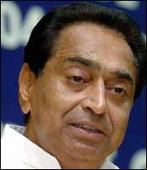
The comprehensive foreign trade policy provides for setting up free trade warehousing zones and gives major thrust to service exports.
Painting a rosy picture, the Asian Development Bank on Tuesday forecast that the Indian economy would grow by 6 % in 2003 and 6.3% in 2004, and said fiscal deficit of the Centre and states would start falling after the elections next year.
India will take a 'firm and tough' stand at the WTO mini ministerial in Tokyo on the issue of market access on agriculture and services as a large population was dependent on them.
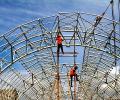
As per the latest government data, India's second quarter economic growth inched up to 4.8 per cent during second quarter (July-September) of 2013-14, well above 4.4 per cent in the first quarter (April-June).
'The economy may not improve unless you admit there are some problems.'

RBI Governor Raghuram Rajan has noted the contradiction.

The Confederation of Indian Industry has pegged the requirement for investment at Rs 280 lakh crore ($4.7 trillion) for five years beginning 2014-15 to make the economy grow by seven per cent a year on an average.

Expenditure cuts necessitated by slowing revenue growth, weak industrial activity worrisome portents
 © 2026 Rediff.com - Advertise with us - Disclaimer - Privacy Policy - Sitemap - Feedback - About us - Terms of use - Grievances