
Jio Financial Services Ltd and Zomato Ltd will enter the National Stock Exchange's benchmark Nifty 50 index from March 28. As per the revisions, Bharat Petroleum Corporation Ltd. (BPCL) and Britannia Industries Ltd will be excluded from the index, according to a release from NSE Indices.

Among the new entries, the largest by market capitalisation are LIC, Avenue Supermarts (DMart), Adani Green Energy, Zomato and Jio Financial Services.

The changes will take effect on March 28, with portfolio adjustments expected before the market closes on March 27.

Stock exchanges are expanding the buffet of index derivatives even as the number of stocks permitted to trade in this space, generating an average daily turnover of Rs 450 trillion, is shrinking. This week, the National Stock Exchange (NSE) started issuing futures and options (F&O) contracts based on the Nifty Next 50 Index, bringing the total count of index derivatives to five.

With new eligibility criteria for futures and options (F&O) coming into effect, Jio Financial Services and Zomato are strong contenders for inclusion in the derivatives segment, according to an analysis by Nuvama Alternative & Quantitative Research. The report suggests that these new F&O inclusions could also propel these two companies into the benchmark National Stock Exchange Nifty 50 during the March rebalancing.

Zomato is at 5, Swiggy at 9, Blinkit at 10.

Bajaj Housing Finance Ltd's impressive stock market debut has brought cheer to the 100-year-old Bajaj Group, but the conglomerate faces the prospect of Bajaj Finserv being removed from the benchmark Sensex index. According to market expectations, Trent, a Tata group-owned fashion retailer, is likely to replace Bajaj Finserv during the upcoming index rebalancing in December.
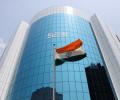
The market regulator's newly proposed selection criteria for the over Rs 400-trillion-a-day futures and options (F&O) market could pave the way for the entry of popular stocks such as Life Insurance Corporation (LIC) of India, Jio Financial Services, Zomato, Paytm, DMart, and Adani Energy into the derivatives segment. The Indian derivatives market, which accounts for most of the trading volumes, could see big churn with over two dozen exits from the current list of 182 stocks due to an upward revision in the eligibility thresholds.

Close to $18 billion that Reliance Jio and Reliance Retail mopped up from a slew of private equity transactions in 2020 has pushed up the money inflows through this route by 108 per cent to $33.8 billion, according to an industry report. As per the data collated by Refinitiv, private equity investments increased 108 per cent in 2020 over the previous year, with the number of deals jumping from 665 in 2019 to 791 in 2020 at $33.8 billion, despite the pandemic. In 2019, total PE deals stood at $16.2 billion. Most of the fund inflows were in the third quarter, fetching $24 billion, which, however, tapered off in Q4 to just about $4.57 billion, as per the data from the agency that tracks financial transactions at a global level.

A slew of Indian firms, including Flipkart, Byju's and Zomato, is building a path to profitability and diversifying into newer business segments ahead of mega-IPO plans.

Tata Consultancy Services (TCS) is India's most-valuable brand in 2022 replacing HDFC Bank, which held the number one spot since 2014, according to Kantar BrandZ report on India's most-valuable brands. TCS was able to grab the top slot due to rising global demand for automation and digital transformation, following the pandemic. Indian brands have bounced back from the pandemic to increase their brand value by 35 per cent compound annual growth rate (CAGR) since 2020.

Beware, it's not just criminals who want your data!
