
Hiring has grown nine per cent this year. And the banking and IT sectors are leading the game.

India's defence sector presents an ordering opportunity worth $138 billion between fiscal years 2023-24 (FY24) and FY32, said a latest note by Nomura, which has initiated coverage on two defence-related players - Hindustan Aeronautics (HAL) and Bharat Electronics (BEL) - with a 'buy' rating. The research and broking house sees an upside potential of 28 per cent and 32 per cent, respectively in these two stocks from the current levels.

Notwithstanding the fact that the country's pharmaceutical (pharma) pricing regulator has allowed a 12 per cent price increase for medicines listed under the National List of Essential Medicines (NLEM) in 2023, analysts and industry insiders predict that the overall domestic pharma industry will only witness a price hike of 5-6 per cent. This is attributed to higher competitive intensity in the market. Krishnakumar V, executive director and chief operating officer (CEO) of Eris Lifesciences, a domestic-focused pharma company, noted that the NLEM segment experienced growth suppression of around 150 basis points due to price reductions during the January to July period this year.
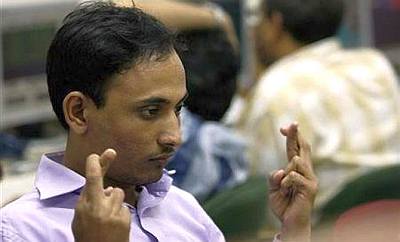
The recovery was led by information technology exporters.

Shares of low-cost airline IndiGo hit record high on the bourses soon after reports of pilot crisis at Vistara emerged. The development also saw airfares surge by around 25 per cent on select routes. Shares of IndiGo hit a lifetime high of ~3,68.5 on April 2, 2024, and has gained 2.4 per cent on the bourses in April.

The pace of lending to the infrastructure sector, including power and roads, fell sharply to 1.8 per cent year-on-year (YoY) in May, 2023 compared to 9.8 per cent in May, 2022. Within the segment, the growth in loans to the power sector was at 0.3 per cent YoY in May 2023, down from 9.3 per cent in May 2022. The RBI data showed that outstanding credit to power sector stood at Rs 6.17 trillion in May.

Power Grid Corporation (PGCIL) intends to ramp up its capex substantially through the next two financial years. The Public Sector Undertaking (PSU) utility posted flat consolidated revenues of Rs 10,700 crore in the third quarter of the current financial year (Q3FY24) and reported 7 per cent year on year (Y-o-Y) growth in net profit to Rs 4,000 crore. The Q3FY24 capex stood at Rs 3,440 crore and capitalisation at Rs 1,780 crore, taking the 9MFY24 total to Rs 8,700 crore capex and Rs 5,800 crore capitalisation, respectively.

Paytm's pre-IPO investors, which include likes of Warren Buffet's Berkshire Hathway, SoftBank and Alibaba, do not seem to be in a hurry to exit India's leading digital payments brand as they continue to believe in its long-term prospect, analysts said. On Tuesday, 86 per cent of Paytm's shares became free to trade after the end of the lock-in period, allowing investors to sell shares that haven't yet been allowed onto the market. Market participants have been speculating on Paytm, post-expiry of lock-in for pre-IPO investors.
Recent RBI data indicates net addition of credit cards is running strong at 18 per cent year-on-year (Y-o-Y), but growth in credit card limits is ahead of loans outstanding. Growth in lower limit cards is decelerating fastest. The West and South have more usage and online transactions are more popular than offline, with metros leading growth.

The recent price correction in broader markets has hit cement companies hard. So far in the current month, smallcap firms like Visaka Industries, Andhra Cements NCL Industries, Sahyadri Industries, and KCP have lost 19.7 per cent, 14.3 per cent, 13.8 per cent, 13.5 per cent, and 11.5 per cent, respectively. On the contrary, largecap companies, while registering losses for the month, have seen a softer blow.

A strong performance in the July-September quarter of 2023-24 (Q2FY24), an upward revision in the margin guidance and sustained momentum in US sales has helped the stock of pharmaceutical major Cipla gain about 2 per cent over the last two trading sessions. The brokerages have upgraded the earnings estimates for this financial year (FY24) by 6-9 per cent to factor in the improved margin guidance and sales in the US market. Led by the US market, which rose by 31 per cent, the company posted a 16 per cent growth in revenues.

With the last quarter of 2023-24 (FY24) expected to have been soft owing to lower discretionary spend and macro uncertainty, many are hoping FY25 will be a year of recovery for the information-technology (IT) industry. The fourth quarter, January-March, is considered soft, and will continue to see the headwinds the sector has been facing. And the sector has entered the new financial year on a weak footing. Analysts are expecting Tier-I firms to report sequential growth of -1 per cent to 1.5 per cent and midcap players' growth may range between 0.7 per cent and 4 per cent.

Nifty 50 firms' net profit estimated to grow by a modest 3.1% in Q2, reports Krishna Kant.

Reflecting subdued global economic growth, India's outward foreign direct investment (FDI) fell by 33.3 per cent sequentially to $1.21 billion in August, compared to over $1.82 billion in July.

The government's decision to impose a 20 per cent export duty on parboiled rice and a $1,200 per tonne minimum export price (MEP) on basmati rice has pulled down overseas shipments of the former by almost 83 per cent and around 30 per cent of basmati exports in a month. Data sourced from various trade agencies and shippers showed that between August 25 and September 20, export of basmati rice has shrunk from 342,605 tonnes in 2022 to around 241,083 tonnes in 2023. Similarly, export of parboiled rice, after the imposition of 20 per cent duty during the same period, has dropped from 1.16 million tonnes in 2022 to just around 204,190 tonnes in 2023.

The overall physical presence of life insurance companies in Tier-II and Tier-III cities increased in FY23 compared to a year ago period on account of the higher impetus given to financial inclusion by the government and insurance regulator, as well as recovery from the Covid-19 pandemic, according to the latest data released by the Insurance Regulatory and Development Authority of India (Irdai). It is the first time that there has been growth in the number of offices since the financial year 2019-20.

Revenue up 15.8% at Rs 34,261 crore over year-ago period.

Strong refining and petrochemical margins seen boosting consolidated net by up to 6%

'IT companies do not have a large presence there either in terms of market and team. So, the impact of the war will be minimal. But West Asia is an emerging economy.'

Hindustan Unilever's Q3FY24 performance was lacklustre, with both sales and operating profit barely moving from the year-ago period due to price cuts and higher advertising costs. Besides weak demand, the FMCG (fast-moving consumer goods) major is facing increased competitive pressures, particularly from regional players, which, coupled with a slow recovery in rural markets, could put revenues under pressure going forward. Margins are expected to remain range-bound as benefits from falling raw material costs are expected to be neutralised by rising promotional budgets.

With seven million new subscribers, India accounted for the highest net addition of mobile subscriptions globally in the second quarter of 2023, according to the August edition of Ericsson Mobility. Among national markets, India was followed by China with five million and the US with three million subscribers. The subscriber penetration in India, however, stood at 79 per cent, compared to 120 per cent in China, the report said.

InterGlobe Aviation, the operator of India's leading airline IndiGo, delivered a better than expected performance across most parameters in Q2FY24. The company posted its fourth consecutive quarter of net profit of Rs 188 crore. It had reported a loss of Rs 1,583 crore in the same quarter a year ago.

'Our unsecured loan is not exactly unsecured. It is backed by cash flow of customers.'

The second wave of the coronavirus pandemic is likely to delay recovery in air passenger traffic with an 80-85 per cent growth year-on-year this fiscal against the earlier estimate of 130-135 per cent, ratings agency ICRA said on Monday. The domestic passenger traffic, which witnessed a steady ramp-up after resumption of airport operations since May 25 last year and reached 64 per cent of the previous year levels in February, has again suffered a setback, the ratings agency said in a report. The spike in coronavirus infections towards March-end and April has resulted in several state governments implementing fresh restrictions, resulting in a marginal 0.7 per cent de-growth sequentially in traffic in March.

The move comes barely a week after fellow crypto unicorn CoinDCX laid off 12 per cent of its workforce - an estimated 80 employees - amid challenging macroeconomic conditions and regulatory uncertainty in the sector. CoinSwitch has 519 employees, according to its LinkedIn profile. This means around 8 per cent of its workforce were shown the door.

The economy, though projected to grow 9.6 per cent in the next financial year in year-on-year growth term, may grow just 1 per cent in real terms to Rs 147.17 lakh crore as against Rs 145.66 lakh crore in 2019-20, at the 2011-12 prices, according to a report by India Ratings. The size of the economy, as per the National Statistical Office's data, had stood at Rs 145.66 lakh crore in 2019-20, at the 2011-12 prices. According to the rating agency, the country's gross domestic product (GDP) is expected to contract 7.8 per cent to Rs 134.33 lakh crore in 2020-21, but may grow 9.6 per cent to Rs 147.17 lakh crore in 2021-22.

'We are committed to achieving the targets we had outlined.'

Most analysts have downgraded the stock of SBI Cards and Payments (SBI Card) as the credit card issuer posted weak results during the December quarter (Q3) of financial year 2023-24 (FY24). The sub-par show, analysts said, was for the eighth straight quarter. With this, they have slashed their earnings estimates by as much as 20 per cent over FY24-26 amid near-term pressure points in the company's growth outlook.

Analysts attribute this fall to the recent moderation in energy (mainly crude oil) and commodity prices, lowering of input costs for companies in sectors such as FMCG, consumer durables, and automobiles, reports Krishna Kant.

Fund inflows jumped over 77 per cent in the second quarter of 2021 to $7.55 billion compared to $4.26 billion in the first quarter, according to the data collated by Refinitiv, the London Stock Exchange Group's financial markets data and insights arm. However, volume growth was a tepid 8.8 per cent in Q2 at 296 transactions up from 272 in Q1, totalling the counts in the first half to 568, against 365 transaction in the year-ago period. Total inflows in the first half of 2020 were $5.43 billion across 365 deals, while in the first quarter these were $3.92 billion across 183 deals and the second quarter at $1.51 billion across 182 deals, according to Refinitiv.

The Union government's finances witnessed significant improvement in August after a stressful first four months of the current fiscal year. India's gross tax revenue, comprising both direct and indirect taxes, for the first five months of 2023-24 surged 16.5 per cent year-on-year (Y-o-Y) to Rs 11.8 trillion. During the April-July period, gross tax revenue increased by a mere 2.8 per cent compared to the Budget Estimate of 12.1 per cent growth for FY24.

'We are engaging in substantial open market sales of both wheat and rice to control food inflation; special measures of market intervention in vegetables, pulses and oil seeds were also taken to cushion the impact.'

A rate cut could stimulate demand and help revive industrial activity, without much risk of sparking off inflation again.

Analysts refuse to read too much into the early birds numbers.

Vegetable rates may ease from September, led by tomato prices, which have started showing signs of correction on the back of increased supply, Reserve Bank of India (RBI) Governor Shaktikanta Das said on Wednesday. "Looking ahead, the spike in vegetable prices in July is starting to see a correction, led by tomato prices. "New arrivals of tomatoes in mandis are already softening the prices, coupled with proactive supply management in the case of onions.

The average ticket size (ATS) of all transactions on United Payments Interface (UPI) in H1 2023 was pegged at Rs 1,604, marking a 10 per cent decline, compared to Rs 1,774 in H1 2022, according to data from Worldline India's Digital Payments Report. The reduction in the overall ATS on UPI is a good sign, suggesting a deeper embedding of UPI as it is being used for smaller or micro-transactions, and the dip is driven by the growth in person-to-merchant (P2M) transactions, the report said. The ATS of P2M transactions dipped 21 per cent from Rs 839 in H1 2022 to Rs 659 in H1 2023.

Existing optimism about the capital goods sector has been enhanced by the Assembly election results, which were favourable for the BJP. The prospects of political continuity led to renewed interest in the sector. There are demand-supply gaps, especially in power, and visibility of improved pricing and strong order flows, including from private enterprises.

New products being designed mainly for auto, oil & gas sectors; firm is raising Kalinganagar plant capacity from three mtpa to eight mtpa

The Colgate-Palmolive (India) stock gained 2.3 per cent in trade on Friday, and ended at Rs 2,079 per share. This was on the back of a robust operating performance in the July-September quarter of 2023-24 (Q2FY24) and expectations of gradual sales recovery going ahead. While the stock is up 44 per cent from its lows in January this year, further gains will depend on its ability to sustain higher growth rates.

Tata Communications has seen analyst upgrades after reporting Q3FY24 results. The biggest factor is the visible signs of a turnaround in its new acquisition, Kaleyra. The consolidated revenue grew 16 per cent Q-o-Q to Rs 5,630 crore led by 15 per cent Q-o-Q improvement in the data segment.
