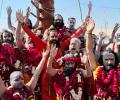
Through history, the Mela has held different meanings for ascetics, the colonised, colonisers, and tourists, but all have been moved by its grandeur points out Atanu Biswas.

Giving final touches to its most ambitious plan to build a wide network of new silk roads on land and seas to enhance global connectivity, China has invited India to join President Xi Jinping's pet project that would revive the ancient trade route and benefit the region.

In the ancient world there is a great deal of give and take and reciprocal learning. India was an integral and important constituent of such interchanges of goods and ideas.

The model-turned-actress has been doing lot of work post her stint in Bigg Boss 9.

The monks took the route taken by famous Chinese scholar Xuanzang (602-664 AD).

Bodh Gaya emerged as a centre that encouraged a continuous dialogue of civilisation, it has enabled India to re-forge her age old linkages with countries, who derived inspiration from Buddha's message of compassion. It is this dialogue that was sought to be interrupted by the dastardly attack, says Dr Anirban Ganguly.

'It was the Mughals who first established standard units of measurement and maintained offices of meticulous record keepers and auditors, departing from the more haphazard methods of earlier regimes.' 'By the end of the 16th century, their revenue and judicial administrations exhibited an obsessive preoccupation with order, the efficient management of time, and a spirit of rational self-control -- all of them characteristics of early modernity,' point out Sheldon Pollock and Benjamin Ellman.
