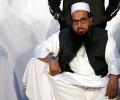
Pakistan's Punjab government has warned citizens against providing charity to banned organizations such as Jaish-e-Mohammad (JeM) and Lashkar-e-Taiba (LeT), stating that those who do so will face terrorism charges.
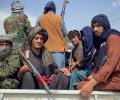
In fact, the Taliban apparently collects about 10 per cent as cultivation tax from opium farmers and 15 per cent as heroin tax from laboratories and smugglers that smuggle narcotics into Pakistan. This, by itself, is a revenue stream estimated at USD 250-300 million.

The United States has said it wants Pakistan to implement UN curbs against three key financers who raised money for the Taliban and Haqqani network, a day after slapping sanctions on the leaders of these outfits.
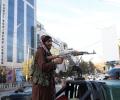
Delhi has come to accept the Taliban takeover in Kabul as a reality and seems increasingly unsure of its dogmatic view of the Taliban as a mere proxy of the Pakistani military and security establishment, observes Ambassador M K Bhadrakumar.

Seeking to wriggle out of the FATF's grey list, Pakistan has imposed tough financial sanctions on 88 banned terror groups and their leaders, including Hafiz Saeed, Masood Azhar and Dawood Ibrahim, by ordering the seizure of all of their properties and freezing of bank accounts, a media report said.

Dawood Ibrahim is wanted in India to face the law of the land for carrying out serial blasts in Mumbai in 1993 in which scores of people were killed and injured.
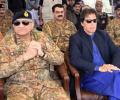
"The FATF plenary decided continuation of Pakistan in 'Grey List' till its next meeting to be held in October," an official privy to the development told PTI.

The APG released its much-awaited 228-page 'Mutual Evaluation Report' on Saturday, 10 days ahead of the key Financial Action Task Force's plenary meeting which will give its decision on Pakistan's 'grey list' status.

Currently placed on the FATF'S 'grey list', Pakistan has been scrambling in recent months to avoid being added to a list of countries deemed non-compliant with anti-money laundering and terrorist financing regulations by the FATF.
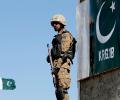
The proscribed organisations will be examined under heightened security checks at all layers of legal, administrative, investigative and financial regimes, the Dawn newspaper reported.
The Paris-headquartered FATF said Pakistan should continue to work on implementing its action plan to address its strategic deficiencies
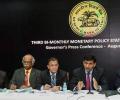
The financial crisis has challenged the intellectual assumptions on which previous regulatory approaches were largely built, and in particular the theory of rational and self-correcting markets.

Domestically, China's 'strike hard' policy is alienating Uighurs further in Xinjiang. China's quid pro quo with the Taliban is hardly any lasting solution to the Afghanistan crises or to regional security, says Srikanth Kondapalli.
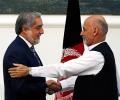
As Ashraf Ghani and Abdullah Abdullah form a joint government after contesting the presidential election against each other, Prakash Bhandari reports from Kabul on the problems facing the new, US-brokered arrangement.
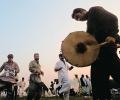
The Kabuliwalas of Kolkata, traditional moneylenders, have seen their numbers shrink.
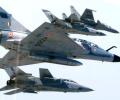
'We could quibble with each other whether there were 25 terrorists killed or 250 killed.' 'The message is more that India undertook such an aerial attack and this attack has actually changed the paradigm.' 'The change in paradigm is that India has shown by the surgical strike in 2016 and the aerial strike of 2019 that we will not just sit back and tolerate terrorism which killed so many of our people.' 'We will hit back and by hitting back we will raise the costs of such activities.'

How much do you know about Shah Jahan, Mumtaz Mahal and the Taj Mahal?

'It is in the interest of both sides that the visit of the US President is seen as being successful. Both sides have invested considerable political capital in it. This rapid exchange of visits and the decisions taken have to be justified, beyond the symbolism, which is no doubt important in itself. This opportunity to impart a fresh momentum to ties should not be missed,' says former foreign secretary Kanwal Sibal.
 © 2026 Rediff.com - Advertise with us - Disclaimer - Privacy Policy - Sitemap - Feedback - About us - Terms of use - Grievances