
The initial public offering (IPO) market in India last year was hot, with companies raising over $22 billion in 2025. But half of the 350-plus companies that listed on the stock exchange last year traded below their offer price, according to a new research report released by HSBC Global Investment Research - a sobering fact despite what otherwise looked like a rush of companies eager to list on the bourses.

Semiconductor makers need thousands of engineers and technicians, and though India has one of the largest pool of engineers in the world, they do not have experience in the semiconductor manufacturing space.

Tata Group is in discussions with some major international companies, including those from Taiwan, for its foray into the semiconductor chip business. The Union government had earlier tried to bring in Taiwanese manufacturers Taiwan Semiconductor Manufacturing Company (TSMC) and United Microelectronics Corporation (UMC) for chip manufacturing in India. A person close to the development said the Tatas have now opened a separate channel for a possible tie-up. Currently, India mostly imports chips, which are fabricated and assembled to put into various applications, including automobiles, renewable power, mobile phones, televisions, and other electronic items.

'As one of many immigrants at Nvidia, I know the opportunities we've found in America have profoundly shaped our lives.'

Due to the prevailing geopolitical situation, like-minded countries are collaborating with India to make it a major semiconductor manufacturing destination, a top Electronics and IT ministry official said on Sunday. In an interview with PTI, Ministry of Electronics and IT Secretary S Krishnan said pilot facilities of US storage semiconductor maker Micron and Tata Electronics have already rolled out chips, and their main plants in Gujarat will begin to produce made-in-India chips from the later part of 2025.

Tata Electronics' Rs 91,000 crore semiconductor fab in Dholera, Gujarat, in partnership with PSMC, will generate over 20,000 direct and indirect skilled jobs in the region and construction of the mega unit is expected to begin this year, according to a statement on Thursday. The planned unit - India's first commercial fab, marks Tata Electronics' entry into the global semiconductor industry. Tata Electronics said it is "proud to lead India's entry into global semiconductor fabrication".
India is all set to make its presence felt in the $47 billion global outsourced semiconductor testing and packaging market, an arena where Malaysia and Vietnam have been way ahead so far. The Cabinet last Thursday cleared two projects, the Tata's assembly testing and packaging plant (ATMP) and the Murugappa-owned CG Power with Renesas from Japan as its tech partner. These, together with Micron's assembly and testing plant which is already being constructed in Sanad in Gujarat, will collectively invest Rs 47,300 crore to set up the factories.

India on Thursday said it promotes engagement with Taiwan in several areas including trade and investment and Taipei's decision to open an economic and cultural centre in Mumbai should be seen in that context.
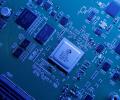
The global semiconductor shortage is turning into a headache for automotive (auto) and appliance manufacturers. But it is proving to be a boon for equity investors. Semiconductor stocks are among the best performers this year. The PHLX Semiconductor Index has gained more than 35 per cent year-to-date.

'India needs many more job creators, both in manufacturing and services, to make it big.' 'For that, the red carpet must be rolled out fully and for all investors without holding back,' suggests Nivedita Mookerji.
A joint venture of the Indian conglomerate Vedanta and Taiwanese electronics manufacturing giant Foxconn signed a memorandum of understanding with the Gujarat government on Tuesday to set up a semiconductor and display manufacturing unit in the state.
Taiwan is keen to collaborate with India and help it become a leader in the semiconductor space, Jason Ho, chairman of the Taiwan Chamber of Commerce in India, said, asserting that the Taiwanese companies have the supply chain for things that the Indian market needs. Manufacturing semiconductors - used in electric and hybrid cars, drones, and communication devices - is fairly complicated, entails huge investment, and can be a cumbersome process.
India and Vietnam are vying with each other to woo semiconductor companies to their country. With the tension between the US and China escalating, and Taiwan getting vulnerable both countries are trying to present themselves as alternative destinations for global players. Vietnam, which started the effort as early as 2010, has got a leg-up after US President Joe Biden's visit last month.

The government is close to approving a proposal by Micron Technology to set up an assembly, testing, marking and packaging (ATMP) facility in the country involving an investment of about $1 billion. The world's fifth largest semiconductor company, based in Idaho, USA, will use the facility to process some of its own wafers, manufactured across the globe.
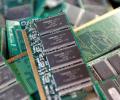
Even as India's passenger-vehicle sales touched a record high of 3.9 million units in 2022-23, growing 27 per cent over the previous financial year, the country's largest carmaker, Maruti Suzuki India (MSIL), said on Monday uncertainties in the electronic-component supplies might affect production in FY24. MSIL said the shortage of electronic components had some impact on production in FY23. "The company took all possible measures to minimise the impact.
The exclusive club that dominates the global semiconductor fab scenario is about to get a new member. Taiwan, South Korea, and China control nearly 70 per cent of the global capacity. SEMI, the global industry body for semiconductor and electronics design and manufacturing, projects all fabs collectively will churn out 30 million wafers a month this year.

Tata Motors recently cut the sales forecast of its luxury car brand, JLR, due to chip shortages, scaling down its production numbers from the earlier 120,000 units to 60,000-65,000 units by September, and leading to an almost 10 per cent fall in the company's stock. In May this year, Bosch India, too, had stated that chip shortfalls would impact its production, as supply chains were getting disrupted.
Foundries in Taiwan account for more than 75 per cent of the chips that mobile devices made in India need, according to estimates by the Indian Cellular and Electronics Association (ICEA), which represents global and domestic manufacturers. The number is slightly lower, 60 per cent, if one considers all chips -- those of consumer electronics, PCs, laptops, autos, etc. This ties in with the fact that foundries in Taiwan, led by TSMC, account for over 70 per cent of the world's microchip supply, according to estimates by Gartner.
The Indian government is keen to woo major semiconductor players, but a global race to attract them to countries where there is already an ecosystem is making it difficult for India to attract the biggies in the business. On Wednesday the government decided to throw open the doors to more players to participate in its semiconductor scheme. It is now looking at not only 28 nanometre (nm) chips and below, but higher nodes like 40 nm.
Is self-reliance the right approach in a mega-buck game, or better to be part of a network? asks T N Ninan.
India's overall imports from Taiwan during April-February rose by 34 per cent to $7.5 billion.

Research and development (R&D) spending by BSE 100 companies has grown steadily, rising from 0.89 per cent of revenue in FY20 to 1.32 per cent in FY24, averaging around 1 per cent over the period in-between, according to data compiled from Bloomberg and company annual reports. Also, these companies more than doubled their R&D spending in absolute terms over these five years: From Rs 25,041 crore to Rs 63,072 crore. While this reflects a prioritisation of innovation, corporate R&D investment remains relatively conservative.

OSAT majors have concerns about India's ability to provide a stable, predictable, and lasting policy environment for years to come, which is key for making a decision in a capital-intensive business.

IIT Roorkee has so far seen the highest domestic salary rise Rs 80 lakh, up by a third from Rs 60 lakh last year.

Their favourite alternatives: Malaysia, Vietnam and the Philippines. Note, India is missing from that list. And this is despite an attractive financial incentive scheme for OSAT players. The reason, said a senior executive of a US chip company who had a meeting in Taiwan just a few weeks ago, is that "they want more predictability in government policy because they plan to put in big money."

The Tamil Nadu government on Tuesday cleared the Rs 13,180 crore project by Yuzhan Technology, part of Taiwan's Foxconn Group, at Kancheepuram. The unit is reportedly expected to assemble smartphone display modules, which will be one of the first such units to cater to Apple's growing presence in the country. The unit is expected to generate at least 14,000 jobs. Of the 14 existing manufacturing units in the Apple supply chain, seven are based in Tamil Nadu.

'If the almost literally heart-stopping Suez block has any positive outcome, it is to be hoped that it will accelerate the setting up of a fab (perhaps Taiwanese) in India,' asserts Rajeev Srinivasan.
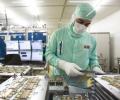
Mumbai-based Indian Semiconductor Manufacturing Company (ISMC) and Singapore-headquartered IGSS Ventures have one strategy in common: They have told the government in their application for semiconductor fabrication plants that they will export the bulk of the chips they make in India in the initial five or 10 years. The third applicant, Vedanta-Foxconn, which is also building a fab plant, has said it will concentrate on the needs of consumer electronics and mobile device markets, and earmark 80 per cent of output for domestic consumption, but has not specified its customers. Finding a viable domestic market could well be the biggest challenge for India's renewed tryst with semiconductors. Fab plants do not sell directly to end users but to intermediary chip design companies - such as Qualcomm or MediaTek.
US chipmaker Advanced Micro Devices (AM) on Friday announced a $400 million investment in India over the next five years and said it will build its largest design centre in Bengaluru. AMD chief technology officer Mark Papermaster made the announcement at the annual semiconductor conference in the presence of Prime Minister Narendra Modi. Undeterred by Taiwan's Foxconn pulling out of his group's $20 billion semiconductor-making venture, mining baron Anil Agarwal said the first phase of Vedanta's chip-making project will be ready in two-and-a-half years.

In a sign of the expanding Apple supplier ecosystem in India, American multinational Jabil Inc will set up an electronics manufacturing facility in Tiruchirappalli, Tamil Nadu with an investment of Rs 2,000 crore. Jabil is one of the 14 Apple suppliers in India, of around 200 globally, while another 14 have reportedly received preliminary clearance to form joint ventures with Indian companies to set up facilities. Interestingly, of the 14 existing manufacturing units in the Apple supply chain, seven are already in Tamil Nadu.

Despite all the noise around India's chance to leverage the China-plus one strategy, India's share of global foreign direct investment (FDI) inflows fell from 3.5 per cent in the first nine months of 2022 to 2.19 per cent in the same period in 2023, according to OECD data. The sharp drop of 54 per cent is much steeper than the overall global FDI inflow decline of 26 per cent in the first nine months. FDI inflows to China have fallen dramatically from a share of 12.5 per cent in the first nine months of 2022 to only 1.7 per cent in the same period in 2023.
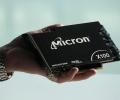
Micron Technology, a global leader in memory and storage, is considering supplying Made-in-India chips from its Gujarat plant to one of its key global clients, Apple, whose vendors assemble iPhones in the country. Micron is setting up an assembly test marking and packaging (ATMP) plant in Sanand, Gujarat. Currently, Apple vendors import chips for manufacturing iPhones. Sources in the know say the aim is to use part of the production to supply to Micron's clients in India directly.

Clearly, Foxconn Chairman Young Liu and his team are looking to raise their game in India.

Taiwanese electronic contract manufacturer Foxconn on Monday said it has decided to pull out of semiconductor joint venture with Indian conglomerate Vedanta, according to a statement. Foxconn said it is "working to remove the Foxconn name from what now is a fully-owned entity of Vedanta". "Foxconn has no connection to the entity and efforts to keep its original name will cause confusion for future stakeholders," Hon Hai Technology group (Foxconn) said.

They are both electronic manufacturing services (EMS) companies, also known as contract manufacturers. One is Taiwan's Foxconn group, the undisputed global number one in this business with revenues of $223 billion. The other is Dixon Technologies, the biggest domestic player with revenues of over Rs 10,500 crore.

LCD displays could be produced in India in the near future.
India will be an important country in terms of manufacturing in future, Young Liu, chairman and CEO of Hon Hai Technology Group (Foxconn) has said, his latest comment adding to a growing chorus of global voices acknowledging the country's bold moves to position itself as electronics and hi-tech production powerhouse. In an interaction with reporters in Taipei, the top honcho of the Taiwanese electronics manufacturing giant said the development of the entire ecosystem and industrial chain, and opportunities for development in India are "very, very huge opportunities". "If there is no big change, India will be a very important country in terms of manufacturing in the future," Liu said.

India's biggest car maker Maruti Suzuki said on Tuesday that its vehicle production in September will tumble by 60 per cent due to chip shortage. The company, which had earlier cut down production at its Gujarat plant, said the chip shortage will hit production in Gurugram and Manesar plants, effectively forcing the automaker to cut production by 60 per cent. Owing to a supply constraint of electronic components due to semiconductor shortage, the company is expecting an adverse impact on vehicle production in September in both Haryana and its contract manufacturing company, Suzuki Motor Gujarat Pvt Ltd. (SMG) in Gujarat.

If you have an IT firm, you should avoid encroaching on their turf.
 © 2026 Rediff.com - Investor Information - Advertise with us - Disclaimer - Privacy Policy - Sitemap - Feedback - About us - Terms of use - Grievances